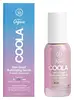
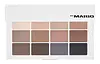
COOLA Dew Good Illuminating Serum Sunscreen Versus Makeup by Mario Master Mattes Eyeshadow Palette The Neutrals
This hybrid sunscreen covers the full UV range, though its SPF isn't confirmed on file yet.

What's inside
What's inside
 Key Ingredients
Benefits
Concerns
Ingredients Side-by-side
Butyl Methoxydibenzoylmethane 3%
UV Absorber
Ethylhexyl Salicylate 4%
UV Absorber
Octocrylene 8%
UV Absorber

Aloe Barbadensis Leaf Juice
Skin Conditioning


Butyloctyl Salicylate
Skin Conditioning
Glycerin
Humectant

Ammonium Acryloyldimethyltaurate/Vp Copolymer
CI 77163
Cosmetic Colorant
Lactobacillus Ferment
Skin Conditioning
Jasminum Sambac Leaf Cell Extract
Masking
Theobroma Cacao Seed Extract
Antioxidant
Schinus Molle Extract
Skin ProtectingWater
Skin ConditioningTitanium Dioxide
Cosmetic Colorant
Ethyl Ferulate
Antioxidant
Tropolone
Skin ConditioningMica
Cosmetic ColorantHydroxyacetophenone
Antioxidant
Propanediol
Solvent
Butylene Glycol
Humectant
Sodium Stearoyl Glutamate
Cleansing1,2-Hexanediol
Skin Conditioning
Caprylyl Glycol
Emollient
Ethylhexyl Hydroxystearate
Emollient

Maltodextrin
Absorbent
Sodium Phytate
ChelatingParfum
Masking
Butyl Methoxydibenzoylmethane 3%, Ethylhexyl Salicylate 4%, Octocrylene 8%, Aloe Barbadensis Leaf Juice, Butyloctyl Salicylate, Glycerin, Ammonium Acryloyldimethyltaurate/Vp Copolymer, CI 77163, Lactobacillus Ferment, Jasminum Sambac Leaf Cell Extract, Theobroma Cacao Seed Extract, Schinus Molle Extract, Water, Titanium Dioxide, Ethyl Ferulate, Tropolone, Mica, Hydroxyacetophenone, Propanediol, Butylene Glycol, Sodium Stearoyl Glutamate, 1,2-Hexanediol, Caprylyl Glycol, Ethylhexyl Hydroxystearate, Maltodextrin, Sodium Phytate, Parfum
Talc
Abrasive
Zinc Stearate
Cosmetic ColorantHdi/Trimethylol Hexyllactone Crosspolymer
Triethoxycaprylylsilane

Caprylic/Capric Triglyceride
Masking
Dimethicone
Emollient
Caprylyl Glycol
Emollient
Ethylhexylglycerin
Skin ConditioningAlumina
Abrasive
Glycerin
Humectant
Silica
Abrasive

Tocopherol
Antioxidant



CI 77891
Cosmetic ColorantIron Oxides
CI 77163
Cosmetic Colorant
CI 77742
Cosmetic ColorantCI 19140
Cosmetic ColorantKaolin
Abrasive
CI 75470
Cosmetic ColorantCI 77007
Cosmetic ColorantCI 77499
Cosmetic ColorantCI 77266
Cosmetic ColorantTalc, Zinc Stearate, Hdi/Trimethylol Hexyllactone Crosspolymer, Triethoxycaprylylsilane, Caprylic/Capric Triglyceride, Dimethicone, Caprylyl Glycol, Ethylhexylglycerin, Alumina, Glycerin, Silica, Tocopherol, CI 77891, Iron Oxides, CI 77163, CI 77742, CI 19140, Kaolin, CI 75470, CI 77007, CI 77499, CI 77266
Ingredients Explained
These ingredients are found in both products.
Ingredients higher up in an ingredient list are typically present in a larger amount.
Caprylyl Glycol is a humectant, skin conditioner, emollient, and preservative booster derived from either caprylic acid or synthetically created.
Typical use levels vary from 0.3-1% as a preservative booster and go up to 2% to condition skin.
Because it is not a free-fatty acid, this ingredient is fungal acne safe (there's nothing for Malassezia to feed on).
Learn more about Caprylyl GlycolCI 77163 is the color-index name for Bismuth Oxychloride, a lab-made white powder that acts as a pearl pigment.
It's what gives a lot of pressed powders, eyeshadows, highlighteres, and mineral foundations that soft pearly glow.
Due to its structure as flat, plate-like crystals that stack like tiles, it feels silky and sticks to skin well. This also makes it very chemically stable and insoluble under normal skin conditions (this just means it sits on top of skin rather than going into it).
It has an interesting quirk: it slowly goes gray in sunlight and the graying is partly reversible in the dark.
At this time, there's no legal cap on how much a brand can use. Both the FDA and the EU permit it without restriction so real-world concentration levels come down to formulation:
Allergy risk is low as well since it's insoluble and doesn't release free metal ions into skin. True allergic contact dermatitis to it is rare enough that there's very little published cases.
However, mineral makeup users do report itching or stinging. The leading explanation for this is irritation from those stiff platelet crystals rubbing on skin (also more likely with heavy, high-percentage loose mineral powders) rather than an immune reaction.
This ingredient shows up on a lot of "pore-clogging" lists but there's no real evidence behind that. It doesn't even have a comedogenic rating from an actual study; the numbers you'll find online come from blogs citing other blogs.
Some people still find it breaks them out. So if that's you, definitely trust your skin.
Learn more about CI 77163Glycerin (or glycerol) is a compound naturally found in your skin. It's a powerhouse humectant that pulls water into the stratum corneum.
Topically, glycerin does several things at once:
Your skin makes glycerin on its own (mostly from sebaceous oil breakdown) and shuttles it to your outermost layer of skin, or your epidermis, via aquaporin-3.
Aquaporin-3 is a transporter that is essential for normal skin hydration, elasticity, and repair. Interestingly, mice lacking in AQP3 have dry and less elastic skin that can be fully corrected with glycerin.
This ingredient is non-irritating, plays well with almost every ingredient, and works across all skin types. Typical use is anywhere between 3-10% but can go up to 79% in some leave-on products.
Just know very high concentrations (>40%) can feel tacky in low humidity.
Glycerin is the name for this ingredient in American English. British English uses Glycerol/Glycerine.
Learn more about Glycerin

