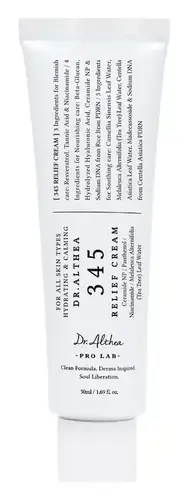
This calming moisturizer is formulated around Aloe Barbadensis Leaf Juice and Centella Asiatica Leaf Extract to calm redness and hydrate skin.
This barrier-repair moisturizer is formulated around Caprylic/Capric Triglyceride and Butyrospermum Parkii Butter to strengthen the skin barrier and hydrate skin.


What's inside
What's inside
 Key Ingredients
No key ingredients
Benefits
Concerns
Ingredients Side-by-side
Aloe Barbadensis Leaf Juice
Skin Conditioning


Glycerin
Humectant

Propanediol
Solvent
Propylene Glycol
Humectant

Isoamyl Laurate
Emollient
Centella Asiatica Leaf Extract
Skin Conditioning
Sodium Acrylate/Sodium Acryloyldimethyl Taurate Copolymer
Emulsion StabilisingBetaine
Humectant
Squalane
Emollient
Phenoxyethanol
Preservative
Isohexadecane
EmollientPolysorbate 80
Emulsifying
Caprylyl Glycol
Emollient
Allantoin
Skin Conditioning
Sodium Benzoate
Masking
Water
Skin ConditioningCaprylic/Capric Triglyceride
Masking
Glycerin
Humectant
Octyldodecanol
Emollient
Polyglyceryl-3 Methylglucose Distearate
Emulsifying
Butyrospermum Parkii Butter
Skin Conditioning

Cera Alba
Emollient
Jojoba Esters
Emollient
Helianthus Annuus Seed Wax
Skin Conditioning
Glyceryl Stearate
Emollient
Xanthan Gum
Emulsifying1,2-Hexanediol
Skin Conditioning
Caprylyl Glycol
Emollient
Sodium Hydroxide
BufferingAcrylates/C10-30 Alkyl Acrylate Crosspolymer
Emulsion StabilisingPolyglycerin-3
Humectant
Acacia Decurrens Flower Wax
Emollient
Aloe Barbadensis Leaf Juice Powder
Skin Conditioning
Tocopherol
Antioxidant



Tropolone
Skin ConditioningGlycine Soja Oil
Emollient
Hydrolyzed Soy Protein
Humectant
Water, Caprylic/Capric Triglyceride, Glycerin, Octyldodecanol, Polyglyceryl-3 Methylglucose Distearate, Butyrospermum Parkii Butter, Cera Alba, Jojoba Esters, Helianthus Annuus Seed Wax, Glyceryl Stearate, Xanthan Gum, 1,2-Hexanediol, Caprylyl Glycol, Sodium Hydroxide, Acrylates/C10-30 Alkyl Acrylate Crosspolymer, Polyglycerin-3, Acacia Decurrens Flower Wax, Aloe Barbadensis Leaf Juice Powder, Tocopherol, Tropolone, Glycine Soja Oil, Hydrolyzed Soy Protein
Reviews
Ingredients Explained
These ingredients are found in both products.
Ingredients higher up in an ingredient list are typically present in a larger amount.
Caprylyl Glycol is a humectant, skin conditioner, emollient, and preservative booster derived from either caprylic acid or synthetically created.
Typical use levels vary from 0.3-1% as a preservative booster and go up to 2% to condition skin.
Because it is not a free-fatty acid, this ingredient is fungal acne safe (there's nothing for Malassezia to feed on).
Learn more about Caprylyl GlycolGlycerin (or glycerol) is a compound naturally found in your skin. It's a powerhouse humectant that pulls water into the stratum corneum.
Topically, glycerin does several things at once:
Your skin makes glycerin on its own (mostly from sebaceous oil breakdown) and shuttles it to your outermost layer of skin, or your epidermis, via aquaporin-3.
Aquaporin-3 is a transporter that is essential for normal skin hydration, elasticity, and repair. Interestingly, mice lacking in AQP3 have dry and less elastic skin that can be fully corrected with glycerin.
This ingredient is non-irritating, plays well with almost every ingredient, and works across all skin types. Typical use is anywhere between 3-10% but can go up to 79% in some leave-on products.
Just know very high concentrations (>40%) can feel tacky in low humidity.
Glycerin is the name for this ingredient in American English. British English uses Glycerol/Glycerine.
Learn more about Glycerin