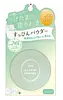
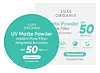
Club Suppin Powder White Floral Bouquet Versus Luxe Organix 24h Zero Sebum Instant Pore Blurring Matte Powder SPF 50


What's inside
What's inside
 Key Ingredients
Benefits
Concerns
Ingredients Side-by-side
Aluminum Starch Octenylsuccinate
Absorbent
Pentaerythrityl Tetraethylhexanoate
Emollient
Cellulose
Absorbent
Zinc Myristate
Lauroyl Lysine
Skin Conditioning
Silica Dimethyl Silylate
EmollientPhytosteryl/Octyldodecyl Lauroyl Glutamate
Skin ConditioningPentylene Glycol
Skin Conditioning
Phenoxyethanol
Preservative
Parfum
Masking




Methylparaben
Preservative

Tocopherol
Antioxidant





Water
Skin ConditioningSilica
Abrasive

Butylene Glycol
Humectant
Algin
MaskingHydrolyzed Hyaluronic Acid
Humectant

Maltodextrin
Absorbent
Lactobacillus
Skin ConditioningSodium Hyaluronate
Humectant
Hydroxypropyltrimonium Hyaluronate
Scutellaria Baicalensis Root Extract
Astringent
Chamomilla Recutita Flower Extract
Masking
Rosa Damascena Flower Extract
Masking
Citric Acid
Buffering
Soluble Collagen
Humectant
Sodium Citrate
BufferingTalc
Abrasive
Synthetic Fluorphlogopite
Iron Oxides
Aluminum Starch Octenylsuccinate, Pentaerythrityl Tetraethylhexanoate, Cellulose, Zinc Myristate, Lauroyl Lysine, Silica Dimethyl Silylate, Phytosteryl/Octyldodecyl Lauroyl Glutamate, Pentylene Glycol, Phenoxyethanol, Parfum, Methylparaben, Tocopherol, Water, Silica, Butylene Glycol, Algin, Hydrolyzed Hyaluronic Acid, Maltodextrin, Lactobacillus, Sodium Hyaluronate, Hydroxypropyltrimonium Hyaluronate, Scutellaria Baicalensis Root Extract, Chamomilla Recutita Flower Extract, Rosa Damascena Flower Extract, Citric Acid, Soluble Collagen, Sodium Citrate, Talc, Synthetic Fluorphlogopite, Iron Oxides
Mica
Cosmetic ColorantAluminum Starch Octenylsuccinate
Absorbent
Talc
Abrasive
Zinc Oxide
Cosmetic Colorant
Titanium Dioxide
Cosmetic Colorant
Silica
Abrasive
Caprylic/Capric Triglyceride
Masking
Dimethicone
Emollient
Aluminum Hydroxide
EmollientOctyldodecyl Stearoyl Stearate
Emollient
Stearic Acid
Cleansing
Magnesium Myristate

Triethoxycaprylylsilane
Acetyl Glucosamine
Skin Conditioning
Bis-Diglyceryl Polyacyladipate-2
Emollient
Synthetic Fluorphlogopite
Resveratrol
Antioxidant
Ascorbic Acid
Antioxidant

Ethylhexylglycerin
Skin ConditioningTocopheryl Acetate
Antioxidant
Iron Oxides
Mica, Aluminum Starch Octenylsuccinate, Talc, Zinc Oxide, Titanium Dioxide, Silica, Caprylic/Capric Triglyceride, Dimethicone, Aluminum Hydroxide, Octyldodecyl Stearoyl Stearate, Stearic Acid, Magnesium Myristate, Triethoxycaprylylsilane, Acetyl Glucosamine, Bis-Diglyceryl Polyacyladipate-2, Synthetic Fluorphlogopite, Resveratrol, Ascorbic Acid, Ethylhexylglycerin, Tocopheryl Acetate, Iron Oxides
Reviews
Ingredients Explained
These ingredients are found in both products.
Ingredients higher up in an ingredient list are typically present in a larger amount.
Aluminum Starch Octenylsuccinate is a synthetic powder used as an absorbent, thickener, and anti-caking agent.
As an absorbent, it is great at mattifying skin by soaking up the oil. This is why you'll find it in a range of products from makeup to moisturizers.
This ingredient is considered a modified starch. Starch can also be found naturally in plants.
One study from 1991 found that 5% of this ingredient enhanced titanium dioxide SPF by as much as 40%. The study found 1% titanium dioxide had a 5.6 SPF and adding 5% of aluminum starch octenylsuccinate boosted it to an SPF of 8.1
Although “aluminum” in an ingredient name can raise red flags for some consumers, the form and usage context matter significantly. For typical topical applications, there is no substantial evidence of health risks - such as cancer, neurotoxicity, or systemic “aluminum overload.”
Learn more about Aluminum Starch OctenylsuccinateSilica, also known as silicon dioxide, is a naturally occurring mineral. It is used as a fine, spherical, and porous powder in cosmetics.
Though it has exfoliant properties, the function of silica varies depending on the product.
The unique structure of silica enhances the spreadability and adds smoothness, making it a great texture enhancer.
It is also used as an active carrier, emulsifier, and mattifier due to its ability to absorb excess oil.
In some products, tiny microneedles called spicules are made from silica or hydrolyzed sponge. When you rub them in, they lightly polish away dead skin layers and enhance the penetration of active ingredients.
Learn more about SilicaSynthetic Fluorphlogopite is the synthethic version of mica. It consists of fluorine, aluminum and silicate.
Synthetic Fluorphlogopite is used to add volume to products.
It is considered non-irritating on the skin.
Learn more about Synthetic FluorphlogopiteTalc is a clay mineral. It helps absorb moisture and improve the texture of products. Like other types of clay, Talc can have a slight exfoliating effect on skin. Talc can be added to increase the volume of products.
Some Baby powders are made by combining talc with corn starch. The word "talc" comes from Latin and originates from Arabic. Talc is a mineral commonly found throughout the world.
If you have any concerns about using talc, we recommend checking out the FDA's official page.
Learn more about TalcThis ingredient is a combination of red, black, and yellow iron oxide pigments. This combination of colors is usually found in foundation, because it results in a "skin" color.
The EU typically uses CI numbers for colorants when applicable, such as CI 77489. In the US, iron oxides are regulated as color additives and "iron oxides" is the most commonly used name in US cosmetic practice.
A 2021 paper looked at skincare formulations containing iron oxides and found that they reduced transmission of blue light when measured optically. In simple terms, the pigment particles helped block or scatter part of the visible light spectrum in lab testing and the authors suggest this could translate into better protection against blue-light-related skin effects.
There is also clinical and experimental research showing that tinted products containing iron oxides can reduce visible light-induced pigmentation:
Please note, whether a product reduces visible or blue light depends on things like:
In the EU's CosIng database, iron oxides are only listed as a colorant. CosIng groups ingredients by their main cosmetic role, such as colorant, preservative, or UV filter.
Though studies say iron oxides can "attenuate blue light", they're describing an optical property and not an officially recognized cosmetic function.
So CosIng isn’t contradicting the research. It’s just classifying iron oxides by what they officially are: pigments that add color.
Learn more about Iron Oxides

