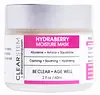
This hydrating overnight mask is formulated around Squalane and Camellia Sinensis Extract to hydrate skin and calm redness.
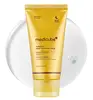
This brightening overnight mask is formulated around Niacinamide and Retinol to brighten dull-looking skin and refine skin texture.


What's inside
What's inside
 Key Ingredients
Benefits
Concerns
Ingredients Side-by-side
Water
Skin ConditioningPropanediol
Solvent

Squalane
Emollient
Glycerin
Humectant
Cetearyl Alcohol
Emollient






Ethylhexyl Olivate
Skin Conditioning
Polyglyceryl-6 Distearate
Emulsifying
Raphanus Sativus Seed Extract
Skin ConditioningIsopentyldiol
Humectant
Butylene Glycol
Humectant
Arnica Montana Extract
Skin ConditioningCamellia Sinensis Extract
Antioxidant



Argania Spinosa Sprout Cell Extract
Skin ConditioningSalix Nigra Bark Extract
Skin ProtectingCannabis Sativa Seed Oil
Emollient
Punica Granatum Seed Oil
Emollient
Trifolium Pratense Flower Extract
AstringentAlteromonas Ferment Extract
Skin Conditioning
Aloe Barbadensis Leaf Extract
Emollient
Sodium Hyaluronate
Humectant
Curcuma Longa Root Extract
Antioxidant
Jojoba Esters
Emollient
Lactobacillus Ferment
Skin Conditioning
Hibiscus Esculentus Fruit Extract
Skin ConditioningCetyl Alcohol
Emollient
Diglucosyl Gallic Acid
Xanthan Gum
EmulsifyingThioctic Acid
Antioxidant
Erythritol
Humectant
Polylysine
Vaccinium Angustifolium Fruit Extract
Skin Protecting
Mentha Piperita Extract
CleansingCaprylhydroxamic Acid
Chelating1,2-Hexanediol
Skin Conditioning
Water, Propanediol, Squalane, Glycerin, Cetearyl Alcohol, Ethylhexyl Olivate, Polyglyceryl-6 Distearate, Raphanus Sativus Seed Extract, Isopentyldiol, Butylene Glycol, Arnica Montana Extract, Camellia Sinensis Extract, Argania Spinosa Sprout Cell Extract, Salix Nigra Bark Extract, Cannabis Sativa Seed Oil, Punica Granatum Seed Oil, Trifolium Pratense Flower Extract, Alteromonas Ferment Extract, Aloe Barbadensis Leaf Extract, Sodium Hyaluronate, Curcuma Longa Root Extract, Jojoba Esters, Lactobacillus Ferment, Hibiscus Esculentus Fruit Extract, Cetyl Alcohol, Diglucosyl Gallic Acid, Xanthan Gum, Thioctic Acid, Erythritol, Polylysine, Vaccinium Angustifolium Fruit Extract, Mentha Piperita Extract, Caprylhydroxamic Acid, 1,2-Hexanediol
Water
Skin ConditioningPolyvinyl Alcohol
Butylene Glycol
Humectant
Curcuma Longa Root Extract
Antioxidant
Glycerin
Humectant
Niacinamide
Smoothing




1,2-Hexanediol
Skin Conditioning
Isopentyldiol
Humectant
Sodium Hyaluronate
Humectant
Polyglyceryl-10 Laurate
Skin Conditioning
Propanediol
Solvent
Glyceryl Glucoside
Humectant
Glucose
Humectant
Ethylhexylglycerin
Skin ConditioningXanthan Gum
EmulsifyingAdenosine
Skin Conditioning
Disodium EDTA
ChelatingCollagen Extract
Skin Conditioning
Ascorbic Acid
Antioxidant
Glycine Soja Oil
Emollient
Retinol
Skin Conditioning

Water, Polyvinyl Alcohol, Butylene Glycol, Curcuma Longa Root Extract, Glycerin, Niacinamide, 1,2-Hexanediol, Isopentyldiol, Sodium Hyaluronate, Polyglyceryl-10 Laurate, Propanediol, Glyceryl Glucoside, Glucose, Ethylhexylglycerin, Xanthan Gum, Adenosine, Disodium EDTA, Collagen Extract, Ascorbic Acid, Glycine Soja Oil, Retinol
Reviews
Ingredients Explained
These ingredients are found in both products.
Ingredients higher up in an ingredient list are typically present in a larger amount.
1,2-Hexanediol is a synthetic liquid and another multi-functional powerhouse.
It is a:
- Humectant, drawing moisture into the skin
- Emollient, helping to soften skin
- Solvent, dispersing and stabilizing formulas
- Preservative booster, enhancing the antimicrobial activity of other preservatives
Butylene Glycol (or BG) is used within cosmetic products for a few different reasons:
Overall, Butylene Glycol is a safe and well-rounded ingredient that works well with other ingredients.
Though this ingredient works well with most skin types, some people with sensitive skin may experience a reaction such as allergic rashes, closed comedones, or itchiness.
Learn more about Butylene GlycolCurcuma Longa Root Extract comes from the rhizome (underground stem) of the turmeric plant.
While the official EU Cosing Database lists this ingredient as a fragrance, it actually does more than give products a scent.
This ingredient contains a group of yellow pigments called curcuminoids (mostly curcumin) that give it genuine antioxidant and anti-inflammatory activity in skin.
Reviews of topical clinical studies have found turmeric/curcumin to be generally well-tolerated and useful across conditions like eczema and mild inflammation.
One thing working in its favor is that curcumin barely penetrates; in lab skin-permeation testing, the curcuminoids mostly stayed in the outermost layer of skin. This is a good thing because its soothing and antioxidant activity is a surface-level job anyway.
At this time, industry data shows there's no single "correct" cosmetic percentage. It's used across a wide range depending on the product and varies from tiny fractions of a percent up to a few percent.
Allergy-wise, curcumin is a documented (but uncommon) contact allergen. It can also cross react with related plants, so anyone with a turmeric/ginger/cinnamon allergy or reactive skin should patch test first.
Learn more about Curcuma Longa Root ExtractGlycerin (or glycerol) is a compound naturally found in your skin. It's a powerhouse humectant that pulls water into the stratum corneum.
Topically, glycerin does several things at once:
Your skin makes glycerin on its own (mostly from sebaceous oil breakdown) and shuttles it to your outermost layer of skin, or your epidermis, via aquaporin-3.
Aquaporin-3 is a transporter that is essential for normal skin hydration, elasticity, and repair. Interestingly, mice lacking in AQP3 have dry and less elastic skin that can be fully corrected with glycerin.
This ingredient is non-irritating, plays well with almost every ingredient, and works across all skin types. Typical use is anywhere between 3-10% but can go up to 79% in some leave-on products.
Just know very high concentrations (>40%) can feel tacky in low humidity.
Glycerin is the name for this ingredient in American English. British English uses Glycerol/Glycerine.
Learn more about GlycerinIsopentyldiol is a synthetic solvent, humectant, and emollient.
Humectants have the ability to attract and hold water while emollients create a thin film to prevent water from evaporating. This combination keeps your skin and hair soft and hydrated. Plus, isopentyldiol does not leave a sticky feeling behind.
As a surfactant, isopentyldiol is a hydrotrope. Hydrotropes help surfactants (cleansing agents) dissolve into water.
According to the manufacturer, using this ingredient with sorbitol boosts skin hydration and helps close cuticles of damaged hair.
This ingredient is water-soluble.
Learn more about IsopentyldiolPropanediol is an all-star ingredient. It softens, hydrates, and smooths the skin.
It’s often used to:
Propanediol is not likely to cause sensitivity and considered safe to use. It is derived from corn or petroleum with a clear color and no scent.
Learn more about PropanediolSodium Hyaluronate is the salt form of hyaluronic acid. It is a long sugar chain that is naturally found in your skin, joints, and connective tissue that maintains hydration and elasticity.
In skincare, it works as a humectant. It pulls water from the environment and deeper layers of skin and binds it to the surface.
Interestingly, the size of the molecule affects its behavior:
Some clinical evidence links low molecular weight versions to improved wrinkle depth, elasticity, anti-inflammatory effects, and barrier repair.
Many serums use a blend of both weights so you can get surface hydration plus longer-lasting and deeper effects.
You'll typically see concentrations between 0.1-2% for this ingredient.
Learn more about Sodium HyaluronateWater. It's the most common cosmetic ingredient of all. You'll usually see it at the top of ingredient lists, meaning that it makes up the largest part of the product.
So why is it so popular? Water most often acts as a solvent - this means that it helps dissolve other ingredients into the formulation.
You'll also recognize water as that liquid we all need to stay alive. If you see this, drink a glass of water. Remember to stay hydrated!
Learn more about WaterXanthan gum is used as a stabilizer and thickener within cosmetic products. It helps give products a sticky, thick feeling - preventing them from being too runny.
On the technical side of things, xanthan gum is a polysaccharide - a combination consisting of multiple sugar molecules bonded together.
Xanthan gum is a pretty common and great ingredient. It is a natural, non-toxic, non-irritating ingredient that is also commonly used in food products.
Learn more about Xanthan Gum

