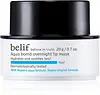
This hydrating lip mask is formulated around Butyrospermum Parkii Butter and Centella Asiatica Leaf Extract to hydrate lips and strengthen the lip barrier.
This hydrating lip mask is formulated around Butyrospermum Parkii Butter and Ascorbic Acid to hydrate lips and brighten dull-looking skin.

What's inside
What's inside
 Key Ingredients
Benefits
Concerns
Ingredients Side-by-side
Diisostearyl Malate
EmollientPhytosteryl/Isostearyl/Cetyl/Stearyl/Behenyl Dimer Dilinoleate
Skin Conditioning

Hydrogenated Polyisobutene
EmollientButyrospermum Parkii Butter
Skin Conditioning




Synthetic Wax
Abrasive
1,2-Hexanediol
Skin Conditioning
Microcrystalline Wax
Emulsion StabilisingCentella Asiatica Leaf Extract
Skin Conditioning


Madecassoside
Antioxidant


Ethylene/Propylene Copolymer
Abrasive
Simethicone
Emollient
Water
Skin ConditioningButylene Glycol
Humectant
Avena Sativa Kernel Extract
Abrasive
Calendula Officinalis Flower Extract
Masking
Nepeta Cataria Extract
TonicRubus Idaeus Leaf Extract
Skin ConditioningStellaria Media Extract
Skin ConditioningBaptisia Tinctoria Root Extract
Skin ConditioningAlchemilla Vulgaris Leaf Extract
Antioxidant
Equisetum Arvense Leaf Extract
AstringentUrtica Dioica Leaf Extract
Skin ConditioningParfum
Masking

Limonene
Perfuming
Linalool
Perfuming
Citral
Perfuming
Diisostearyl Malate, Phytosteryl/Isostearyl/Cetyl/Stearyl/Behenyl Dimer Dilinoleate, Hydrogenated Polyisobutene, Butyrospermum Parkii Butter, Synthetic Wax, 1,2-Hexanediol, Microcrystalline Wax, Centella Asiatica Leaf Extract, Madecassoside, Ethylene/Propylene Copolymer, Simethicone, Water, Butylene Glycol, Avena Sativa Kernel Extract, Calendula Officinalis Flower Extract, Nepeta Cataria Extract, Rubus Idaeus Leaf Extract, Stellaria Media Extract, Baptisia Tinctoria Root Extract, Alchemilla Vulgaris Leaf Extract, Equisetum Arvense Leaf Extract, Urtica Dioica Leaf Extract, Parfum, Limonene, Linalool, Citral
Phytosteryl/Isostearyl/Cetyl/Stearyl/Behenyl Dimer Dilinoleate
Skin Conditioning
Diisostearyl Malate
EmollientHydrogenated Polyisobutene
EmollientButyrospermum Parkii Butter
Skin Conditioning
Tribehenin
Emollient
Synthetic Wax
Abrasive
1,2-Hexanediol
Skin Conditioning
Microcrystalline Wax
Emulsion StabilisingSynthetic Fluorphlogopite
Ethylene/Propylene Copolymer
Abrasive
Simethicone
Emollient
Ascorbic Acid
Antioxidant


Ascorbyl Glucoside
Antioxidant
Niacinamide
Smoothing



Panthenol
Skin Conditioning
Parfum
Masking
Limonene
Perfuming
Linalool
Perfuming
Citral
Perfuming
CI 15850
Cosmetic ColorantCI 19140
Cosmetic ColorantCI 77891
Cosmetic ColorantPhytosteryl/Isostearyl/Cetyl/Stearyl/Behenyl Dimer Dilinoleate, Diisostearyl Malate, Hydrogenated Polyisobutene, Butyrospermum Parkii Butter, Tribehenin, Synthetic Wax, 1,2-Hexanediol, Microcrystalline Wax, Synthetic Fluorphlogopite, Ethylene/Propylene Copolymer, Simethicone, Ascorbic Acid, Ascorbyl Glucoside, Niacinamide, Panthenol, Parfum, Limonene, Linalool, Citral, CI 15850, CI 19140, CI 77891
Ingredients Explained
These ingredients are found in both products.
Ingredients higher up in an ingredient list are typically present in a larger amount.
1,2-Hexanediol is a synthetic liquid and another multi-functional powerhouse.
It is a:
- Humectant, drawing moisture into the skin
- Emollient, helping to soften skin
- Solvent, dispersing and stabilizing formulas
- Preservative booster, enhancing the antimicrobial activity of other preservatives
This ingredient is also known as shea butter. It is a plant-derived extract from the nuts of the Africa shea tree and one of the most well-studied emollients.
Because it has a high concentration of fatty acids (primarily oleic, stearic, and linoleic) it is able to form a protective barrier on the skin's surface. This helps seal in moisture and prevents transepidermal water loss (TEWL).
In vitro research found an increase in skin hydration by 58% and a decrease in TEWL by 37.8% after 24 hours of applying this ingredient (pretty impressive for a single ingredient!).
Besides hydration, shea butter also contains triterpenes that have anti-inflammatory potential. In particule, lupeol cinnamate has shown the highest anti-inflammatory activity in vivo.
Shea butter also contains vitamins A and E which may contribute to antioxidant activity.
While Shea Butter has an SPF rating of about 3-4, it is not a sunscreen replacement.
This ingredient may not be fungal acne safe because its fatty acids fall within the C11-C24 range that the Malassezia yeast can metabolize.
This ingredient shows up on a lot of "pore-clogging" lists but there's no real evidence behind that. It doesn't even have a comedogenic rating from an actual study; the numbers you'll find online come from blogs citing other blogs.
Ratings for other ingredients mostly come from a 1980s rabbit ear test. This test doesn't translate well to human skin or to real products because the ingredient sits at a much lower percentage.
Some people still find it breaks them out. So if that's you, definitely trust your skin. Just know this one's based on experience and not evidence.
Learn more about Butyrospermum Parkii ButterCitral is the molecule responsible for the fresh lemon scent in lemon, lime, and lemongrass. It is a fragrance ingredient that can be created from plant essential oils or synthetically.
Though Citral has documented antimicrobial activity against acne bacteria (which is where the marketing claims about it being good for acne-prone skin originate), real formulas use it at fragrance-level concentrations under 1% so there's likely no skin benefit.
You should know this ingredient is a known EU fragrance allergen.
Animal studies classifies this ingredient as a weak-to-moderate skin sensitizer and clinical patch testing on eczema patients confirmed it to be both a contact allergen and irritant.
The term 'citral' is a collective term for two geometric isomers: geranial/Citral A and neral/Citral B.
The term 'fragrance' is not regulated in many countries. In many cases, it is up to the brand to define this term. For instance, many brands choose to label themselves as "fragrance-free" because they are not using synthetic fragrances. However, their products may still contain ingredients such as essential oils that are considered a fragrance.
Learn more about CitralDiisostearyl Malate is an emollient and most often used in lip products. It comes from isostearyl alcohol, a fatty acid, and malic acid, an AHA.
As an emollient, Diisostearyl Malate helps create a thin film on your skin to trap moisture in. This helps keep your skin soft and smooth.
Ethylene/Propylene Copolymer is an exfoliant.
Hydrogenated Polyisobutene is a synthetic polymer. Polymers are compounds with high molecular weight. Hydrogenated Polyisobutene is an emollient and texture enhancer.
In one study, Hydrogenated Polyisobutene showed better skin hydration levels than Caprylic/Capric Triglyceride. As an emollient, it helps keep your skin soft and hydrated by trapping moisture in.
Hydrogenated Polyisobutene is often used as a mineral oil replacement.
Learn more about Hydrogenated PolyisobuteneLimonene is the compound that gives citrus peel its smell.
In skincare, it shows up as a standalone fragrance ingredient or as a natural compound of citrus and other essential oils.
You'll typically see this ingredient used in very small amounts; anything above 0.001% in a leave-on product or 0.01% in a rinse-off has to be named on the label in the EU. The citrus oils that carry it sit around 0.5-1% in a finished formula.
Fresh limonene is a weak allergen; the real issue is that it slowly reacts with air and then breaks down from oxidation to create hydroperoxides (which are strong sensitizers). This is why suppliers are required to keep the peroxide value below 20 mmol.
Positive reactions in people being investigated for eczema vary:
It's worth skipping if you have a known fragrance allergy or a compromised barrier, but the risk is low for most people.
Older or long-opened products are also more likely to bother you than fresh ones due to oxidation.
Learn more about LimoneneLinalool is a small, naturally occurring scent molecule found in plants like lavender, coriander, bergamot, and more.
It is one of the two most-used fragrance ingredients in cosmetics and added purely for smell. Since it's not used for a skin benefit, there's no "effective dose". Concentration depends on the fragrance load of the product.
The EU requires it to be named on the label above 0.001% in leave-on and 0.01% in rinse-off products.
Fresh linalool is a weak sensitizer but air exposure turns some of it into hydroperoxides, which are strong sensitizers. Those oxidation products are the actual allergy concern.
Patch-test clinics see positive reactions to linalool hydroperoxides in about 4% to 12% of dermatitis patients depending on country and test concentration.
Resassuringly, one analytical study found hydroperoxide levels in real fragranced products to be orders of magnitude below what induced sensitization in animal studies with no evidence of oxidation building up during normal storage.
The practical takeaway is that linalool is fine for most people but worth avoiding if you have a confirmed fragrance contact allergy or a badly compromised barrier.
Products stored a long time after opening are also the high-risk scenario since that is when oxidation happens.
The scent of linalool is described as floral, spicy tropical, and citrus-like.
Learn more about LinaloolMicrocrystalline Wax is derived from petroleum through a de-oiling process, then highly refined and purified before use in cosmetics.
In skincare formulations, it is used to improve texture and create a smooth, even consistency. It also helps stabilize products by preventing ingredients from separating.
Parfum is a catch-all term for an ingredient or more that is used to give a scent to products.
Also called "fragrance", this ingredient can be a blend of hundreds of chemicals or plant oils. This means every product with "fragrance" or "parfum" in the ingredients list is a different mixture.
For instance, Habanolide is a proprietary trade name for a specific aroma chemical. When used as a fragrance ingredient in cosmetics, most aroma chemicals fall under the broad labeling category of “FRAGRANCE” or “PARFUM” according to EU and US regulations.
The term 'parfum' or 'fragrance' is not regulated in many countries. In many cases, it is up to the brand to define this term.
For instance, many brands choose to label themselves as "fragrance-free" because they are not using synthetic fragrances. However, their products may still contain ingredients such as essential oils that are considered a fragrance by INCI standards.
One example is Calendula flower extract. Calendula is an essential oil that still imparts a scent or 'fragrance'.
Depending on the blend, the ingredients in the mixture can cause allergies and sensitivities on the skin. Some ingredients that are known EU allergens include linalool and citronellol.
Parfum can also be used to mask or cover an unpleasant scent.
The bottom line is: not all fragrances/parfum/ingredients are created equally. If you are worried about fragrances, we recommend taking a closer look at an ingredient. And of course, we always recommend speaking with a professional.
Learn more about ParfumThis is a plant-derived ester that functions as a skin conditioner. It's basically a two linoleic acid molecules combined with fatty alcohols.
In practice, it works as a rich emollient that helps reduce moisture loss and give skin a soft appearance.
The phytosterol part of this ingredient brings an added structural bonus: phytosterols are structurally similar to cholesterol so they can fit right into the stratum corneum's lipid matrix to help reinforce the skin barrier.
Due to its molecular structure, this ingredient delivers a cushiony and glossy feeling without being excessively greasy.
It did not produce skin irritation or sensitization in clinical studies, and this ingredient is deemed safe to use in cosmetics at current practices.
Because this ingredient contains C16, C18, and C22 fatty chains, it may not be Malassezia/fungal acne safe. The Malassezia yeast potentially feeds on fatty acids in the C11-C24 range.
Learn more about Phytosteryl/Isostearyl/Cetyl/Stearyl/Behenyl Dimer DilinoleateSimethicone is a silicone. It is an emollient and used to reduce foaming in a product. It is also often used to coat sunscreen ingredients for better spreadability.
This ingredient is created by mixing dimethylpolysiloxane and hydrated silica.
Synthetic Wax is a manufactured hydrocarbon wax. In formulas, it works as an occlusive emollient that helps reduce water loss and improves the spreadability of products.
Research comparing synthetic wax to traditional mineral-derived products found that formulas containing it perform as well for skin hydration.
It is considered non-comedogenic and vegan-friendly.
This ingredient has a well-established safety record by the CIR Expert Panel for Cosmetic Ingredient Safety.
Synthetic Waxes are straight/branched-chain hydrocarbons with no ester bond or fatty acids. That means there is nothing for the Malassezia yeast to feed on.
Learn more about Synthetic Wax

