
What's inside
What's inside
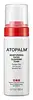 Key Ingredients
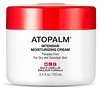
Benefits
Concerns
Ingredients Side-by-side
Water
Skin ConditioningPotassium Cocoyl Glutamate
Surfactant
Disodium Cocoamphodiacetate
CleansingDisodium Lauryl Sulfosuccinate
CleansingDecyl Glucoside
Cleansing
Glycerin
Humectant


Betaine
Humectant
Sodium Lactate
Buffering
Caprylyl Glycol
Emollient
Potassium Sorbate
Preservative
Citric Acid
Buffering


Citrus Aurantium Amara Fruit Extract
Skin ConditioningLactic Acid
Buffering





Sodium Hyaluronate
Humectant

Myristoyl/Palmitoyl Oxostearamide/Arachamide Mea
Skin ConditioningParfum
Masking

Water, Potassium Cocoyl Glutamate, Disodium Cocoamphodiacetate, Disodium Lauryl Sulfosuccinate, Decyl Glucoside, Glycerin, Betaine, Sodium Lactate, Caprylyl Glycol, Potassium Sorbate, Citric Acid, Citrus Aurantium Amara Fruit Extract, Lactic Acid, Sodium Hyaluronate, Myristoyl/Palmitoyl Oxostearamide/Arachamide Mea, Parfum
Water
Skin ConditioningGlycerin
Humectant
Propanediol
Solvent
Myristoyl/Palmitoyl Oxostearamide/Arachamide Mea
Skin ConditioningCaprylic/Capric Triglyceride
Masking
Cetearyl Alcohol
Emollient


Glyceryl Stearate
Emollient
Polyglyceryl-10 Distearate
Emulsifying
Vitis Vinifera Seed Oil
Emollient
Sorbitan Stearate
Emulsifying
Portulaca Oleracea Extract
Skin Conditioning
Dimethicone
Emollient
Hydrogenated Vegetable Oil
Emollient
Olea Europaea Fruit Oil
Masking
Tocopheryl Acetate
Antioxidant

Simmondsia Chinensis Seed Oil
Emollient
Sodium Hyaluronate
Humectant
Phytosterols
Skin Conditioning
Carbomer
Emulsion StabilisingCaprylyl Glycol
Emollient
1,2-Hexanediol
Skin Conditioning
Arginine
Masking
Stearic Acid
Cleansing
Allantoin
Skin Conditioning
Parfum
Masking
Tropolone
Skin ConditioningWater, Glycerin, Propanediol, Myristoyl/Palmitoyl Oxostearamide/Arachamide Mea, Caprylic/Capric Triglyceride, Cetearyl Alcohol, Glyceryl Stearate, Polyglyceryl-10 Distearate, Vitis Vinifera Seed Oil, Sorbitan Stearate, Portulaca Oleracea Extract, Dimethicone, Hydrogenated Vegetable Oil, Olea Europaea Fruit Oil, Tocopheryl Acetate, Simmondsia Chinensis Seed Oil, Sodium Hyaluronate, Phytosterols, Carbomer, Caprylyl Glycol, 1,2-Hexanediol, Arginine, Stearic Acid, Allantoin, Parfum, Tropolone
Ingredients Explained
These ingredients are found in both products.
Ingredients higher up in an ingredient list are typically present in a larger amount.
Caprylyl Glycol is a humectant, skin conditioner, emollient, and preservative booster derived from either caprylic acid or synthetically created.
Typical use levels vary from 0.3-1% as a preservative booster and go up to 2% to condition skin.
Because it is not a free-fatty acid, this ingredient is fungal acne safe (there's nothing for Malassezia to feed on).
Learn more about Caprylyl GlycolGlycerin (or glycerol) is a compound naturally found in your skin. It's a powerhouse humectant that pulls water into the stratum corneum.
Topically, glycerin does several things at once:
Your skin makes glycerin on its own (mostly from sebaceous oil breakdown) and shuttles it to your outermost layer of skin, or your epidermis, via aquaporin-3.
Aquaporin-3 is a transporter that is essential for normal skin hydration, elasticity, and repair. Interestingly, mice lacking in AQP3 have dry and less elastic skin that can be fully corrected with glycerin.
This ingredient is non-irritating, plays well with almost every ingredient, and works across all skin types. Typical use is anywhere between 3-10% but can go up to 79% in some leave-on products.
Just know very high concentrations (>40%) can feel tacky in low humidity.
Glycerin is the name for this ingredient in American English. British English uses Glycerol/Glycerine.
Learn more about GlycerinMyristoyl/Palmitoyl Oxostearamide/Arachamide Mea (M/PO/AM) is a synthetic pseudoceramide; it's basically a lab-made ingredient designed to mimic the ceramides that your skin naturally produces.
What makes this ingredient special? It is connected to something called multi-lamellar emulsion (MLE) technology.
Your skin's outermost layer (stratum corneum) is often described as a "brick wall" where skin cells are bricks and lipids hold everything together. Your lipids are Ceramides, Cholesterol, and free fatty acids.
These fatty acids are not just randomly squished together. They're arranged in very specific layered (lamellar) structures. Your barrier suffers when the layer structure gets disrupted from things like eczema, harsh weather, or over-exfoliating.
M/PO/AM is formulated within MLE technology to closely replicate your skin's natural layers, setting it apart from other ceramides.
The research behind M/PO/AM is pretty solid for eczema, aka atopic dermatitis. A 2003 study on children with eczema found that an MLE cream containing M/PO/AM outperformed a standard urea-based moisturizer. The study also found a 31-35% decrease in severity index compared to smaller improvements from the control cream.
Recently, a 2024 trial found that combining M/PO/AM with topical corticosteroid led to better outcomes than using the steroid alone. The trial noted improvements in skin hydration, dryness, itching, and quality of life scores.
Research has also shown that M/PO/AM can help reduce barrier-damaging side effects of long term topical steroid use.
This ingredient also goes by the trade name PC-9S. No notable allergy concerns have been flagged for this ingredient in the published literature.
Learn more about Myristoyl/Palmitoyl Oxostearamide/Arachamide MeaParfum is a catch-all term for an ingredient or more that is used to give a scent to products.
Also called "fragrance", this ingredient can be a blend of hundreds of chemicals or plant oils. This means every product with "fragrance" or "parfum" in the ingredients list is a different mixture.
For instance, Habanolide is a proprietary trade name for a specific aroma chemical. When used as a fragrance ingredient in cosmetics, most aroma chemicals fall under the broad labeling category of “FRAGRANCE” or “PARFUM” according to EU and US regulations.
The term 'parfum' or 'fragrance' is not regulated in many countries. In many cases, it is up to the brand to define this term.
For instance, many brands choose to label themselves as "fragrance-free" because they are not using synthetic fragrances. However, their products may still contain ingredients such as essential oils that are considered a fragrance by INCI standards.
One example is Calendula flower extract. Calendula is an essential oil that still imparts a scent or 'fragrance'.
Depending on the blend, the ingredients in the mixture can cause allergies and sensitivities on the skin. Some ingredients that are known EU allergens include linalool and citronellol.
Parfum can also be used to mask or cover an unpleasant scent.
The bottom line is: not all fragrances/parfum/ingredients are created equally. If you are worried about fragrances, we recommend taking a closer look at an ingredient. And of course, we always recommend speaking with a professional.
Learn more about ParfumSodium Hyaluronate is the salt form of hyaluronic acid. It is a long sugar chain that is naturally found in your skin, joints, and connective tissue that maintains hydration and elasticity.
In skincare, it works as a humectant. It pulls water from the environment and deeper layers of skin and binds it to the surface.
Interestingly, the size of the molecule affects its behavior:
Some clinical evidence links low molecular weight versions to improved wrinkle depth, elasticity, anti-inflammatory effects, and barrier repair.
Many serums use a blend of both weights so you can get surface hydration plus longer-lasting and deeper effects.
You'll typically see concentrations between 0.1-2% for this ingredient.
Learn more about Sodium HyaluronateWater. It's the most common cosmetic ingredient of all. You'll usually see it at the top of ingredient lists, meaning that it makes up the largest part of the product.
So why is it so popular? Water most often acts as a solvent - this means that it helps dissolve other ingredients into the formulation.
You'll also recognize water as that liquid we all need to stay alive. If you see this, drink a glass of water. Remember to stay hydrated!
Learn more about Water

