V 10 Plus Ceramide Cleansing Gel
A face cleanser with 30 ingredients.
This mild gel cleanser is made to cleanse while respecting your skin barrier.
We independently verify ingredients, backed by peer-reviewed research. Suggest an update.
What's inside
Ingredients List
Water
Skin ConditioningGlycerin
Humectant


Sodium Methyl Cocoyl Taurate
Cleansing
Butylene Glycol
Humectant
PEG-20
HumectantCocamide DEA
Emulsifying
Arginine
Masking
Acrylates/C10-30 Alkyl Acrylate Crosspolymer
Emulsion StabilisingHydroxyethylcellulose
Emulsion StabilisingCellulose
Absorbent
Bisabolol
Antioxidant


Phenoxyethanol
Preservative
Dipotassium Glycyrrhizate
Humectant
Sapindus Mukorossi Peel Extract
Skin ConditioningEtidronic Acid
ChelatingCoix Lacryma-Jobi Ma-Yuen Seed Extract
Skin ConditioningPhospholipids
Skin Conditioning
Chamomilla Recutita Flower Extract
Masking
Sphingolipids
Emollient
Nasturtium Officinale Extract
Perfuming
Allium Sativum Bulb Extract
Skin ConditioningArnica Montana Flower Extract
Masking
Rosmarinus Officinalis Leaf Extract
AntimicrobialHedera Helix Extract
AntimicrobialLamium Album Flower Extract
AstringentArctium Lappa Root Extract
Skin Conditioning
Pinus Sylvestris Cone Extract
Masking
Anthemis Nobilis Flower Extract
Masking
Disodium EDTA
ChelatingMentha Arvensis Leaf Oil
Masking

Water, Glycerin, Sodium Methyl Cocoyl Taurate, Butylene Glycol, PEG-20, Cocamide DEA, Arginine, Acrylates/C10-30 Alkyl Acrylate Crosspolymer, Hydroxyethylcellulose, Cellulose, Bisabolol, Phenoxyethanol, Dipotassium Glycyrrhizate, Sapindus Mukorossi Peel Extract, Etidronic Acid, Coix Lacryma-Jobi Ma-Yuen Seed Extract, Phospholipids, Chamomilla Recutita Flower Extract, Sphingolipids, Nasturtium Officinale Extract, Allium Sativum Bulb Extract, Arnica Montana Flower Extract, Rosmarinus Officinalis Leaf Extract, Hedera Helix Extract, Lamium Album Flower Extract, Arctium Lappa Root Extract, Pinus Sylvestris Cone Extract, Anthemis Nobilis Flower Extract, Disodium EDTA, Mentha Arvensis Leaf Oil
Key Ingredients
Benefits
Concerns
Ingredients Explained
Water. It's the most common cosmetic ingredient of all. You'll usually see it at the top of ingredient lists, meaning that it makes up the largest part of the product.
So why is it so popular? Water most often acts as a solvent - this means that it helps dissolve other ingredients into the formulation.
You'll also recognize water as that liquid we all need to stay alive. If you see this, drink a glass of water. Remember to stay hydrated!
Learn more about WaterGlycerin (or glycerol) is a compound naturally found in your skin. It's a powerhouse humectant that pulls water into the stratum corneum.
Topically, glycerin does several things at once:
Your skin makes glycerin on its own (mostly from sebaceous oil breakdown) and shuttles it to your outermost layer of skin, or your epidermis, via aquaporin-3.
Aquaporin-3 is a transporter that is essential for normal skin hydration, elasticity, and repair. Interestingly, mice lacking in AQP3 have dry and less elastic skin that can be fully corrected with glycerin.
This ingredient is non-irritating, plays well with almost every ingredient, and works across all skin types. Typical use is anywhere between 3-10% but can go up to 79% in some leave-on products.
Just know very high concentrations (>40%) can feel tacky in low humidity.
Glycerin is the name for this ingredient in American English. British English uses Glycerol/Glycerine.
Learn more about GlycerinSodium Methyl Cocoyl Taurate is a gentle, coconut-derived cleansing surfactant. It's most commonly found in "sulfate-free" cleansers.
As a taurate, it belongs to a class of anionic surfactants prized for being efficient at cleansing without harshness, good performance in hard water, stability across a wide pH range, and easily biodegradable.
It is able to lift away oil and grime and make a nice lather without stripping your skin, so it's a good pick for sensitive skin.
Safety-wise, it has a good record. The CIR Expert Panel has concluded this ingredient to be safe in cosmetics and concentrations go up to 11% in leave-on products or 13% in rinse-off products.
Despite being derived from coconut oil, this ingredient is fungal acne safe. It's a water-soluble surfactant with no fatty oils or esters left intact on skin for the Malassezia yeast to feed.
Learn more about Sodium Methyl Cocoyl TaurateButylene Glycol (or BG) is used within cosmetic products for a few different reasons:
Overall, Butylene Glycol is a safe and well-rounded ingredient that works well with other ingredients.
Though this ingredient works well with most skin types, some people with sensitive skin may experience a reaction such as allergic rashes, closed comedones, or itchiness.
Learn more about Butylene GlycolWe don't have a description for PEG-20 yet.
Cocamide DEA is a coconut-derived cleansing agent that creates rich foam and helps to thicken the consistency of cleansing products.
This ingredient effectively removes dirt and oil while helping to stabilize formulations, making it a common addition to shampoos, body washes, and facial cleansers.
It has become less popular in recent formulations due to potential irritation in sensitive skin types and concerns about trace amounts of diethanolamine (DEA), which can potentially form nitrosamines.
While still considered safe at regulated concentrations, many manufacturers now opt for gentler alternatives like cocamidopropyl betaine or other surfactants that offer similar benefits with fewer potential drawbacks.
Learn more about Cocamide DEAArginine is a semi-essential amino acid. This just means our bodies can product a bit on its own, but sometimes needs a little boost from food sources.
It is a part of your skin's natural moisturizing factor (NMF), or the water-loving molecules in your outermost layer of skin (stratum corneum) that keeps everything hydrated and happy.
Here's an interesting thing about Arginine: your skin converts it into urea through the Krebs-Henseleit urea cycle. Urea is one of the most effective humectants your skin naturally produces.
A clinical study showed applying 2.5% arginine hydrochloride to atopic dermatitis skin showed significant urea levels in the stratum corneum and improved moisture in just four weeks.
Arginine is also a precursor to nitric oxide; nitric oxide improves microcirculation and supports wound healing and collagen synthesis.
One study found that an amino acid complex containing Arginine reduced skin irritation, improved hydration, and accelerated skin repair in clinical / in-vivo studies.
Arginine itself is an amino acid and not a fatty acid, oil, or ester. On its own, it's not a direct food source for Malassezia, or the yeast that causes fungal acne.
Learn more about ArginineAcrylates/C10-30 Alkyl Acrylate Crosspolymer is a synthetic polymer. It is used to thicken, emulsify, and improve the texture of products.
As an emulsifier, it helps stabilize oil-in-water emulsions to give products an elegant feel when applied.
It can also form a thin protective film on skin. One study found that a formula using this polymer helped slow down how quickly other ingredients (like DEET) were absorbed through skin.
A 2024 study of over 1,300 patients confirmed that sensitization to this ingredient is rare. It is also non-mutagenic and has a clean track record.
Learn more about Acrylates/C10-30 Alkyl Acrylate CrosspolymerHydroxyethylcellulose is used to improve the texture of products. It is created from a chemical reaction involving ethylene oxide and alkali-cellulose. Cellulose is a sugar found in plant cell walls and help give plants structure.
This ingredient helps stabilize products by preventing ingredients from separating. It can also help thicken the texture of a product.
This ingredient can also be found in pill medicines to help our bodies digest other ingredients.
Learn more about HydroxyethylcelluloseCellulose is the main component of plant cell walls. It is used as an emulsifier, absorbent, and texture enhancer.
This ingredient has many functions:
Fun fact: Cellulose is the most abundant form of organic polymer on Earth.
Learn more about CelluloseBisabolol is a gentle skin conditioner, antioxidant, and soothing ingredient.
It's primary claim to fame is soothing and research shows topically applied bisabolol can quiet the chemical messengers that cause your skin to become inflamed, helping to sooth any irritation.
A clinical study found that applying 0.5% bisabolol daily for 8 weeks produced an average 9% decrease in skin pigmentation. Researchers found it can also suppress the process that leads to excess melanin production in skin.
In vitro studies found that bisabolol combined with propylene glycol significantly increased skin permeability by increasing lipid fluidity in the stratum corneum.
You'll likely see use concentrations quite low, usually 0.1-0.2%.
Overall, this is a well-tolerated ingredient that works well in formulas designed for sensitive, reactive, or post-procedure skin.
Learn more about BisabololPhenoxyethanol is one of the most widely used preservatives in skincare (and for good reason!).
It has a large spectrum of antimicrobial activity and especially effective bacteria, yeast, and mold while only having a weak effect on your skin's natural microbiome.
On a cellular level, it disrupts the cell membranes of microbes by poking holes that make the cell leak. This shuts down the chemical reactions the microbe needs to make energy so it can no longer survive.
Another perk of this ingredient is that it stays functional across a wide pH range (3-10).
You'll often see it paired with boosters like Ethylhexylglycerin; one study showed that a 1:9 ratio of Ethylhexylglycerin to Phenoxyethanol damages bacterial membranes as effectively as doubling the Phenoxyethanol concentration on its own.
Typical use concentrations range from 0.3-1% depending on the formula, and this ingredient is capped at 1% int the EU.
Safety-wise, the fear mongering does not hold up to the evidence. The EU's Scientific Committee on Consumer Safety and FDA consider it safe as a preservative at up to 1%, including for children of all ages.
Adverse systemic effects only showed up in animal studies at exposures roughly 200x higher than what people get from cosmetics. And despite its very widespread use, this ingredient is a rare sensitizer and allergic reactions are uncommon.
Learn more about PhenoxyethanolDipotassium Glycyrrhizate comes from licorice root.
Extracts of licorice have demonstrated to have antibacterial, anti‐inflammatory, antiviral, antioxidant properties.
One component, glabridin, has extra potent antioxidant and soothing properties. It has also been found to block pigmentation from UVB rays in guinea pigs.
Licorice Root also contains a flavonoid. Flavonoids are a natural substance from in plants. Flavonoids also have antioxidant properties.
Another component, glycyrrhizin, has been found to have anti-inflammatory and antimicrobial benefits. This may make licorice root extract effective at treating acne. However, more research is needed to support this.
Liquiritin is one of the flavone compounds found in licorice. It has been found to help lighten skin by preventing tyrosinase from reacting with tyrosine. When the two react, protein is converted to melanin. Melanin is the substance in your body that gives your features pigmentation.
Licorice root is native to Southern Europe and Asia. It has been used in traditional Chinese medicine to help with respiratory issues.
Learn more about Dipotassium GlycyrrhizateWe don't have a description for Sapindus Mukorossi Peel Extract yet.
We don't have a description for Etidronic Acid yet.
You might know this plant as Job's Tears or Chinese pearl barley. It is a grain native to Southeast Asia.
This ingredient has skin conditioning properties. Emerging studies show the grain to exhibit antioxidant and anti-inflammation properties as well. (With one study finding this ingredient to be effective at blocking melanin when skin is exposed to UV).
Job's tears is rich in nutrients, such as thiamine, riboflavin, niacin and ascorbic acid.
You can also find great antioxidants such as ferulic acid, caffeic acid.
To top if off, ceramides are also present in this grain.
Learn more about Coix Lacryma-Jobi Ma-Yuen Seed ExtractPhospholipids are a family of skin-identical lipids that makeup the structural backbone of every cell membrane in your body.
In cosmetics, they function as skin conditioning agents with emulsifier and surfactant properties. They're typically sourced from soybean or sunflower lecithin (or sometimes egg yolk or marine sources).
Because they mirror the lipids naturally found in the deeper layers of your skin, topical phospholipids help reinforce the lipid matrix, reduce transepidermal water loss, and leave skin feeling conditioned.
They're also used to form liposomes, or tiny self-assembling vesible used to stabilize actives like vitamin c or retinol. This helps these ingredients integrate into the upper layers of skin more easily.
Phospholipids are compatible with everything and the CIR Expert Panel has concluded them to be safe at current use levels.
Some types of phospholipids include:
Learn more about PhospholipidsChamomilla Recutita Flower Extract comes from the Chamomile flower.
Chamomile is rich in antioxidants and has anti-inflammatory properties. Several compounds found in chamomile help with soothing, such as bisbolol.
Antioxidant components in chamomile make it an effective ingredient to help slow the signs of aging. Antioxidants help fight free-radical molecules, or molecules that may damage your skin.
Essential oils from chamomile have been found to improve wound healing due to its antimicrobial properties.
Ancient Greeks and Egyptians used Chamomile to treat skin redness and dryness. Chamomile has also been used to help treat stomach issues.
Learn more about Chamomilla Recutita Flower ExtractSphingolipids are a major class of lipids in cell membranes. This ingredient has emollient, skin conditioning, and skin protecting properties.
Certain ceramides are considered sphingolipids (Ceramide NS and Ceramid AP), but not all sphingolipids are ceramides.
This ingredient is also known as watercress extract.
This ingredient is also known as garlic extract.
Arnica Montana Flower is more commonly known as Wolf's Bane. While this flower has been used in traditional medicine, its skin benefits are in question.
The FDA considers Wolf's Bane to be an unsafe herb. They advise against taking it orally or applying it to broken skin.
Wolf's Bane has been said to have anti-inflammatory properties. However, studies are conflicting about whether this is true.
According to the Final report on the safety assessment of Arnica montana, this plant has not been found to cause dermal irritation.
This flower contains numerous fatty acids such as palmitic, linoleic, myristic, and linolenic acids. The presence and amount of fatty acids depends on where the flower is harvested.
Like other flowers, this ingredient has a natural fragrance. It can also be used to mask, or cover, the unpleasant scents from other ingredients.
Learn more about Arnica Montana Flower ExtractThis is a botanical extract from the rosemary plant (the same one you cook with). In skincare, it mostly works as a skin conditioning agent.
Its activity comes from a handful of polyphenols, carnosic acid, carnosol, and rosmarinic acid. Almost 90% of the antioxidant activity of this ingredient can be attributed to canosol and carnosic acid.
These compounds protect your skin two ways:
1) They fight off free radicals, or the unstable molecules from things like sun and pollution that age and damage skin.
2) They help calm inflammation by switching off the chemical signals that tell skin to get red and irritated.
Lab studies also suggest that rosmarinic acid may help protect collagen and slow sugar-related damage to it.
The Cosmetic Ingredient Review has concluded rosemary-derived ingredients to be safe when formulated to be non-sensitizing.
Rosemary can occasionally cause allergic contact dermatitis (due to carnosol), so be sure to patch test if you have reactive or fragrance-sensitive skin.
Learn more about Rosmarinus Officinalis Leaf ExtractWe don't have a description for Hedera Helix Extract yet.
We don't have a description for Lamium Album Flower Extract yet.
Arctium Lappa Root Extract is from the burdock plant. It is a botanical extract with skin conditioning and soothing properties.
Burdock root contains polyphenols that have anti-inflammatory and antioxidant activity. This can help explain why it's used to calm irritated or red skin.
Evidence in humans is limited to the non-root parts of this plant; topical arctium fruit extract showed improvements in dermal extracellular matrix metabolism and visible wrinkles.
Learn more about Arctium Lappa Root ExtractPinus Sylvestris Cone Extract is a fragrance.
Anthemis Nobilis Flower Extract is from the Roman Chamomile flower. It helps soothe the skin and contains antioxidants.
Disodium EDTA is a chelating agent. It grabs onto and deactivates metal ions that sneak into your products from water, packaging, or air.
This ingredient mainly works behind the scenes and helps with:
On top of that, this ingredient can counteract the effects of hard water by binding to the minerals in it.
One thing worth knowing is that Disodium EDTA has been shown to be a mild penetration enhancer. It can help other ingredients absorb into skin more effectively which can be a double-edged sword (great for actives, but can also make the active too strong if you have sensitive skin).
Clinical patch testing showed no significant skin irritation at typical use concentrations and minimal dermal absorption.
You'll most likely see this ingredient near the end of an ingredient list. It's typically found in concentrations less than 1%.
Learn more about Disodium EDTAThis ingredient is the essential oil from the leaves of cornmint. It is one of the richest natural sources of menthol on our planet (about 70-78%).
In cosmetics, this ingredient mostly works as a fragrance and/or masking agent used to cover up unpleasant smells of other ingredients.
The "cooling" sensation from mint isn't a real temperature change; menthol actives a nerve receptor in skin that gets triggered by cold. Your brain essentially gets a "cool" signal from it.
Just so you know, allergic contact dermatitis to menthol is documented in literature (but it's kind of uncommon). This is why the percentages allowed in leave-on products are quite low (0.2%). Be sure to patch test if you have sensitive skin.
Though this ingredient is not listed as an EU allergen, it's cousins (Mentha Piperita Oil, menthol and Mentha Viridis Leaf Oil) are.
Due to the high Menthol content of this ingredient, brands are required to label "menthol" as a separate ingredient on the list. The EU regulation labels the allergenic substance, not just the source ingredient, so the menthol carried in this ingredient still has to be declared.
Learn more about Mentha Arvensis Leaf OilReviews
Recent searches
Search reviews by skin type, ingredient, or keyword.
Where it's from
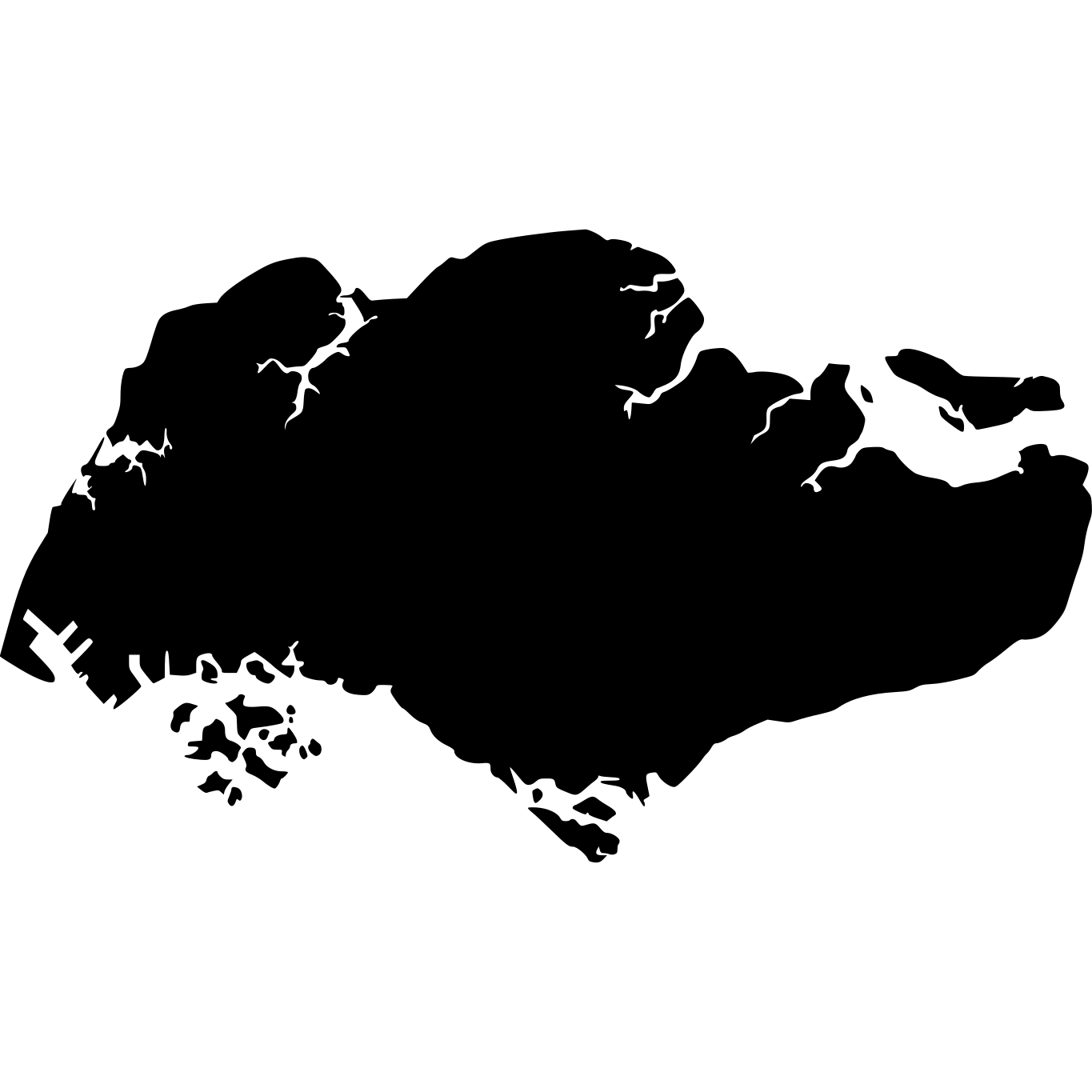
V 10 Plus is a Singaporean brand

We're dedicated to providing you with the most up-to-date and science-backed ingredient info out there.
The data we've presented on this page has been verified by a member of the SkinSort Team.
Read more about us· Updated July 11, 2026 • Added by marjoriewong1


