Gentle Hour Call It A Day Cleansing Balm
A makeup remover with 26 ingredients, including exfoliants.
This oil-based makeup remover is made to dissolve makeup, sunscreen, and daily buildup.
Worth noting
Contains EU-listed fragrance allergens, including Jasminum Officinale Flower Extract and Lavandula Angustifolia Flower Extract.
We independently verify ingredients, backed by peer-reviewed research. Suggest an update.
What's inside
Ingredients List
Cetearyl Ethylhexanoate
Emollient

PEG-20 Glyceryl Triisostearate
Emollient
Caprylic/Capric Triglyceride
Masking


PEG-10 Stearate
EmulsifyingPolyethylene
Abrasive

C12-15 Alkyl Benzoate
AntimicrobialPersea Gratissima Oil
Skin Conditioning

Ricinus Communis Seed Oil
Masking
Prunus Amygdalus Dulcis Oil
Skin Conditioning
Glycine Soja Oil
Emollient


Jasminum Officinale Flower Extract
Masking

Paeonia Officinalis Flower Extract
TonicPrunus Serrulata Flower Extract
Skin ConditioningCitrus Aurantium Amara Flower Extract
RefreshingLavandula Angustifolia Flower Extract
Cleansing
Sambucus Nigra Flower Extract
RefreshingRosa Damascena Flower Oil
Masking
Helianthus Annuus Seed Oil
Emollient
Rosa Canina Fruit Oil
Emollient
Pelargonium Graveolens Flower Oil
Masking
Citrus Sinensis Peel Oil Expressed
Perfuming
Ubiquinone
Antioxidant

Curcuma Longa Root Extract
Antioxidant
Curcuma Xanthorrhiza Root Extract
Bisabolol
Antioxidant
CI 61565
Cosmetic ColorantCetearyl Ethylhexanoate, PEG-20 Glyceryl Triisostearate, Caprylic/Capric Triglyceride, PEG-10 Stearate, Polyethylene, C12-15 Alkyl Benzoate, Persea Gratissima Oil, Ricinus Communis Seed Oil, Prunus Amygdalus Dulcis Oil, Glycine Soja Oil, Jasminum Officinale Flower Extract, Paeonia Officinalis Flower Extract, Prunus Serrulata Flower Extract, Citrus Aurantium Amara Flower Extract, Lavandula Angustifolia Flower Extract, Sambucus Nigra Flower Extract, Rosa Damascena Flower Oil, Helianthus Annuus Seed Oil, Rosa Canina Fruit Oil, Pelargonium Graveolens Flower Oil, Citrus Sinensis Peel Oil Expressed, Ubiquinone, Curcuma Longa Root Extract, Curcuma Xanthorrhiza Root Extract, Bisabolol, CI 61565
Key Ingredients
Benefits
Concerns
Ingredients Explained
Cetearyl Ethylhexanoate is derived from cetearyl alcohol and sorbic acid.
It is an emollient and helps hydrate the skin. Emollients form a barrier on the skin to prevent water from escaping.
PEG-20 Glyceryl Triisostearate is a synthetic, oil-loving helper ingredient that does two jobs:
This ingredient is made by joining three building blocks: PEG, Isostearic Acid and glycerin. The PEG gives it the oil-and-water blending power.
This ingredient has been found safe for use in cosmetics and broader PEG family testing shows minimal irritation/sensitization. The molecule's large size also means it isn't expected to penetrate skin to any meaningful degree.
Fungal acne note: This ingredient may not be fungal acne safe due to isostearic acid (C18). Isostearic acid falls into the C11-24 range that Malassezia can feed on.
Learn more about PEG-20 Glyceryl TriisostearateCaprylic/Capric Triglyceride (aka MCT Oil) is a lightweight emollient, solvent, and texture enhancer. It is considered a skin-softener by helping to prevent moisture loss.
Though it behaves like an oil, it is not technically one due to its chemical composition. One perk of this ingredient is that it is very stable, resistant to oxidation, and unlikely to go rancid.
In practice, that translates to a long shelf life and a consistently elegant skin feel.
While there is an assumption Caprylic Triglyceride can clog pores due to it being derived from coconut oil, there is no research supporting this. Just patch test if you have concerns.
Fractionated coconut oil and MCT Oil are both listed as Caprylic/Capric Triglyceride according to INCI. This is because INCI names are based on the ingredient’s final chemical composition and not its marketing name or source.
This ingredient is treated as the gold standard fungal acne safe oil. Even though it is coconut derived, the problematic lauric acid is stripped out.
This leaves just caprylic (C8) and capric (C10) acid. These chain lengths actually trend antifungal; a 2020 study found caprylic acid was enough to disrupt Malassezia furfur cell membrane, with a caprylic acid derivative damaging membrane structures at concentrations as low as 0.2%.
Learn more about Caprylic/Capric TriglycerideWe don't have a description for PEG-10 Stearate yet.
Polyethylene is a synthetic ingredient that helps the skin retain moisture. It is a polymer.
It is also typically used within product formulations to help bind solid ingredients together and thicken oil-based ingredients. When added to balms and emulsions, it helps increase the melting point temperature.
C12-15 Alkyl Benzoate is a lightweight emollient made by combinig benzoic acid with fatty alcohols that are 12-15 carbons long.
In cosmetics, it plays several roles:
The Cosmetic Review Expert Panel has concluded the alkyl benzoate group to be safe as used in cosmetics; it wasn't found to be a skin irritant and unlikely to be absorbed due to its low water solubility.
This report recorded almost 1000 reported uses with concentrations up to 59% in leave-on products but your cosmetics will typically use 0.5-15% depending on the product.
It's often called a "SPF booster": this is because it keeps UV filters properly dissolved and evenly distributed to support a sunscreen's performance. It doesn't actually raise SPF on its own.
Overall, this ingredient is well tolerated.
This ingredient is fungal acne safe because it is an ester of benzoic acid.
Think of this ingredient as two parts stuck together: an oily part and an acid part. Malassezia only gets a meal when it can snip off a fatty acid to eat. With C12-15 Alkyl Benzoate, the acid part is benzoic acid, which isn't a fatty acid and which the yeast can't use as food.
Benzoic acid is actually used as a preservative to stop yeast from growing.
The oily part is a blend of C12-15 fatty alcohols but fatty alcohols in this size range can support only a little Malassezia growth (mostly for one species of Malassezia as well).
In the ingredient, those alcohols stay locked inside the molecule. The yeast can only reach them by snipping the benzoate bond, and that type of bond is harder for it to cut than a normal fatty bond.
So not much gets released. And whatever does get snipped comes packaged with benzoic acid, which discourages yeast growth.
Learn more about C12-15 Alkyl BenzoateThis ingredient is also known as Avocado oil. It's the cold-pressed oil from the flesh of the avocado fruit packed with fatty acids (mostly oleic acid).
The rich fatty acid profile allows it to function as a skin conditioning agent and emollient; it helps soften and smooth skin while reducing water loss.
Preclinical research has found that topical avocado oil increased collagen synthesis and reduced inflammation during wound healing, giving it some skin-repairing credibility.
The unsaponifiable fraction of the oil is also interesting: studies on avocado unsaponifiables showed that it helped skin produce more collagen and other structural compounds that support healing.
The CIR Expert Panel has found this ingredient to be non-irritating in formulations.
It's a great ingredient for dry or compromised skin. Just know it may not be fungal acne safe. This is because the oleic acid content falls within the range that Malassezia can use as a food source.
Learn more about Persea Gratissima OilThis ingredient is also known as castor oil. It is a skin conditioning ingredient.
The star component of castor oil is ricinoleic acid, an unusual fatty acid that makes up ~80-92% of its composition.
In skincare, it is an emollient that dries down to a solid film with water-binding properties. This helps keep skin hydrated and helps reduce transepidermal water loss (TEWL).
A 2026 dermatology review pulls together its broader uses:
Human clinical testing found this ingredient to be non-irritating and non-sensitizing.
Because castor oil contains fatty acids in the C11-24 range, this ingredient may not be fungal acne safe.
At this time, the literature does not support castor oil in regrowing hair. A 2022 systematic review found no strong evidence that it supports hair growth and only weak evidence that it improves hair shine.
Castor oil itself carries "perfuming" and "masking" function tags according to the official CosIng database. This is because of its mild odor and odor-dampening properties.
Learn more about Ricinus Communis Seed OilThis ingredient is also known as sweet almond oil. It is a lightweight, cold-pressed oil from the ripe seeds of the sweet almond tree.
Sweet almond oil is rich in skin-nourishing fatty acids such as oleic acid (55-86%) and linolenic acid (7-35%).
As an emollient, it softens and hydrates skin by forming a thin barrier that locks in moisture.
Clinical studies have found it to be non-irritating and non-sensitizing. The CIR Expert Panel has evaluated the available safety data and concluded it is safe for topical use.
Because of the oleic acid content, this ingredient may not be fungal acne safe.
Learn more about Prunus Amygdalus Dulcis OilGlycine Soja Oil is a plant-derived oil from soybean seeds. Like other oils, it is rich in essential fatty acids (mostly linoleic and oleic) that support skin hydration and barrier function.
The fatty acids are able to integrate into the lipid matrix of the stratum corneum to help soften skin and reduce water loss.
On top of that, soybean oil is rich in vitamins like vitamin E, a potent antioxidant.
Research on soybean's active components also point to anti-inflammatory, collagen-stimulating, antioxidant activity, and protection against UV-induced oxidative damage.
Most of this research applies to the broader soybean plant and not just the oil fraction alone.
This ingredient does carry a comedogenic rating of 3 from the old rabbit-ear assay. Just remember testing finished products in humans showed that formulas built with "comedogenic" ingredients are not necessarily comedogenic themselves. It's worth patch testing if you're breakout prone, and always listen to your skin.
This ingredient may not be fungal acne safe due to the oleic acid content.
Learn more about Glycine Soja OilJasmine flower extract is a fragrance. The flower also has antioxidant and antimicrobial properties.
The antioxidant activity in Jasmine comes from flavonoids - a compound found in many plants. While antioxidants are great - Jasmine flowers also contain coumarin, a known EU allergen.
This ingredient can also help mask unpleasant scents from other ingredients.
Learn more about Jasminum Officinale Flower ExtractThis ingredient is derived from the Peony flower's petals.
Chemically, it contains a mix of antioxidant compounds like polyphenols, flavonoids, and tannins. These compounds are known to neutralize free radicals and soothe inflammatory signaling in skin cells.
In lab studies, peony flower extracts show antioxidant activity and can reduce stress response in keratinocytes, the main skin cell found in the epidermis.
Learn more about Paeonia Officinalis Flower ExtractThis ingredient comes from the flowers of the cherry blossom tree native to Japan, Korea, China, and Vietnam.
This ingredient is known as bitter orange blossom or neroli flower extract. It is mainly used for its soft floral scent.
The flowers naturally contain plant antioxidants and soothing compounds that have shown calming, antioxidant, and mild brightening-related effects in lab studies.
It is generally considered low risk when used at the small amounts typical in cosmetics. However, it may still bother fragrance-sensitive skin because it’s a fragrant botanical.
Unlike some citrus peel oils, bitter orange flower extracts are not usually linked to sun sensitivity.
Learn more about Citrus Aurantium Amara Flower ExtractLavandula Angustifolia Flower Extract comes from the lavender plant.
Many components of lavender flowers are antioxidants, such as ferulic acid, caffeic acid, and several flavonoids.
Traditional Iranian folk medicine uses Lavender extract to help treat inflammation.
Lavender extract may have a scent.
It contains linalool, a known allergen. However, lavender extract contains less linalool than lavender essential oil.
Learn more about Lavandula Angustifolia Flower ExtractSambucus Nigra Flower Extract comes from the European Elder Tree. It's a polyphenol-rich extract that give it antioxidant, skin soothing, and tonic properties.
In-vitro studies show elder extracts can inhibit collagenase (or the enzyme that degrades collagen), including the ones triggered by UV damage from the sun.
This ingredient is generally well-tolerated unless you have a known elder or Adoxaceae allergy.
Learn more about Sambucus Nigra Flower ExtractRosa Damascena Flower Oil is an essential oil made from the Damask Rose. It is often used as a fragrance in cosmetics.
Rose Oil has antibacterial and antioxidant properties due to its terpene, glycoside, flavonoid, anthocyanin, and Vitamin C content.
Other major parts of Rose Oil include citronellol and geraniol. Both of these are known EU allergens and cause contact-allergies.
The downsides of this ingredient outweight the positives.
Learn more about Rosa Damascena Flower OilHelianthus Annuus Seed Oil is a plant oil derived from the seeds of a sunflower.
It is rich in fatty acids, primarily linoleic acid and oleic acid. This gives it emollient and skin conditioning properties.
The reason this ingredient is so effective is because it forms a thin film on the skin that reduces transepidermal water loss (TEWL) while supplying linoleic acid to the stratum corneum to improve barrier strength.
The high linoleic acid content is particularly noteworthy for acne-prone skin.
Research suggests that acne-prone skin tends to be deficient in linoleic acid in sebum. Topical application may help replenish this to support a healthier follicular environment and less comedone-promoting sebum.
One randomized study found sunflower seed oil preserved skin barrier integrity in adult volunteers with and without atopic dermatitis (outperforming olive oil).
This ingredient is well-studied, gentle, and an effective emollient suitable for most skin types.
On fungal acne: This ingredient may not be Fungal acne (Malassezia folliculitis) safe. This is because it contains fatty acids with carbon chain lengths in the C11-C24 range.
Learn more about Helianthus Annuus Seed OilRosa Canina Fruit Oil is a non-fragrant plant oil that has earned its skincare reputation through chemistry.
It's dominated by fatty acids like linoleic acid (~35-55%), alpha-linolenic acid (~17-27%), and oleic acid (~14-22%). This is the exact profile that supports skin barrier, locks in hydration, and calms inflammation.
A 2024 review found evidence for the Rosa canina species supports its use for scarring, hyperpigmentation, wrinkles, and atopic dermatitis; this was mostly credited to its vitamin C content and fatty acid composition as the primary active mechanisms.
You might see this ingredient marketed as a "natural retinol". Some rosehip seed oils contains traces of all-trans-retinoic acid but these trace amounts are far below biologically active levels.
The Cosmetic Ingredient Review Panel has deemed this ingredient safe and it's well-tolerated.
Fungal acne: The fatty acids of this oil fall into the C11-24 range that Malassezia yeast can metabolize, so this ingredient may not be fungal acne safe.
Learn more about Rosa Canina Fruit OilPelargonium Graveolens Flower Oil is the pressed oil of the Rose Geranium plant. It is volatile, meaning it evaporates off the skin.
Fragrant components of Rose Geranium include citronellol and geraniol. These may cause allergies and skin-sensitivity. We recommend speaking with a professional if you have any concerns.
The scent of Rose Geranium closely resembles traditional roses.
Learn more about Pelargonium Graveolens Flower OilSweet orange peel oil is made by cold-pressing the peel of a sweet orange to squeeze out its naturally fragrant oil. In skincare, it's mostly used to give products a fresh, citrusy scent.
It's generally considered safe, but citrus peel naturally contains compounds called furocoumarins. These become phototoxic when exposed to UV - meaning they react with sunlight in a way that can irritate or damage skin.
At higher concentrations, that reaction can lead to sun sensitivity, irritation, or dermatitis (red, inflamed skin). If your skin is sensitive, it's worth being a little cautious with fragrant citrus oils like this one.
Learn more about Citrus Sinensis Peel Oil ExpressedUbiquinone (Coenzyme Q10) is a molecule already found in our bodies. It is a potent antioxidant and skin-soothing ingredient.
Aging and environmental exposure diminishes our skin's natural ubiquinone levels. This is much like our natural collagen and elastin.
The good news is: studies show applying this ingredient topically replenishes ubiquinone levels in our skin. This also comes with a ton of skin benefits. These benefits include:
Ubiquinone is considered a large molecule and cannot be absorbed into the lower layers of skin. This is why it is believed to be such an effective antioxidant: it protects our skin in the upper layers and prevents damage in the deeper layers.
When used in sunscreen, ubiquinone is shown to increase ingredient stability, increase SPF factor, and add to infrared protection.
Fun fact: ubiquinone is fat-soluble.
Learn more about UbiquinoneCurcuma Longa Root Extract comes from the rhizome (underground stem) of the turmeric plant.
While the official EU Cosing Database lists this ingredient as a fragrance, it actually does more than give products a scent.
This ingredient contains a group of yellow pigments called curcuminoids (mostly curcumin) that give it genuine antioxidant and anti-inflammatory activity in skin.
Reviews of topical clinical studies have found turmeric/curcumin to be generally well-tolerated and useful across conditions like eczema and mild inflammation.
One thing working in its favor is that curcumin barely penetrates; in lab skin-permeation testing, the curcuminoids mostly stayed in the outermost layer of skin. This is a good thing because its soothing and antioxidant activity is a surface-level job anyway.
At this time, industry data shows there's no single "correct" cosmetic percentage. It's used across a wide range depending on the product and varies from tiny fractions of a percent up to a few percent.
Allergy-wise, curcumin is a documented (but uncommon) contact allergen. It can also cross react with related plants, so anyone with a turmeric/ginger/cinnamon allergy or reactive skin should patch test first.
Learn more about Curcuma Longa Root ExtractWe don't have a description for Curcuma Xanthorrhiza Root Extract yet.
Bisabolol is a gentle skin conditioner, antioxidant, and soothing ingredient.
It's primary claim to fame is soothing and research shows topically applied bisabolol can quiet the chemical messengers that cause your skin to become inflamed, helping to sooth any irritation.
A clinical study found that applying 0.5% bisabolol daily for 8 weeks produced an average 9% decrease in skin pigmentation. Researchers found it can also suppress the process that leads to excess melanin production in skin.
In vitro studies found that bisabolol combined with propylene glycol significantly increased skin permeability by increasing lipid fluidity in the stratum corneum.
You'll likely see use concentrations quite low, usually 0.1-0.2%.
Overall, this is a well-tolerated ingredient that works well in formulas designed for sensitive, reactive, or post-procedure skin.
Learn more about BisabololWe don't have a description for CI 61565 yet.
Reviews
No written reviews yet. Be the first to review this product.
Recent searches
Search reviews by skin type, ingredient, or keyword.
Where it's from
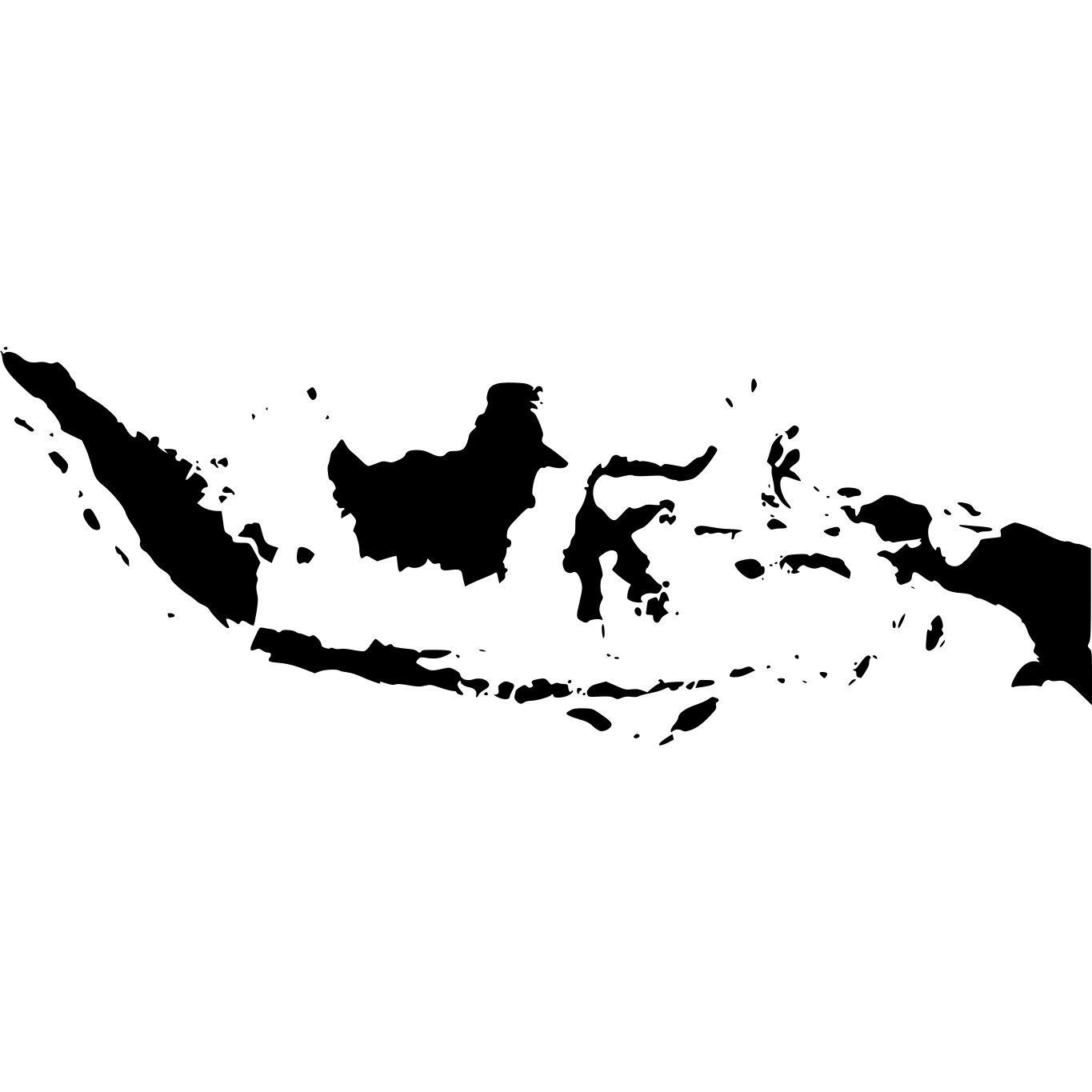
Gentle Hour is a Indonesian brand
Often compared with

We're dedicated to providing you with the most up-to-date and science-backed ingredient info out there.
The data we've presented on this page has been verified by a member of the SkinSort Team.
Read more about us· Updated December 26, 2024 • Added by klaraalexandria


