G.M. Collin Hyaluronic Filler Eye Contour
A eye moisturizer with 33 ingredients.
This eye moisturizer is formulated around Dimethicone and Sodium Lactate to hydrate skin.
Worth noting
Contains EU-listed fragrance allergens, including Hexamethylindanopyran and Tetramethyl Acetyloctahydronaphthalenes.
We independently verify ingredients, backed by peer-reviewed research. Suggest an update.
What's inside
Ingredients List
Chlorhexidine Digluconate
Antimicrobial
Sodium Benzoate
Masking
Potassium Sorbate
Preservative
Phenoxyethanol
Preservative
C12-20 Alkyl Glucoside
EmulsifyingCetyl Alcohol
Emollient



Dimethicone
Emollient

Ammonium Acryloyldimethyltaurate/Vp Copolymer
Polysorbate 20
Emulsifying
Sodium Stearoyl Glutamate
CleansingStearyl Alcohol
Emollient
Polyacrylate Crosspolymer-6
Emulsion StabilisingPolyglyceryl-4 Diisostearate/Polyhydroxystearate/Sebacate
Emulsifying
Parfum
Masking



Sodium Isostearate
CleansingSodium Lactate
Buffering
Steareth-20
CleansingTrihydroxystearin
Skin Conditioning
Ethylene Brassylate
MaskingCarbomer
Emulsion StabilisingCitric Acid
Buffering

Hexamethylindanopyran
Masking
Tetramethyl Acetyloctahydronaphthalenes
Masking
T-Butyl Alcohol
Perfuming

Xanthan Gum
EmulsifyingCaprylyl Glycol
Emollient
Linalyl Acetate
Masking
Sodium Citrate
BufferingGlyceryl Caprylate
EmollientLactic Acid/Glycolic Acid Copolymer
Skin ConditioningPhenylpropanol
Masking
Polyvinyl Alcohol
Biotin
AntiseborrhoeicChlorhexidine Digluconate, Sodium Benzoate, Potassium Sorbate, Phenoxyethanol, C12-20 Alkyl Glucoside, Cetyl Alcohol, Dimethicone, Ammonium Acryloyldimethyltaurate/Vp Copolymer, Polysorbate 20, Sodium Stearoyl Glutamate, Stearyl Alcohol, Polyacrylate Crosspolymer-6, Polyglyceryl-4 Diisostearate/Polyhydroxystearate/Sebacate, Parfum, Sodium Isostearate, Sodium Lactate, Steareth-20, Trihydroxystearin, Ethylene Brassylate, Carbomer, Citric Acid, Hexamethylindanopyran, Tetramethyl Acetyloctahydronaphthalenes, T-Butyl Alcohol, Xanthan Gum, Caprylyl Glycol, Linalyl Acetate, Sodium Citrate, Glyceryl Caprylate, Lactic Acid/Glycolic Acid Copolymer, Phenylpropanol, Polyvinyl Alcohol, Biotin
Benefits
Concerns
Ingredients Explained
Chlorhexidine Digluconate is a preservative.
Sodium Benzoate is a preservative. It's used in both cosmetic and food products to inhibit the growth of mold and bacteria. It is typically produced synthetically.
Both the US FDA and EU Health Committee have approved the use of sodium benzoate. In the US, levels of 0.1% (of the total product) are allowed.
Sodium benzoate works as a preservative by inhibiting the growth of bacteria inside of cells. It prevents the cell from fermenting a type of sugar using an enzyme called phosphofructokinase.
It is the salt of benzoic acid. Foods containing sodium benzoate include soda, salad dressings, condiments, fruit juices, wines, and snack foods.
Studies for using ascorbic acid and sodium benzoate in cosmetics are lacking, especially in skincare routines with multiple steps.
We always recommend speaking with a professional, such as a dermatologist, if you have any concerns.
Learn more about Sodium BenzoatePotassium Sorbate is a preservative used to prevent yeast and mold in products. It is commonly found in both cosmetic and food products.
This ingredient comes from potassium salt derived from sorbic acid. Sorbic acid is a natural antibiotic and effective against fungus.
Both potassium sorbate and sorbic acid can be found in baked goods, cheeses, dried meats, dried fruit, ice cream, pickles, wine, yogurt, and more.
You'll often find this ingredient used with other preservatives.
Learn more about Potassium SorbatePhenoxyethanol is one of the most widely used preservatives in skincare (and for good reason!).
It has a large spectrum of antimicrobial activity and especially effective bacteria, yeast, and mold while only having a weak effect on your skin's natural microbiome.
On a cellular level, it disrupts the cell membranes of microbes by poking holes that make the cell leak. This shuts down the chemical reactions the microbe needs to make energy so it can no longer survive.
Another perk of this ingredient is that it stays functional across a wide pH range (3-10).
You'll often see it paired with boosters like Ethylhexylglycerin; one study showed that a 1:9 ratio of Ethylhexylglycerin to Phenoxyethanol damages bacterial membranes as effectively as doubling the Phenoxyethanol concentration on its own.
Typical use concentrations range from 0.3-1% depending on the formula, and this ingredient is capped at 1% int the EU.
Safety-wise, the fear mongering does not hold up to the evidence. The EU's Scientific Committee on Consumer Safety and FDA consider it safe as a preservative at up to 1%, including for children of all ages.
Adverse systemic effects only showed up in animal studies at exposures roughly 200x higher than what people get from cosmetics. And despite its very widespread use, this ingredient is a rare sensitizer and allergic reactions are uncommon.
Learn more about PhenoxyethanolWe don't have a description for C12-20 Alkyl Glucoside yet.
Cetyl Alcohol is a fatty alcohol. Fatty Alcohols are most often used as an emollient or to thicken a product.
Its main roles are:
Though it has "alcohol" in the name, it is not related to denatured alcohol or ethyl alcohol.
The FDA allows products labeled "alcohol-free" to have fatty alcohols.
This ingredient may not be fungal acne safe. It is a primary fatty alcohol with a chain length above 12 carbons. A study from 2019 show Malassezia can feed on fatty alcohols in this range, so it may trigger fungal acne in those prone to it.
Learn more about Cetyl AlcoholDimethicone is a type of synthetic silicone created from natural materials such as quartz. It is also known as polydimethylsiloxane.
What it does:
Dimethicone comes in different viscosities:
Depending on the viscosity, dimethicone has different properties.
Ingredients lists don't always show which type is used, so we recommend reaching out to the brand if you have questions about the viscosity.
This ingredient is unlikely to cause irritation because it does not get absorbed into skin. However, people with silicone allergies should be careful about using this ingredient.
Note: Dimethicone may contribute to pilling. This is because it is not oil or water soluble, so pilling may occur when layered with products. When mixed with heavy oils in a formula, the outcome is also quite greasy.
Learn more about DimethiconeAmmonium Acryloyldimethyltaurate/Vp Copolymer is a synthetically created polymer. It's used as a film-forming agent and used to thicken the consistency of products.
Think of it as a supportive ingredient that helps your gel-creams feel silky, "cloud cream-like", and spread evenly without being greasy.
The Cosmetic Ingredient Review (CIR) Expert Panel evaluated it (along with 22 other acryloyldimethyltaurate polymers) and concluded it's:
Due to its large molecular size, it sits on the surface of skin rather than penetrating it.
Learn more about Ammonium Acryloyldimethyltaurate/Vp CopolymerPolysorbate 20 is a gentle, water-soluble emulsifier and mild surfactant. It stops oil and water from separating to keep your formulas blended and stable.
It also acts as a mild penetration enhancer by helping active ingredients absorb slightly better.
The common safety discussion around this ingredient involves a manufacturing byproduct called 1,4-dioxane.
Trace amounts can form during production but the EU's Scientific Committee on Consumer Safety has concluded that levels at/below 10 ppm in finished products are safe (commercial products consistently fall within acceptable margins).
True allergic reactions are uncommon and the CIR Expert Panel has confirmed this ingredient to be safe as used in cosmetics.
Because it is derived from lauric acid, it may not be fungal acne safe.
Learn more about Polysorbate 20Sodium Stearoyl Glutamate is an amino-acid based emulsifier. It is made by combining stearic acid with L-glutamic acid and neutralizing it to a sodium salt.
As an emulsifier, it works mainly as an oil-in-water one and helps keep the oil and water in your formulas blended. It also contributes to a smooth, non-greasy skin feel.
This ingredient is biodegradable and commonly available in natural/COSMOS-certified grades.
Learn more about Sodium Stearoyl GlutamateStearyl Alcohol is a type of fatty alcohol from stearic acid. It is a white, waxy compound used to emulsify ingredients used as an emollient or to thicken a product.
Emollients help soothe and hydrate the skin by trapping moisture.
Fatty alcohols are usually derived from natural fats and oils and therefore do not have the same drying or irritating effect as solvent (ethanol) alcohols.
The FDA allows products labeled "alcohol-free" to have fatty alcohols.
This ingredient may not be fungal acne safe. It is a primary fatty alcohol with a chain length above 12 carbons. A study from 2019 show Malassezia can feed on fatty alcohols in this range, so it may trigger fungal acne in those prone to it.
Learn more about Stearyl AlcoholPolyacrylate Crosspolymer-6 is a texture enhancer and pH adjuster.
It is be used to thicken water-based products and create a gel-texture with a velvet feel.
One manufacturer claims this ingredient to have a pH range of 2-8 and to be biodegradable.
This ingredient is also known as Sepimax Zen.
Learn more about Polyacrylate Crosspolymer-6This ingredient is a water-in-oil emulsifier and is sometimes known by its trade name, Isolan GPS. It helps create stable emulsions by bridging oil and water phases without adding a greasy feel.
Common usage levels sit between 2-5% for this ingredient.
Parfum is a catch-all term for an ingredient or more that is used to give a scent to products.
Also called "fragrance", this ingredient can be a blend of hundreds of chemicals or plant oils. This means every product with "fragrance" or "parfum" in the ingredients list is a different mixture.
For instance, Habanolide is a proprietary trade name for a specific aroma chemical. When used as a fragrance ingredient in cosmetics, most aroma chemicals fall under the broad labeling category of “FRAGRANCE” or “PARFUM” according to EU and US regulations.
The term 'parfum' or 'fragrance' is not regulated in many countries. In many cases, it is up to the brand to define this term.
For instance, many brands choose to label themselves as "fragrance-free" because they are not using synthetic fragrances. However, their products may still contain ingredients such as essential oils that are considered a fragrance by INCI standards.
One example is Calendula flower extract. Calendula is an essential oil that still imparts a scent or 'fragrance'.
Depending on the blend, the ingredients in the mixture can cause allergies and sensitivities on the skin. Some ingredients that are known EU allergens include linalool and citronellol.
Parfum can also be used to mask or cover an unpleasant scent.
The bottom line is: not all fragrances/parfum/ingredients are created equally. If you are worried about fragrances, we recommend taking a closer look at an ingredient. And of course, we always recommend speaking with a professional.
Learn more about ParfumWe don't have a description for Sodium Isostearate yet.
Sodium Lactate is the sodium salt of lactic acid, an AHA. It is a humectant and sometimes used to adjust the pH of a product.
This ingredient is part of our skin's NMF, or natural moisturizing factor. Our NMF is essential for the hydration of our top skin layers and plasticity of skin. NMF also influences our skin's natural acid mantle and pH, which protects our skin from harmful bacteria.
High percentages of Sodium Lactate can have an exfoliating effect.
Fun fact: Sodium Lactate is produced from fermented sugar.
Learn more about Sodium LactateSteareth-20 is an emulsifier and solubilizer. It is created from stearyl alcohol with ~20 units of ethylene oxide to give it a strong preference for water.
As an emulsifier, it helps oil-in-water emulsions like lotions, creams, and cleansers stay stable. It also solubilizes small amounts of oil-loving ingredients (like fragrance) into water-based formulas.
You'll likely find this ingredient with steareth-2 (it's oil-loving sister) where the two work together to give products a cushiony feel.
Typical use levels sit at around 1-5% and this ingredient has been found to be non-irritating by the CIR Expert Panel.
Learn more about Steareth-20Trihydroxystearin is what you get when you fully hydrogenate castor oil into a waxy, fine powder.
It's mostly a behind-the-scenes texture enhancer that's especially good at "thixotropic" thing where the product stays thick but applies nicely.
Because of its structure, it also acts as a mild skin conditioning emollient that helps soften skin while preventing moisture loss.
Safety studies show it to be safe and non-irritation in clinical tests. It's typically used in concentrations up to 5%.
Since its an ester of a C18 fatty acid, it falls into the C11-24 range that Malassezia can potentially feed on. This makes it not fungal-acne safe.
Learn more about TrihydroxystearinWe don't have a description for Ethylene Brassylate yet.
Carbomer is a synthetic thickening and gelling agent. It's basically the ingredient that gives a lot of serums, gels, creams, and sunscreens their smooth, non-sticky texture.
Although legally permitted at very high levels, carbomers are normally used at concentrations below 1%.
It also needs to be neutralized to actually thicken, and because it is a large molecule, it doesn't really penetrate the skin barrier.
Allergy-wise, the risk is very low. Clinical studies show carbomers have low potential for skin irritation/sensitization even at concentrations up to 100%.
A 2024 UK study patch-tested 1,302 patients and found true allergy to the parent group of carbomer to be rare with no confirmed relevant reactions.
Learn more about CarbomerCitric Acid is an alpha hydroxy acid (AHA) naturally found in citrus fruits like oranges, lemons, and limes.
Like other AHAs, citric acid can exfoliate skin by breaking down the bonds that hold dead skin cells together. This helps reveal smoother and brighter skin underneath.
However, this exfoliating effect only happens at high concentrations (20%) which can be hard to find in cosmetic products.
Due to this, citric acid is usually included in small amounts as a pH adjuster. This helps keep products slightly more acidic and compatible with skin's natural pH.
In skincare formulas, citric acid can:
While it can provide some skin benefits, research shows lactic acid and glycolic acid are generally more effective and less irritating exfoliants.
Most citric acid used in skincare today is made by fermenting sugars (usually from molasses). This synthetic version is identical to the natural citrus form but easier to stabilize and use in formulations.
Rosacea skin has a lower threshold for acids generally, with 62.5% of rosacea subjects in one study reacting to lactic acid in a sting test. This is why we mark citric acid as a potential rosacea trigger.
However, this ingredient shows up as a pH adjuster or chelator at roughly 0.1-1% in many products. These low levels are unlikely to be an issue for rosacea skin and becomes a potential trigger at exfoliating concentrations (20%). Because everybody's skin is unique, we recommend a patch test if you are unsure.
Learn more about Citric AcidThis ingredient is also known as Galaxolide. It is a synthetic fragrance used to add a "sweet musky floral" odor.
The EU Scientific Committee for Consumer Safety deems this ingredient to be an allergen and irritant.
This ingredient is also known as ISO E Super. It is a synthetic perfuming and masking ingredient.
The manufacturer describes this scnet as amber and woody.
According to the EU, this ingredient is a known allergen and some people may develop skin sensitivity from repeated exposure.
Learn more about Tetramethyl AcetyloctahydronaphthalenesT-Butyl Alcohol (aka tert-butanol) is a small, clear, camphor-smelling alcohol.
It has two main jobs:
On the safety side, it's well-studied and has a solid track record. Human repeat-insult patch testing showed no skin irritation or sensitization even at 100%.
Typical use levels are pretty tiny, usually less than 1%.
You might see some fear-mongering around this ingredient:
Studies in male rats showed kidney effects but that's because of a rat-specific protein that humans don't make. So this study isn't really relevant to humans.
Though it's not a typical fragrance like parfum, it does have a natural scent. That's why the official COSIng database lists it as 'perfuming' ingredient. It can be used to modify the scent of a formula.
Learn more about T-Butyl AlcoholXanthan gum is used as a stabilizer and thickener within cosmetic products. It helps give products a sticky, thick feeling - preventing them from being too runny.
On the technical side of things, xanthan gum is a polysaccharide - a combination consisting of multiple sugar molecules bonded together.
Xanthan gum is a pretty common and great ingredient. It is a natural, non-toxic, non-irritating ingredient that is also commonly used in food products.
Learn more about Xanthan GumCaprylyl Glycol is a humectant, skin conditioner, emollient, and preservative booster derived from either caprylic acid or synthetically created.
Typical use levels vary from 0.3-1% as a preservative booster and go up to 2% to condition skin.
Because it is not a free-fatty acid, this ingredient is fungal acne safe (there's nothing for Malassezia to feed on).
Learn more about Caprylyl GlycolLinalyl Acetate is the acetate ester of linalool and can be naturally found in many flowers and spice plants.
This ingredient is often used to add a scent or mask an unpleasant one in products.
Linalyl acetate is mildly toxic to humans and toxic to fish.
Learn more about Linalyl AcetateSodium Citrate is the sodium salts of citric acid. In skincare, it is used to alter pH levels and acts as a preservative.
Its main functions are to maintain the pH of a product and neutralize metal ions.
The acidity of our skin is maintained by our glands and skin biome; normal pH level of skin is slightly acidic (~4.75-5.5).
Being slightly acidic allows our skin to create an "acid mantle". This acid mantle is a thin barrier that protects our skin from bacteria and contaminants.
Learn more about Sodium CitrateGlyceryl Caprylate comes from glycerin and caprylic acid. It is an emollient, co-emulsifier, and preservative booster.
Its short C8 fatty acid chain makes it behave differently from its longer-chain emollient cousins like Glyceryl Stearate. It feels more lightweight, fast-absorbing, and silky instead of rich and waxy.
As a co-emulsifier, its "head" and "tail" sit at the oil-water interface. But overall, the short C8 tail and not being water soluble means it doesn't really have the muscle to emulsify a formula on its own. That's why you'll often see it paired with a primary emulsifier like Cetearyl Glucoside.
Interestingly, Glyceryl Caprylate acts as a preservative booster. This is because its fatty-acid backbone disrupts microbial lipid membranes. It shows excellent activity against bacteria and yeast but is weaker against mold.
Typical concentrations range from 0.5-1% and this ingredient is generally non-irritating.
Because this ingredient has a C8 fatty acid chain, it is outside the range that the Malassezia yeast metabolizes (making it fungal acne safe).
Learn more about Glyceryl CaprylateThis ingredient is a combination of two AHAs, lactic acid and glycolic acid. It has exfoliating properties
Phenylpropanol is a fragrance.
We don't have a description for Polyvinyl Alcohol yet.
Biotin is a B vitamin that is naturally produced by our bodies. It is also called Vitamin H.
Our bodies use biotin in the metabolism process. It also helps our bodies use enzymes and move nutrients around. A biotin deficiency can lead to brittle hair and nails.
More research is needed on applying biotin topically. However, taking biotin orally has been shown to help nourish the skin, hair, and nails. They play a role in forming skin-hydrating fatty acids.
Biotin is water-soluble. It can be found in foods such as fish, eggs, dairy, nuts, and meat. Vitamin H stands for "haar" and "haut". These are the German words for hair and skin.
Learn more about BiotinReviews
No written reviews yet. Be the first to review this product.
Recent searches
Search reviews by skin type, ingredient, or keyword.
Where it's from
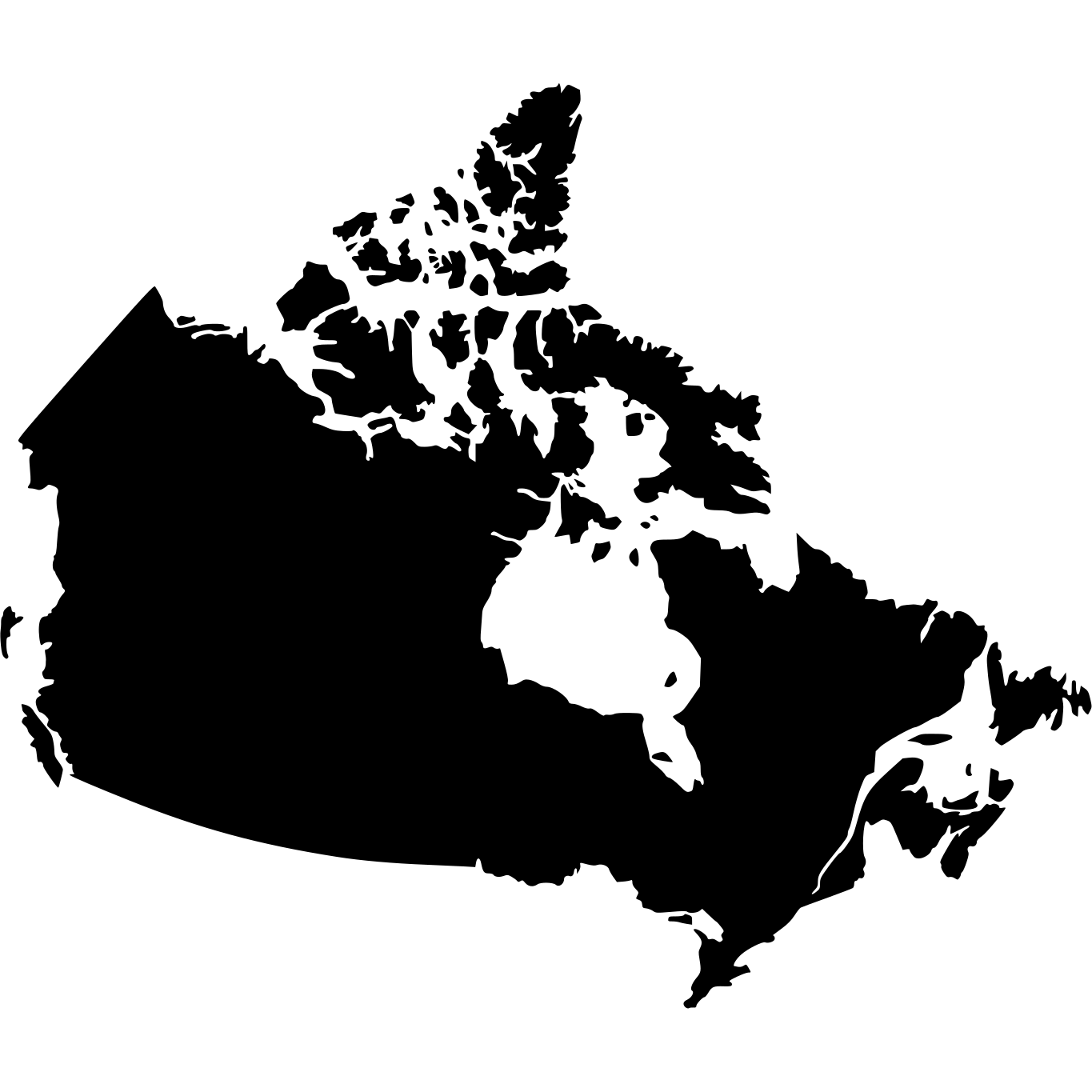
G.M. Collin is a Canadian brand

We're dedicated to providing you with the most up-to-date and science-backed ingredient info out there.
The data we've presented on this page has been verified by a member of the SkinSort Team.
Read more about us· Updated April 7, 2026 • Added by ukieu001


