
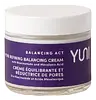
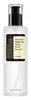
Yuni Beauty Balancing Act Pore Refining Face Cream Versus COSRX Advanced Snail 96 Mucin Power Essence
This pore-care moisturizer is formulated around Niacinamide to refine the look of pores and balance excess oil.
This hydrating essence is formulated around Snail Secretion Filtrate and Allantoin to hydrate skin and calm redness.


What's inside
What's inside
 Key Ingredients
Benefits
Concerns
No concerns
Ingredients Side-by-side
Water
Skin ConditioningCaprylic/Capric Triglyceride
Masking


Niacinamide
Smoothing










Simmondsia Chinensis Seed Oil
Emollient


Cetyl Alcohol
Emollient
Glycerin
Humectant
Glyceryl Stearate Se
Emulsifying


Helianthus Annuus Seed Oil
Emollient
Cetearyl Alcohol
Emollient
Cetyl Palmitate
Emollient
Squalane
Emollient
Mevalonolactone
HumectantSodium Hyaluronate
Humectant
Cucumis Sativus Fruit Extract
Emollient
Rosa Damascena Extract
MaskingDecyl Glucoside
Cleansing
Lauryl Glucoside
CleansingCaprylyl Glycol
Emollient
Capryloyl Glycine
CleansingUndecylenoyl Glycine
CleansingEthylhexylglycerin
Skin ConditioningHeptyl Undecylenate
EmollientXanthan Gum
EmulsifyingCarbomer
Emulsion StabilisingCitric Acid
Buffering
Sodium Hydroxide
BufferingCitronellol
Perfuming


Geraniol
Perfuming
Water, Caprylic/Capric Triglyceride, Niacinamide, Simmondsia Chinensis Seed Oil, Cetyl Alcohol, Glycerin, Glyceryl Stearate Se, Helianthus Annuus Seed Oil, Cetearyl Alcohol, Cetyl Palmitate, Squalane, Mevalonolactone, Sodium Hyaluronate, Cucumis Sativus Fruit Extract, Rosa Damascena Extract, Decyl Glucoside, Lauryl Glucoside, Caprylyl Glycol, Capryloyl Glycine, Undecylenoyl Glycine, Ethylhexylglycerin, Heptyl Undecylenate, Xanthan Gum, Carbomer, Citric Acid, Sodium Hydroxide, Citronellol, Geraniol


Reviews
Ingredients Explained
These ingredients are found in both products.
Ingredients higher up in an ingredient list are typically present in a larger amount.
Carbomer is a synthetic thickening and gelling agent. It's basically the ingredient that gives a lot of serums, gels, creams, and sunscreens their smooth, non-sticky texture.
Although legally permitted at very high levels, carbomers are normally used at concentrations below 1%.
It also needs to be neutralized to actually thicken, and because it is a large molecule, it doesn't really penetrate the skin barrier.
Allergy-wise, the risk is very low. Clinical studies show carbomers have low potential for skin irritation/sensitization even at concentrations up to 100%.
A 2024 UK study patch-tested 1,302 patients and found true allergy to the parent group of carbomer to be rare with no confirmed relevant reactions.
Learn more about CarbomerSodium Hyaluronate is the salt form of hyaluronic acid. It is a long sugar chain that is naturally found in your skin, joints, and connective tissue that maintains hydration and elasticity.
In skincare, it works as a humectant. It pulls water from the environment and deeper layers of skin and binds it to the surface.
Interestingly, the size of the molecule affects its behavior:
Some clinical evidence links low molecular weight versions to improved wrinkle depth, elasticity, anti-inflammatory effects, and barrier repair.
Many serums use a blend of both weights so you can get surface hydration plus longer-lasting and deeper effects.
You'll typically see concentrations between 0.1-2% for this ingredient.
Learn more about Sodium HyaluronateWater. It's the most common cosmetic ingredient of all. You'll usually see it at the top of ingredient lists, meaning that it makes up the largest part of the product.
So why is it so popular? Water most often acts as a solvent - this means that it helps dissolve other ingredients into the formulation.
You'll also recognize water as that liquid we all need to stay alive. If you see this, drink a glass of water. Remember to stay hydrated!
Learn more about Water

