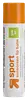
This chemical sunscreen covers most of the UV range, lighter on the deep UVA that drives aging.
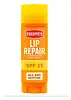
This barrier-repair lip moisturizer is formulated around Dimethicone and Petrolatum to strengthen the lip barrier and hydrate lips.

What's inside
What's inside
 Key Ingredients
Benefits
Concerns
Ingredients Side-by-side
Butyl Methoxydibenzoylmethane 3%
UV Absorber
Homosalate 8%
Skin Conditioning
Octocrylene 10%
UV Absorber

Petrolatum
Emollient


Polyethylene
Abrasive
Ethylhexyl Palmitate
Emollient


Trimethylsiloxyphenyl Dimethicone

Microcrystalline Wax
Emulsion StabilisingButyloctyl Salicylate
Skin Conditioning
Isopropyl Myristate
Emollient
Theobroma Cacao Seed Butter
Emollient
Paraffinum Liquidum
Emollient
PEG-8
HumectantCaprylyl Glycol
Emollient
Cocos Nucifera Oil
Masking

Sodium Saccharin
MaskingAloe Barbadensis Leaf Extract
Emollient

Tocopheryl Acetate
Antioxidant


Butyl Methoxydibenzoylmethane 3%, Homosalate 8%, Octocrylene 10%, Petrolatum, Polyethylene, Ethylhexyl Palmitate, Trimethylsiloxyphenyl Dimethicone, Microcrystalline Wax, Butyloctyl Salicylate, Isopropyl Myristate, Theobroma Cacao Seed Butter, Paraffinum Liquidum, PEG-8, Caprylyl Glycol, Cocos Nucifera Oil, Sodium Saccharin, Aloe Barbadensis Leaf Extract, Tocopheryl Acetate
Butyl Methoxydibenzoylmethane 2.5%
UV Absorber
Dimethicone 17.5%
Emollient
Ethylhexyl Methoxycinnamate 6%
UV Absorber
Octocrylene 2%
UV Absorber
Mink Wax
Skin ConditioningPetrolatum
Emollient
Hydrogenated Poly(C6-14 Olefin)
EmollientPhenyl Trimethicone
Skin Conditioning
Trimethylpentanediol/Adipic Acid/Glycerin Crosspolymer
Skin ConditioningButyrospermum Parkii Butter
Skin Conditioning
Prunus Amygdalus Dulcis Oil
Skin Conditioning
Aroma

Polysilicone-11

Hydrogenated Polyisobutene
EmollientHydrogenated Vegetable Oil
Emollient
Ethylene/Propylene/Styrene Copolymer
Sodium Saccharin
MaskingCitrus Aurantifolia Peel Oil
Masking
Aloe Barbadensis Leaf Extract
Emollient
Butylene/Ethylene/Styrene Copolymer
Pentaerythrityl Tetra-Di-T-Butyl Hydroxyhydrocinnamate
Antioxidant
Butyl Methoxydibenzoylmethane 2.5%, Dimethicone 17.5%, Ethylhexyl Methoxycinnamate 6%, Octocrylene 2%, Mink Wax, Petrolatum, Hydrogenated Poly(C6-14 Olefin), Phenyl Trimethicone, Trimethylpentanediol/Adipic Acid/Glycerin Crosspolymer, Butyrospermum Parkii Butter, Prunus Amygdalus Dulcis Oil, Aroma, Polysilicone-11, Hydrogenated Polyisobutene, Hydrogenated Vegetable Oil, Ethylene/Propylene/Styrene Copolymer, Sodium Saccharin, Citrus Aurantifolia Peel Oil, Aloe Barbadensis Leaf Extract, Butylene/Ethylene/Styrene Copolymer, Pentaerythrityl Tetra-Di-T-Butyl Hydroxyhydrocinnamate
Ingredients Explained
These ingredients are found in both products.
Ingredients higher up in an ingredient list are typically present in a larger amount.
Aloe Barbadensis Leaf Extract is a botanical extract pulled from the leaves of aloe vera and one of the most studied plant ingredients in cosmetics.
The inner leaf gel it comes from is mostly water (~99-99.5%) and the remaining fraction is made up of pretty good stuff: polysaccharides, vitamins, phenolics, and enzymes.
Its headline job is hydration.
The star polysaccharide in aloe, acemannan, is a humectant that retains moisture and helps reduce trans-epidermal water loss.
Aloe also has real soothing credentials; it contains anti-inflammatory compounds like bradykinase and C-glucosyl chromone that help calm irritation and redness.
On the repair side, lab work shows that acemannan wakes up your skin's repair cells (fibroblasts), prompting them to multiply and speed up healing.
There's some human data for cosmetic benefit too: a cream containing 10% Aloe Barbadensis leaf extract improved skin hydration and elasticity in a real-use study.
Safety-wise, this ingredient is well-regarded with just one rare downside; there have been some case reports of acute eczema, contact urticaria, and dermatitis in people who applied aloe-derived ingredients topically. Those with a known aloe or Liliaceae sensitivity should patch test.
Typical use levels range widely, from under 1% up to 90%+ depending on the format and the effect you are after.
Learn more about Aloe Barbadensis Leaf ExtractAlso known as Avobenzone, this ingredient is an oil-soluble used to absorb the full spectrum of UVA rays (peak 357 nm).
It's one of the most effective UVA filters available but has a major caveat of photostability: avobenzone is susceptible to photodegradation.
This means it can lose efficacy when exposed to sunlight without the help of a stabilizing agent.
Studies show antioxidants (like vitamin E or vitamin C) and some UV filters (like octocrylene and Tinosorb S) can meaningfully improve its stability in a formulation.
The maximum allowable concentration according to regulation is 3% in the US + Canada, and 5% in the EU, Australia, China, Korea, and ASEAN countries.
It has a well-support safety profile: a comprehensive 2025 review found minimal toxicity with no evidence of carcinogenicity.
Overall, avobenzone is a safe and regulated ingredient used in sunscreen for over 40 years.
Learn more about Butyl MethoxydibenzoylmethaneOctocrylene is an oil-soluble organic UV filter that mainly absorbs UVB and short wave UVA II light.
Its real superpower is teamwork: octocrylene is remarkably photostable and is most famous for stabilizing avobenzone (the workhorse UVA filter).
This ingredient is commonly used to enhance both UVB and UVA protection due to its unique property in stabilizing avobenzone. It also pulls double duty by boosting water resistance and giving formulas a smooth, spreadable feel.
The EU's Scientific Committee on Consumer Safety (SCCS) has deemed octocrylene to be safe as a UV-filter at concentrations up to 10% (capped at 9% in propellant sprays). The US also permits it up to 10%.
Two things worth knowing:
You'll usually see this ingredient used in concentrations between 2-10% (higher amounts when used as a stabilizer for avobenzone).
Learn more about OctocrylenePetrolatum is more commonly known as petroleum jelly. It is created by mixing waxes and mineral oils.
This ingredient is effective at reducing water loss by 99%. This is because it is an occlusive. Occlusives create a hydrophobic barrier on the skin to prevent evaporation. This property makes it great for hydrating dry skin.
Pro tip: Use occlusives, such as this ingredient, on damp skin for the best results.
The quality or origin of petrolatum is only known when disclosed by the brand. Most cosmetic petrolatum has gone through several purification stages.
Another benefit of occlusives is it protects your skin against infection or allergies.
Petrolatum is fungal acne safe. It is a hydrocarbon with no fatty acid structure, so Malassezia cannot metabolize it. In-vitro studies support negligible growth stimulation as well.
It's also worth noting that petrolatum has a comedogenic rating of 0. In updated rabbit ear testing (and in human testing), petrolatum was found to be not comedogenic. This means it didn’t promote comedone formation in standard models.
Learn more about PetrolatumWe don't have a description for Sodium Saccharin yet.


