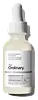
This hydrating serum is formulated around Sodium Hyaluronate and Panthenol to hydrate skin and strengthen the skin barrier.


What's inside
What's inside
 Key Ingredients
Benefits
Concerns
Ingredients Side-by-side
Water
Skin ConditioningSodium Hyaluronate
Humectant




Propanediol
Solvent
Pentylene Glycol
Skin Conditioning
Hydrolyzed Hyaluronic Acid
Humectant
Sodium Hyaluronate Crosspolymer
Humectant
Phospholipids
Skin Conditioning
Sphingolipids
Emollient
Panthenol
Skin Conditioning
Ahnfeltiopsis Concinna Extract
Skin Conditioning

Glycerin
Humectant
Polysorbate 20
Emulsifying

Citric Acid
Buffering

Sodium Citrate
BufferingP-Anisic Acid
MaskingTocopherol
Antioxidant


Trisodium Ethylenediamine Disuccinate
ChelatingCaprylyl Glycol
Emollient
Ethoxydiglycol
HumectantEthylhexylglycerin
Skin ConditioningHexylene Glycol
EmulsifyingPhenoxyethanol
Preservative
Chlorphenesin
Antimicrobial
Water, Sodium Hyaluronate, Propanediol, Pentylene Glycol, Hydrolyzed Hyaluronic Acid, Sodium Hyaluronate Crosspolymer, Phospholipids, Sphingolipids, Panthenol, Ahnfeltiopsis Concinna Extract, Glycerin, Polysorbate 20, Citric Acid, Sodium Citrate, P-Anisic Acid, Tocopherol, Trisodium Ethylenediamine Disuccinate, Caprylyl Glycol, Ethoxydiglycol, Ethylhexylglycerin, Hexylene Glycol, Phenoxyethanol, Chlorphenesin


Reviews
Ingredients Explained
These ingredients are found in both products.
Ingredients higher up in an ingredient list are typically present in a larger amount.
Citric Acid is an alpha hydroxy acid (AHA) naturally found in citrus fruits like oranges, lemons, and limes.
Like other AHAs, citric acid can exfoliate skin by breaking down the bonds that hold dead skin cells together. This helps reveal smoother and brighter skin underneath.
However, this exfoliating effect only happens at high concentrations (20%) which can be hard to find in cosmetic products.
Due to this, citric acid is usually included in small amounts as a pH adjuster. This helps keep products slightly more acidic and compatible with skin's natural pH.
In skincare formulas, citric acid can:
While it can provide some skin benefits, research shows lactic acid and glycolic acid are generally more effective and less irritating exfoliants.
Most citric acid used in skincare today is made by fermenting sugars (usually from molasses). This synthetic version is identical to the natural citrus form but easier to stabilize and use in formulations.
Rosacea skin has a lower threshold for acids generally, with 62.5% of rosacea subjects in one study reacting to lactic acid in a sting test. This is why we mark citric acid as a potential rosacea trigger.
However, this ingredient shows up as a pH adjuster or chelator at roughly 0.1-1% in many products. These low levels are unlikely to be an issue for rosacea skin and becomes a potential trigger at exfoliating concentrations (20%). Because everybody's skin is unique, we recommend a patch test if you are unsure.
Learn more about Citric AcidEthylhexylglycerin is created from glycerin. It is a multitasker ingredient that:
The CIR Expert Panel found minimal skin absorption or sensitization of any kind in a safety assessment. Though this ingredient is considered well-tolerated, a small number of cases of allergic dermatitis have been published since 2002. Just be sure to patch test if you are unsure.
Industry-reported use ranges from 8% in rinse-off products and 2% in leave-on formulations.
Learn more about Ethylhexylglycerinp-anisic acid is an aromatic compound that is naturally found in some plants. It is mainly used as a fragrance ingredient but also has preservative and antimicrobial properties.
The effectiveness of this ingredient as a preservative and antimicrobial depends on the pH (with more acidic being better). This is the reason you'll see this ingredient bundled with other preservatives.
Panthenol is a common ingredient that helps hydrate and soothe the skin. It is found naturally in our skin and hair.
There are two forms of panthenol: D and L.
D-panthenol is also known as dexpanthenol. Most cosmetics use dexpanthenol or a mixture of D and L-panthenol.
Panthenol is famous due to its ability to go deeper into the skin's layers. Using this ingredient has numerous pros (and no cons):
Like hyaluronic acid, panthenol is a humectant. Humectants are able to bind and hold large amounts of water to keep skin hydrated.
This ingredient works well for wound healing. It works by increasing tissue in the wound and helps close open wounds.
Once oxidized, panthenol converts to pantothenic acid. Panthothenic acid is found in all living cells.
This ingredient is also referred to as pro-vitamin B5.
Learn more about PanthenolPentylene Glycol (1,2-pentanediol) is a multitasking little diol with three main roles in a formula:
Research on alkanediols (the family pentylene glycol belongs to) show they work by disrupting microbial cell membranes. This disruption helps the primary preservative system in a product work more effectively at lower doses.
On the safety side, the Cosmetic Ingredient Review Expert Panel has concluded this ingredient to be safe as used in current cosmetic practices + concentrations.
Typical use levels in a formula run about 1-5%.
Learn more about Pentylene GlycolPhenoxyethanol is one of the most widely used preservatives in skincare (and for good reason!).
It has a large spectrum of antimicrobial activity and especially effective bacteria, yeast, and mold while only having a weak effect on your skin's natural microbiome.
On a cellular level, it disrupts the cell membranes of microbes by poking holes that make the cell leak. This shuts down the chemical reactions the microbe needs to make energy so it can no longer survive.
Another perk of this ingredient is that it stays functional across a wide pH range (3-10).
You'll often see it paired with boosters like Ethylhexylglycerin; one study showed that a 1:9 ratio of Ethylhexylglycerin to Phenoxyethanol damages bacterial membranes as effectively as doubling the Phenoxyethanol concentration on its own.
Typical use concentrations range from 0.3-1% depending on the formula, and this ingredient is capped at 1% int the EU.
Safety-wise, the fear mongering does not hold up to the evidence. The EU's Scientific Committee on Consumer Safety and FDA consider it safe as a preservative at up to 1%, including for children of all ages.
Adverse systemic effects only showed up in animal studies at exposures roughly 200x higher than what people get from cosmetics. And despite its very widespread use, this ingredient is a rare sensitizer and allergic reactions are uncommon.
Learn more about PhenoxyethanolPhospholipids are a family of skin-identical lipids that makeup the structural backbone of every cell membrane in your body.
In cosmetics, they function as skin conditioning agents with emulsifier and surfactant properties. They're typically sourced from soybean or sunflower lecithin (or sometimes egg yolk or marine sources).
Because they mirror the lipids naturally found in the deeper layers of your skin, topical phospholipids help reinforce the lipid matrix, reduce transepidermal water loss, and leave skin feeling conditioned.
They're also used to form liposomes, or tiny self-assembling vesible used to stabilize actives like vitamin c or retinol. This helps these ingredients integrate into the upper layers of skin more easily.
Phospholipids are compatible with everything and the CIR Expert Panel has concluded them to be safe at current use levels.
Some types of phospholipids include:
Learn more about PhospholipidsSodium Citrate is the sodium salts of citric acid. In skincare, it is used to alter pH levels and acts as a preservative.
Its main functions are to maintain the pH of a product and neutralize metal ions.
The acidity of our skin is maintained by our glands and skin biome; normal pH level of skin is slightly acidic (~4.75-5.5).
Being slightly acidic allows our skin to create an "acid mantle". This acid mantle is a thin barrier that protects our skin from bacteria and contaminants.
Learn more about Sodium CitrateSphingolipids are a major class of lipids in cell membranes. This ingredient has emollient, skin conditioning, and skin protecting properties.
Certain ceramides are considered sphingolipids (Ceramide NS and Ceramid AP), but not all sphingolipids are ceramides.
Tocopherol is a fat-soluble antioxidant known as Vitamin E.
You'll find this ingredient in the vast majority of skincare (for good reason). It works to neutralize free radicals, or unstable molecules generated by UV exposure, pollution, and other environmental stressors, before they can cause oxidative damage to your skin cells.
Topically applied tocopherol has been shown to protect against UV damage by ramping up the skin's own natural defense enzymes.
It also acts as a skin conditioning agent; some studies show that regular topical use can improve the skin's water-binding capacity over 2-4 weeks.
This ingredient is especially loved for being a team player. When combined with Vitamin C, the photoprotective effect of both ingredients roughly doubles and the combo also helps reduce UV-induced DNA damage.
This ingredient has some brightening potential but it's more of a prevention ingredient than spot-fader. Cell studies show it can slow down melanin production but it's worth noting that it's not the most powerful brightener out there.
In formulations, it also serves as a stabilizer that helps protect other oxidation-prone ingredients from degrading.
Concentrations usually range from 0.1-1% in most leave-on products.
Learn more about TocopherolWater. It's the most common cosmetic ingredient of all. You'll usually see it at the top of ingredient lists, meaning that it makes up the largest part of the product.
So why is it so popular? Water most often acts as a solvent - this means that it helps dissolve other ingredients into the formulation.
You'll also recognize water as that liquid we all need to stay alive. If you see this, drink a glass of water. Remember to stay hydrated!
Learn more about Water

