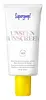
This chemical sunscreen covers most of the UV range, lighter on the deep UVA that drives aging.
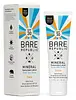
This mineral sunscreen covers the full UV range and blocks ~97% of UVB at SPF 30.

What's inside
What's inside
 Key Ingredients
Benefits
Concerns
Ingredients Side-by-side
Butyl Methoxydibenzoylmethane 3%
UV Absorber
Homosalate 8%
Skin Conditioning
Ethylhexyl Salicylate 5%
UV Absorber
Octocrylene 4%
UV Absorber

Isododecane
EmollientDimethicone Crosspolymer
Emulsion Stabilising
Dimethicone/Bis-Isobutyl PPG-20 Crosspolymer
Emollient
Polymethylsilsesquioxane
Isohexadecane
EmollientDicaprylyl Carbonate
EmollientMeadowfoam Estolide
Skin ConditioningCaprylic/Capric Triglyceride
Masking


Polyester-7
Skin ConditioningNeopentyl Glycol Diheptanoate
EmollientLithothamnion Calcareum Extract
Skin ConditioningCaprylyl Glycol
Emollient
Butyrospermum Parkii Butter
Skin Conditioning



Jojoba Esters
Emollient
Mannitol
Humectant
Boswellia Serrata Resin Extract
SmoothingLecithin
Emollient
Microcrystalline Cellulose
AbsorbentDiatomaceous Earth
Abrasive

Zinc Sulfate
Antimicrobial
Silica
Abrasive
Tocopherol
Antioxidant





Butyl Methoxydibenzoylmethane 3%, Homosalate 8%, Ethylhexyl Salicylate 5%, Octocrylene 4%, Isododecane, Dimethicone Crosspolymer, Dimethicone/Bis-Isobutyl PPG-20 Crosspolymer, Polymethylsilsesquioxane, Isohexadecane, Dicaprylyl Carbonate, Meadowfoam Estolide, Caprylic/Capric Triglyceride, Polyester-7, Neopentyl Glycol Diheptanoate, Lithothamnion Calcareum Extract, Caprylyl Glycol, Butyrospermum Parkii Butter, Jojoba Esters, Mannitol, Boswellia Serrata Resin Extract, Lecithin, Microcrystalline Cellulose, Diatomaceous Earth, Zinc Sulfate, Silica, Tocopherol
Titanium Dioxide 5.2%
Cosmetic Colorant
Zinc Oxide
Cosmetic Colorant
Aluminum Hydroxide
EmollientButyrospermum Parkii Butter
Skin Conditioning
Cyclopentasiloxane
Emollient
Daucus Carota Sativa Seed Oil
Emollient

Dimethicone Crosspolymer
Emulsion Stabilising
Hydrogen Dimethicone
Isopropyl Myristate
Emollient
Polyamide-5
Skin ConditioningPolysilicone-11
Propylene Carbonate
SolventRubus Idaeus Seed Oil
Emollient
Silica Silylate
Emollient
Stearalkonium Hectorite
Gel FormingVitis Vinifera Seed Oil
Emollient
Titanium Dioxide 5.2%, Zinc Oxide, Aluminum Hydroxide, Butyrospermum Parkii Butter, Cyclopentasiloxane, Daucus Carota Sativa Seed Oil, Dimethicone Crosspolymer, Hydrogen Dimethicone, Isopropyl Myristate, Polyamide-5, Polysilicone-11, Propylene Carbonate, Rubus Idaeus Seed Oil, Silica Silylate, Stearalkonium Hectorite, Vitis Vinifera Seed Oil
Reviews
Ingredients Explained
These ingredients are found in both products.
Ingredients higher up in an ingredient list are typically present in a larger amount.
This ingredient is also known as shea butter. It is a plant-derived extract from the nuts of the Africa shea tree and one of the most well-studied emollients.
Because it has a high concentration of fatty acids (primarily oleic, stearic, and linoleic) it is able to form a protective barrier on the skin's surface. This helps seal in moisture and prevents transepidermal water loss (TEWL).
In vitro research found an increase in skin hydration by 58% and a decrease in TEWL by 37.8% after 24 hours of applying this ingredient (pretty impressive for a single ingredient!).
Besides hydration, shea butter also contains triterpenes that have anti-inflammatory potential. In particule, lupeol cinnamate has shown the highest anti-inflammatory activity in vivo.
Shea butter also contains vitamins A and E which may contribute to antioxidant activity.
While Shea Butter has an SPF rating of about 3-4, it is not a sunscreen replacement.
This ingredient may not be fungal acne safe because its fatty acids fall within the C11-C24 range that the Malassezia yeast can metabolize.
This ingredient shows up on a lot of "pore-clogging" lists but there's no real evidence behind that. It doesn't even have a comedogenic rating from an actual study; the numbers you'll find online come from blogs citing other blogs.
Ratings for other ingredients mostly come from a 1980s rabbit ear test. This test doesn't translate well to human skin or to real products because the ingredient sits at a much lower percentage.
Some people still find it breaks them out. So if that's you, definitely trust your skin. Just know this one's based on experience and not evidence.
Learn more about Butyrospermum Parkii ButterDimethicone Crosspolymer is a silicone created by modifying dimethicone with hydrocarbon side chains. Due to its large size, it does not penetrate skin. It is considered non-occlusive.
Dimethicone Crosspolymer is used to stabilize and thicken products. It also helps give products a silky feel.


