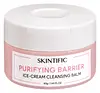
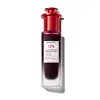
Skintific Purifying Barrier Ice Cream Cleansing Balm Versus Skintific 12% AHA BHA PHA LHA Peeling Solution
This oil-based makeup remover is made to dissolve makeup, sunscreen, and daily buildup.
This smoothing exfoliator is formulated around Glycolic Acid and Lactic Acid to refine skin texture and refine the look of pores.

What's inside
What's inside
 Key Ingredients
Benefits
Concerns
Ingredients Side-by-side
Ethylhexyl Palmitate
Emollient




Caprylic/Capric Triglyceride
Masking


PEG-20 Glyceryl Triisostearate
Emollient
Synthetic Wax
Abrasive
Butylene Glycol
Humectant
Cera Microcristallina
Emulsion StabilisingFragaria Chiloensis Fruit Extract
Skin Conditioning
Euterpe Oleracea Fruit Extract

Rubus Fruticosus Fruit Extract
AstringentCentella Asiatica Extract
Cleansing



Ceramide NP
Skin Conditioning
Ceramide EOP
Skin Conditioning
Ceramide Ns
Skin Conditioning
Ceramide Ng
Skin Conditioning
Ceramide As
Skin Conditioning
Ceramide AP
Skin Conditioning
Ascorbic Acid
Antioxidant



Tocopherol
Antioxidant
Hydrogenated Lecithin
Emulsifying
Cyclodextrin
AbsorbentGlycerin
Humectant
Ethylhexylglycerin
Skin ConditioningWater
Skin ConditioningEthylhexyl Palmitate, Caprylic/Capric Triglyceride, PEG-20 Glyceryl Triisostearate, Synthetic Wax, Butylene Glycol, Cera Microcristallina, Fragaria Chiloensis Fruit Extract, Euterpe Oleracea Fruit Extract, Rubus Fruticosus Fruit Extract, Centella Asiatica Extract, Ceramide NP, Ceramide EOP, Ceramide Ns, Ceramide Ng, Ceramide As, Ceramide AP, Ascorbic Acid, Tocopherol, Hydrogenated Lecithin, Cyclodextrin, Glycerin, Ethylhexylglycerin, Water
Water
Skin ConditioningGlycolic Acid
Buffering




Lactic Acid
Buffering
Succinic Acid
BufferingSodium Hydroxide
BufferingSalicylic Acid
Masking


Niacinamide
Smoothing
Capryloyl Salicylic Acid
Exfoliating
Gluconolactone
Skin Conditioning
Lactobionic Acid
Buffering
Glycerin
Humectant
Xanthan Gum
Emulsifying1,2-Hexanediol
Skin Conditioning
Hydroxyacetophenone
Antioxidant
Butylene Glycol
Humectant
Propylene Glycol
Humectant
Enantia Chlorantha Bark Extract
Skin ConditioningGardenia Florida Fruit Extract
Skin ConditioningGlycerophosphoinositol Choline
Skin ProtectingBacillus Ferment
Skin Conditioning
Brassica Oleracea Acephala Leaf Extract
HumectantPhenoxyethanol
Preservative
Potassium Sorbate
Preservative
Ethylhexylglycerin
Skin ConditioningOleanolic Acid
Skin ConditioningCyclodextrin
AbsorbentWater, Glycolic Acid, Lactic Acid, Succinic Acid, Sodium Hydroxide, Salicylic Acid, Niacinamide, Capryloyl Salicylic Acid, Gluconolactone, Lactobionic Acid, Glycerin, Xanthan Gum, 1,2-Hexanediol, Hydroxyacetophenone, Butylene Glycol, Propylene Glycol, Enantia Chlorantha Bark Extract, Gardenia Florida Fruit Extract, Glycerophosphoinositol Choline, Bacillus Ferment, Brassica Oleracea Acephala Leaf Extract, Phenoxyethanol, Potassium Sorbate, Ethylhexylglycerin, Oleanolic Acid, Cyclodextrin
Reviews
Ingredients Explained
These ingredients are found in both products.
Ingredients higher up in an ingredient list are typically present in a larger amount.
Butylene Glycol (or BG) is used within cosmetic products for a few different reasons:
Overall, Butylene Glycol is a safe and well-rounded ingredient that works well with other ingredients.
Though this ingredient works well with most skin types, some people with sensitive skin may experience a reaction such as allergic rashes, closed comedones, or itchiness.
Learn more about Butylene GlycolCyclodextrins are ring-shaped sugar molecules made from starch. It is used to stabilize, protect, and slowly release active ingredients.
This ingredient can help prevent oxidation, reduce irritation from strong actives, and make certain ingredients absorb better once applied.
Once applied to your skin, enzymes gradually break down the cyclodextrin "ring"; this releases the active ingredient in a controlled way.
Learn more about CyclodextrinEthylhexylglycerin is created from glycerin. It is a multitasker ingredient that:
The CIR Expert Panel found minimal skin absorption or sensitization of any kind in a safety assessment. Though this ingredient is considered well-tolerated, a small number of cases of allergic dermatitis have been published since 2002. Just be sure to patch test if you are unsure.
Industry-reported use ranges from 8% in rinse-off products and 2% in leave-on formulations.
Learn more about EthylhexylglycerinGlycerin (or glycerol) is a compound naturally found in your skin. It's a powerhouse humectant that pulls water into the stratum corneum.
Topically, glycerin does several things at once:
Your skin makes glycerin on its own (mostly from sebaceous oil breakdown) and shuttles it to your outermost layer of skin, or your epidermis, via aquaporin-3.
Aquaporin-3 is a transporter that is essential for normal skin hydration, elasticity, and repair. Interestingly, mice lacking in AQP3 have dry and less elastic skin that can be fully corrected with glycerin.
This ingredient is non-irritating, plays well with almost every ingredient, and works across all skin types. Typical use is anywhere between 3-10% but can go up to 79% in some leave-on products.
Just know very high concentrations (>40%) can feel tacky in low humidity.
Glycerin is the name for this ingredient in American English. British English uses Glycerol/Glycerine.
Learn more about GlycerinWater. It's the most common cosmetic ingredient of all. You'll usually see it at the top of ingredient lists, meaning that it makes up the largest part of the product.
So why is it so popular? Water most often acts as a solvent - this means that it helps dissolve other ingredients into the formulation.
You'll also recognize water as that liquid we all need to stay alive. If you see this, drink a glass of water. Remember to stay hydrated!
Learn more about Water

