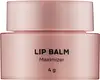
This barrier-repair lip moisturizer is formulated around Ricinus Communis Seed Oil and Simmondsia Chinensis Seed Oil to strengthen the lip barrier and hydrate lips.
This lip moisturizer is formulated around Petrolatum and Squalene to hydrate lips.

What's inside
What's inside
 Key Ingredients
Benefits
Concerns
Ingredients Side-by-side
Tridecyl Trimellitate
EmollientRicinus Communis Seed Oil
Masking




Phytosteryl/Isostearyl/Cetyl/Stearyl/Behenyl Dimer Dilinoleate
Skin Conditioning
Oleic/Linoleic/Linolenic Polyglycerides
Emollient
Diisostearyl Malate
EmollientPolyisobutene
Euphorbia Cerifera Wax
Simmondsia Chinensis Seed Oil
Emollient

Octyldodecanol
Emollient
Synthetic Wax
Abrasive

Microcrystalline Wax
Emulsion Stabilising1,2-Hexanediol
Skin Conditioning
Dextrin Palmitate
Emulsifying
Menthol
Masking



Ethylene/Propylene Copolymer
Abrasive
Caprylyl Glycol
Emollient
Benzotriazolyl Dodecyl P-Cresol
UV AbsorberEthylhexylglycerin
Skin ConditioningPentaerythrityl Tetra-Di-T-Butyl Hydroxyhydrocinnamate
Antioxidant
CI 45410
Cosmetic ColorantCI 77491
Cosmetic ColorantTridecyl Trimellitate, Ricinus Communis Seed Oil, Phytosteryl/Isostearyl/Cetyl/Stearyl/Behenyl Dimer Dilinoleate, Oleic/Linoleic/Linolenic Polyglycerides, Diisostearyl Malate, Polyisobutene, Euphorbia Cerifera Wax, Simmondsia Chinensis Seed Oil, Octyldodecanol, Synthetic Wax, Microcrystalline Wax, 1,2-Hexanediol, Dextrin Palmitate, Menthol, Ethylene/Propylene Copolymer, Caprylyl Glycol, Benzotriazolyl Dodecyl P-Cresol, Ethylhexylglycerin, Pentaerythrityl Tetra-Di-T-Butyl Hydroxyhydrocinnamate, CI 45410, CI 77491





Reviews
Ingredients Explained
These ingredients are found in both products.
Ingredients higher up in an ingredient list are typically present in a larger amount.
Diisostearyl Malate is an emollient and most often used in lip products. It comes from isostearyl alcohol, a fatty acid, and malic acid, an AHA.
As an emollient, Diisostearyl Malate helps create a thin film on your skin to trap moisture in. This helps keep your skin soft and smooth.
Ethylene/Propylene Copolymer is an exfoliant.
Microcrystalline Wax is derived from petroleum through a de-oiling process, then highly refined and purified before use in cosmetics.
In skincare formulations, it is used to improve texture and create a smooth, even consistency. It also helps stabilize products by preventing ingredients from separating.
Octyldodecanol is a fatty alcohol sourced from plant oils like coconut or palm (or made synthetically).
It is:
You'll likely see this in many BHA products because this is the go-to solvent for salicylic acid.
This ingredient is typically used at levels between 2-20%.
Regarding fungal acne:
In 2019, this ingredient was tested against multiple Malassezia species (the yeast that causes fungal acne) and showed no growth.
Synthetic Wax is a manufactured hydrocarbon wax. In formulas, it works as an occlusive emollient that helps reduce water loss and improves the spreadability of products.
Research comparing synthetic wax to traditional mineral-derived products found that formulas containing it perform as well for skin hydration.
It is considered non-comedogenic and vegan-friendly.
This ingredient has a well-established safety record by the CIR Expert Panel for Cosmetic Ingredient Safety.
Synthetic Waxes are straight/branched-chain hydrocarbons with no ester bond or fatty acids. That means there is nothing for the Malassezia yeast to feed on.
Learn more about Synthetic Wax

