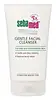
This mild gel cleanser is made to cleanse while calming and soothing your skin.
This salicylic acid gel cleanser is formulated around Salicylic Acid to clear breakouts and unclog pores.


What's inside
What's inside
 Key Ingredients
No key ingredients
Benefits
Concerns
Ingredients Side-by-side
Water
Skin ConditioningDisodium Laureth Sulfosuccinate
CleansingCocamidopropyl Betaine
Cleansing



Disodium Cocoamphodiacetate
CleansingGlyceryl Laurate
Emollient
PEG-7 Glyceryl Cocoate
Emulsifying
Sodium Chloride
MaskingPEG-120 Methyl Glucose Dioleate
Emulsifying
Phenoxyethanol
Preservative
PEG-150 Distearate
Emulsifying
Glycerin
Humectant


Panthenol
Skin Conditioning

Parfum
Masking

Sodium Benzoate
Masking
Citric Acid
Buffering

Allantoin
Skin Conditioning
Hamamelis Virginiana Bark/Leaf/Twig Extract
Skin Conditioning
Coco-Glucoside
Cleansing
Menthol
Masking
Glycol Distearate
Emollient
Tetramethyl Acetyloctahydronaphthalenes
Masking
Water, Disodium Laureth Sulfosuccinate, Cocamidopropyl Betaine, Disodium Cocoamphodiacetate, Glyceryl Laurate, PEG-7 Glyceryl Cocoate, Sodium Chloride, PEG-120 Methyl Glucose Dioleate, Phenoxyethanol, PEG-150 Distearate, Glycerin, Panthenol, Parfum, Sodium Benzoate, Citric Acid, Allantoin, Hamamelis Virginiana Bark/Leaf/Twig Extract, Coco-Glucoside, Menthol, Glycol Distearate, Tetramethyl Acetyloctahydronaphthalenes
Water
Skin ConditioningCoco-Betaine
Cleansing
PEG-8
HumectantSodium Laureth Sulfate
Cleansing
PEG-120 Methyl Glucose Dioleate
Emulsifying
Disodium Cocoamphodiacetate
CleansingSodium Chloride
MaskingCI 19140
Cosmetic ColorantCI 42090
Cosmetic ColorantLinalool
Perfuming
Zinc Gluconate
Skin Conditioning



Parfum
Masking
Salicylic Acid
Masking

Sodium Benzoate
Masking
Melia Azadirachta Leaf Extract
Skin ConditioningTetrasodium EDTA
ChelatingMenthol
Masking
Butylene Glycol
Humectant
Benzyl Salicylate
Perfuming
Benzyl Alcohol
Perfuming
Water, Coco-Betaine, PEG-8, Sodium Laureth Sulfate, PEG-120 Methyl Glucose Dioleate, Disodium Cocoamphodiacetate, Sodium Chloride, CI 19140, CI 42090, Linalool, Zinc Gluconate, Parfum, Salicylic Acid, Sodium Benzoate, Melia Azadirachta Leaf Extract, Tetrasodium EDTA, Menthol, Butylene Glycol, Benzyl Salicylate, Benzyl Alcohol
Ingredients Explained
These ingredients are found in both products.
Ingredients higher up in an ingredient list are typically present in a larger amount.
Disodium Cocoamphodiacetate is a surfactant and helps cleanse skin. It is created from the fatty acids of coconut oil.
Surfactants help rinse oil, dirt, and other pollutants easily from skin. It has a faint fruit-like scent.
Menthol is a compound found in mint plants, such as peppermint. In its pure form, it is a clear crystalline substance.
Menthol is known for its cooling sensation; however, the cooling is actually from your skin being sensitized. Menthol can worsen rosacea. We recommend speaking with a professional if you have concerns.
Menthol also has antimicrobial properties.
Learn more about MentholParfum is a catch-all term for an ingredient or more that is used to give a scent to products.
Also called "fragrance", this ingredient can be a blend of hundreds of chemicals or plant oils. This means every product with "fragrance" or "parfum" in the ingredients list is a different mixture.
For instance, Habanolide is a proprietary trade name for a specific aroma chemical. When used as a fragrance ingredient in cosmetics, most aroma chemicals fall under the broad labeling category of “FRAGRANCE” or “PARFUM” according to EU and US regulations.
The term 'parfum' or 'fragrance' is not regulated in many countries. In many cases, it is up to the brand to define this term.
For instance, many brands choose to label themselves as "fragrance-free" because they are not using synthetic fragrances. However, their products may still contain ingredients such as essential oils that are considered a fragrance by INCI standards.
One example is Calendula flower extract. Calendula is an essential oil that still imparts a scent or 'fragrance'.
Depending on the blend, the ingredients in the mixture can cause allergies and sensitivities on the skin. Some ingredients that are known EU allergens include linalool and citronellol.
Parfum can also be used to mask or cover an unpleasant scent.
The bottom line is: not all fragrances/parfum/ingredients are created equally. If you are worried about fragrances, we recommend taking a closer look at an ingredient. And of course, we always recommend speaking with a professional.
Learn more about ParfumPeg-120 Methyl Glucose Dioleate is used to improve texture and stability of a product. It is sugar based and helps thicken a product.
Once applied, it also creates a thin film to trap moisture in. This helps keep your skin hydrated.
This ingredient is the polyethylene glycol ether of the diester of oleic acid and methylglucose. The 120 represents an average of 120 moles of ethylene oxide.
There is limited research on this ingredient, although it is considered safe to use in skincare products.
Learn more about PEG-120 Methyl Glucose DioleateSodium Benzoate is a preservative. It's used in both cosmetic and food products to inhibit the growth of mold and bacteria. It is typically produced synthetically.
Both the US FDA and EU Health Committee have approved the use of sodium benzoate. In the US, levels of 0.1% (of the total product) are allowed.
Sodium benzoate works as a preservative by inhibiting the growth of bacteria inside of cells. It prevents the cell from fermenting a type of sugar using an enzyme called phosphofructokinase.
It is the salt of benzoic acid. Foods containing sodium benzoate include soda, salad dressings, condiments, fruit juices, wines, and snack foods.
Studies for using ascorbic acid and sodium benzoate in cosmetics are lacking, especially in skincare routines with multiple steps.
We always recommend speaking with a professional, such as a dermatologist, if you have any concerns.
Learn more about Sodium BenzoateChances are, you eat sodium chloride every day. Sodium Chloride is also known as table salt. This ingredient has many purposes in skincare: thickener, emulsifier, and exfoliator.
You'll most likely find this ingredient in cleansers where it is used to create a gel-like texture. As an emulsifier, it also prevents ingredients from separating.
You might see people debate whether Sodium Chloride is comedogenic, but there actually haven't been any comedogenic tests done on it. Either way, the overall formulation of a product matters a lot more than any single ingredient.
You might see this ingredient used in scrubs as a primary exfoliating ingredient.
Learn more about Sodium ChlorideWater. It's the most common cosmetic ingredient of all. You'll usually see it at the top of ingredient lists, meaning that it makes up the largest part of the product.
So why is it so popular? Water most often acts as a solvent - this means that it helps dissolve other ingredients into the formulation.
You'll also recognize water as that liquid we all need to stay alive. If you see this, drink a glass of water. Remember to stay hydrated!
Learn more about Water


