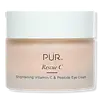
Pur Cosmetics Get A Lift Firming Facial Cream Versus Pur Cosmetics Rescue C Brightening Vitamin C & Peptide Eye Cream
This brightening eye moisturizer is formulated around Caffeine and Acetyl Hexapeptide-8 to brighten dull-looking skin and soften the look of wrinkles.

What's inside
What's inside
 Key Ingredients
Benefits
Concerns
Ingredients Side-by-side
Water
Skin ConditioningCyclopentasiloxane
Emollient
Glycerin
Humectant


Butylene Glycol
Humectant
Cetyl Ethylhexanoate
EmollientDimethicone
Emollient
Caprylyl Methicone
Skin Conditioning
PEG-10 Dimethicone
Skin Conditioning
Stearyl Dimethicone
Emollient
Dipropylene Glycol
HumectantMedicago Sativa Extract
TonicHydrolyzed Wheat Protein
Skin ConditioningHydrolyzed Manihot Esculenta Tuber Extract
Skin ConditioningCitrus Aurantium Amara Peel Oil
Skin Conditioning

Lavandula Angustifolia Oil
Masking


Disteardimonium Hectorite
StabilisingPolymethyl Methacrylate

Cetyl PEG/PPG-10/1 Dimethicone
Emulsifying
Magnesium Sulfate
Sclerotium Gum
Emulsion StabilisingBis-Vinyl Dimethicone/Dimethicone Copolymer
Emulsion Stabilising
Citric Acid
Buffering


CI 77891
Cosmetic ColorantTin Oxide
Abrasive
Sodium Citrate
BufferingSynthetic Fluorphlogopite
Phenoxyethanol
Preservative
Caprylyl Glycol
Emollient
Disodium EDTA
ChelatingWater, Cyclopentasiloxane, Glycerin, Butylene Glycol, Cetyl Ethylhexanoate, Dimethicone, Caprylyl Methicone, PEG-10 Dimethicone, Stearyl Dimethicone, Dipropylene Glycol, Medicago Sativa Extract, Hydrolyzed Wheat Protein, Hydrolyzed Manihot Esculenta Tuber Extract, Citrus Aurantium Amara Peel Oil, Lavandula Angustifolia Oil, Disteardimonium Hectorite, Polymethyl Methacrylate, Cetyl PEG/PPG-10/1 Dimethicone, Magnesium Sulfate, Sclerotium Gum, Bis-Vinyl Dimethicone/Dimethicone Copolymer, Citric Acid, CI 77891, Tin Oxide, Sodium Citrate, Synthetic Fluorphlogopite, Phenoxyethanol, Caprylyl Glycol, Disodium EDTA
Water
Skin ConditioningGlycerin
Humectant
Propanediol
Solvent
Coco-Caprylate/Caprate
Emollient
Trioctyldodecyl Citrate
EmollientStearic Acid
Cleansing

Coconut Alkanes
Emollient

Arachidyl Alcohol
Emollient
Caprylyl Methicone
Skin Conditioning
Dimethicone
Emollient
Caffeine
Skin Conditioning

Panax Ginseng Root Extract
Emollient
Squalane
Emollient
Acetyl Hexapeptide-8
Humectant
Tocopherol
Antioxidant


Behenyl Alcohol
Emollient
Arachidyl Glucoside
EmulsifyingSodium Polyacryloyldimethyl Taurate
Emulsion StabilisingPEG-12 Dimethicone/PPG-20 Crosspolymer
Xanthan Gum
EmulsifyingEthylhexylglycerin
Skin ConditioningAminopropyl Ascorbyl Phosphate
Antioxidant


Tetrasodium Glutamate Diacetate
ChelatingGlucose
Humectant
Caprylyl Glycol
Emollient
Potassium Sorbate
Preservative
Mica
Cosmetic ColorantCI 77891
Cosmetic ColorantCI 77491
Cosmetic ColorantWater, Glycerin, Propanediol, Coco-Caprylate/Caprate, Trioctyldodecyl Citrate, Stearic Acid, Coconut Alkanes, Arachidyl Alcohol, Caprylyl Methicone, Dimethicone, Caffeine, Panax Ginseng Root Extract, Squalane, Acetyl Hexapeptide-8, Tocopherol, Behenyl Alcohol, Arachidyl Glucoside, Sodium Polyacryloyldimethyl Taurate, PEG-12 Dimethicone/PPG-20 Crosspolymer, Xanthan Gum, Ethylhexylglycerin, Aminopropyl Ascorbyl Phosphate, Tetrasodium Glutamate Diacetate, Glucose, Caprylyl Glycol, Potassium Sorbate, Mica, CI 77891, CI 77491
Reviews
Ingredients Explained
These ingredients are found in both products.
Ingredients higher up in an ingredient list are typically present in a larger amount.
Caprylyl Glycol is a humectant, skin conditioner, emollient, and preservative booster derived from either caprylic acid or synthetically created.
Typical use levels vary from 0.3-1% as a preservative booster and go up to 2% to condition skin.
Because it is not a free-fatty acid, this ingredient is fungal acne safe (there's nothing for Malassezia to feed on).
Learn more about Caprylyl GlycolCaprylyl Methicone is a synthetic and lightweight silicone fluid. It gives products a silky, dry-touch finish without the heaviness of pure oils.
Though the EU CosIng Database lists this ingredient as a skin conditioner, it is also used for sensory reasons. It spreads easily, cuts greasiness, and reduces tackiness.
This ingredient is volatile which means it will mostly evaporate (but it evaporates slower than older cyclomethicones, like Cyclotetrasiloxane).
Typical concentration ranges from 1-30% depending on if it's being used to tweak the feel of a product or acting as the main emollient.
Learn more about Caprylyl MethiconeCi 77891 is a white pigment from Titanium dioxide. It is naturally found in minerals such as rutile and ilmenite.
It's main function is to add a white color to cosmetics. It can also be mixed with other colors to create different shades.
Ci 77891 is commonly found in sunscreens due to its ability to block UV rays.
Learn more about CI 77891Dimethicone is a type of synthetic silicone created from natural materials such as quartz. It is also known as polydimethylsiloxane.
What it does:
Dimethicone comes in different viscosities:
Depending on the viscosity, dimethicone has different properties.
Ingredients lists don't always show which type is used, so we recommend reaching out to the brand if you have questions about the viscosity.
This ingredient is unlikely to cause irritation because it does not get absorbed into skin. However, people with silicone allergies should be careful about using this ingredient.
Note: Dimethicone may contribute to pilling. This is because it is not oil or water soluble, so pilling may occur when layered with products. When mixed with heavy oils in a formula, the outcome is also quite greasy.
Learn more about DimethiconeGlycerin (or glycerol) is a compound naturally found in your skin. It's a powerhouse humectant that pulls water into the stratum corneum.
Topically, glycerin does several things at once:
Your skin makes glycerin on its own (mostly from sebaceous oil breakdown) and shuttles it to your outermost layer of skin, or your epidermis, via aquaporin-3.
Aquaporin-3 is a transporter that is essential for normal skin hydration, elasticity, and repair. Interestingly, mice lacking in AQP3 have dry and less elastic skin that can be fully corrected with glycerin.
This ingredient is non-irritating, plays well with almost every ingredient, and works across all skin types. Typical use is anywhere between 3-10% but can go up to 79% in some leave-on products.
Just know very high concentrations (>40%) can feel tacky in low humidity.
Glycerin is the name for this ingredient in American English. British English uses Glycerol/Glycerine.
Learn more about GlycerinWater. It's the most common cosmetic ingredient of all. You'll usually see it at the top of ingredient lists, meaning that it makes up the largest part of the product.
So why is it so popular? Water most often acts as a solvent - this means that it helps dissolve other ingredients into the formulation.
You'll also recognize water as that liquid we all need to stay alive. If you see this, drink a glass of water. Remember to stay hydrated!
Learn more about Water