Pond's Nourishing Moisturizing Cream Crema S Versus Pond's Moisture Clean Evening Soothe Makeup Remover Wipes
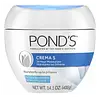
This moisturizer is formulated around Petrolatum to hydrate skin.
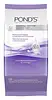
This cleansing wipe is made to dissolve makeup, sunscreen, and daily buildup.

What's inside
What's inside
 Key Ingredients
Benefits
Concerns
Ingredients Side-by-side
Water
Skin ConditioningParaffinum Liquidum
Emollient


Isopropyl Palmitate
Emollient



Petrolatum
Emollient
Glycerin
Humectant

Ceresin
Emulsion StabilisingStearic Acid
Cleansing
Glyceryl Stearate
Emollient
Sorbitan Oleate
Emulsifying
Cetyl Alcohol
Emollient

Phenoxyethanol
Preservative
Triethanolamine
BufferingPEG-4 Laurate
Emulsifying
PEG-4 Dilaurate
Emulsifying
Laureth-23
Cleansing
Parfum
Masking

Carbomer
Emulsion StabilisingPEG-4
HumectantIodopropynyl Butylcarbamate
Preservative
Tetrasodium EDTA
ChelatingDisodium EDTA
ChelatingTocopherol
Antioxidant





BHT
Antioxidant
Citrus Limon Fruit Extract
Masking
Citrus Nobilis Peel Extract
Masking
Alpha-Isomethyl Ionone
Perfuming
Amyl Cinnamal
Perfuming
Benzyl Salicylate
Perfuming
Citronellol
Perfuming
Citrus Aurantium Peel Oil
Citrus Limon Peel Oil
Masking

Eugenol
Perfuming
Geraniol
Perfuming
Hexyl Cinnamal
Perfuming
Limonene
Perfuming
Linalool
Perfuming
Linalyl Acetate
Masking
Terpineol
Masking
Tetramethyl Acetyloctahydronaphthalenes
Masking
Trimethylbenzenepropanol
Masking
Vanillin
Masking
Water, Paraffinum Liquidum, Isopropyl Palmitate, Petrolatum, Glycerin, Ceresin, Stearic Acid, Glyceryl Stearate, Sorbitan Oleate, Cetyl Alcohol, Phenoxyethanol, Triethanolamine, PEG-4 Laurate, PEG-4 Dilaurate, Laureth-23, Parfum, Carbomer, PEG-4, Iodopropynyl Butylcarbamate, Tetrasodium EDTA, Disodium EDTA, Tocopherol, BHT, Citrus Limon Fruit Extract, Citrus Nobilis Peel Extract, Alpha-Isomethyl Ionone, Amyl Cinnamal, Benzyl Salicylate, Citronellol, Citrus Aurantium Peel Oil, Citrus Limon Peel Oil, Eugenol, Geraniol, Hexyl Cinnamal, Limonene, Linalool, Linalyl Acetate, Terpineol, Tetramethyl Acetyloctahydronaphthalenes, Trimethylbenzenepropanol, Vanillin
Water
Skin ConditioningHexylene Glycol
EmulsifyingCamellia Sinensis Leaf Extract
Antimicrobial


Anthemis Nobilis Flower Extract
Masking
Tocopheryl Acetate
Antioxidant
Polysorbate 20
Emulsifying
Sodium Lauroamphoacetate
CleansingPEG-40 Hydrogenated Castor Oil
Emulsifying
Benzyl Alcohol
Perfuming
Xylitylglucoside
Humectant
Anhydroxylitol
Humectant
Xylitol
Humectant
Parfum
Masking
Citric Acid
Buffering
DMDM Hydantoin
Preservative
Iodopropynyl Butylcarbamate
Preservative
Water, Hexylene Glycol, Camellia Sinensis Leaf Extract, Anthemis Nobilis Flower Extract, Tocopheryl Acetate, Polysorbate 20, Sodium Lauroamphoacetate, PEG-40 Hydrogenated Castor Oil, Benzyl Alcohol, Xylitylglucoside, Anhydroxylitol, Xylitol, Parfum, Citric Acid, DMDM Hydantoin, Iodopropynyl Butylcarbamate
Reviews
Ingredients Explained
These ingredients are found in both products.
Ingredients higher up in an ingredient list are typically present in a larger amount.
Iodopropynyl Butylcarbamate (IPBC) is a preservative that is especially good at getting fungi and mold out of your cosmetics.
IPBC works by leveraging the antimicrobial properties of its iodine containing structure. Iodine has been used as a germicide since the late 1800s and IPBC is a more refined and stable derivative of it.
It is typically used at very low levels in cosmetics, with most formulations using 0.0125% or less (well below its approved maximum).
In the EU, IPBC concentration limits are set at 0.02% in rinse-off products and 0.01% in leave-on products.
Though IPBC is a relatively uncommon contact allergen, patch testing studies show positive reaction rates ranging from 0.3%-0.9% of patients tested. This is still quite low compared to preservatives like methylisothiazolinone which sits at around 4-5%.
Researchers note that existing iodine sensitives or rubber allergies may be the cause of this as IPBC shares a structure with both thiuram (used in rubber) and iodine.
Be sure to patch test if you are unsure and speak with a medical professional about using this ingredient.
Learn more about Iodopropynyl ButylcarbamateParfum is a catch-all term for an ingredient or more that is used to give a scent to products.
Also called "fragrance", this ingredient can be a blend of hundreds of chemicals or plant oils. This means every product with "fragrance" or "parfum" in the ingredients list is a different mixture.
For instance, Habanolide is a proprietary trade name for a specific aroma chemical. When used as a fragrance ingredient in cosmetics, most aroma chemicals fall under the broad labeling category of “FRAGRANCE” or “PARFUM” according to EU and US regulations.
The term 'parfum' or 'fragrance' is not regulated in many countries. In many cases, it is up to the brand to define this term.
For instance, many brands choose to label themselves as "fragrance-free" because they are not using synthetic fragrances. However, their products may still contain ingredients such as essential oils that are considered a fragrance by INCI standards.
One example is Calendula flower extract. Calendula is an essential oil that still imparts a scent or 'fragrance'.
Depending on the blend, the ingredients in the mixture can cause allergies and sensitivities on the skin. Some ingredients that are known EU allergens include linalool and citronellol.
Parfum can also be used to mask or cover an unpleasant scent.
The bottom line is: not all fragrances/parfum/ingredients are created equally. If you are worried about fragrances, we recommend taking a closer look at an ingredient. And of course, we always recommend speaking with a professional.
Learn more about ParfumWater. It's the most common cosmetic ingredient of all. You'll usually see it at the top of ingredient lists, meaning that it makes up the largest part of the product.
So why is it so popular? Water most often acts as a solvent - this means that it helps dissolve other ingredients into the formulation.
You'll also recognize water as that liquid we all need to stay alive. If you see this, drink a glass of water. Remember to stay hydrated!
Learn more about Water

