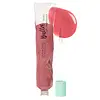
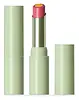
This brightening lip moisturizer is formulated around Tocopheryl Acetate and Ascorbyl Palmitate to brighten dull-looking skin and hydrate lips.


What's inside
What's inside
 Key Ingredients
Benefits
Concerns
Ingredients Side-by-side
Polybutene
Pentaerythrityl Tetraisostearate
Emollient

Diisostearyl Malate
EmollientCera Microcristallina
Emulsion StabilisingSilica Dimethyl Silylate
EmollientAroma


Tocopheryl Acetate
Antioxidant


Astrocaryum Murumuru Seed Butter
Emollient

Phenoxyethanol
Preservative
Caprylyl Glycol
Emollient
Pentaerythrityl Tetra-Di-T-Butyl Hydroxyhydrocinnamate
Antioxidant
Benzotriazolyl Dodecyl P-Cresol
UV AbsorberEthyl Vanillin
MaskingEthylhexylglycerin
Skin ConditioningHexylene Glycol
EmulsifyingAstrocaryum Tucuma Seed Butter
Emollient
Theobroma Grandiflorum Seed Butter
Skin Conditioning
Tocopherol
Antioxidant




Lecithin
Emollient
Ascorbyl Palmitate
Antioxidant

Glyceryl Stearate
Emollient
Glyceryl Oleate
Emollient
Citric Acid
Buffering
Benzyl Benzoate
Antimicrobial

Geraniol
Perfuming
Limonene
Perfuming
CI 42090
Cosmetic ColorantCI 77491
Cosmetic ColorantCI 77492
Cosmetic ColorantCI 77499
Cosmetic ColorantCI 15850
Cosmetic ColorantCI 77891
Cosmetic ColorantCI 19140
Cosmetic ColorantPolybutene, Pentaerythrityl Tetraisostearate, Diisostearyl Malate, Cera Microcristallina, Silica Dimethyl Silylate, Aroma, Tocopheryl Acetate, Astrocaryum Murumuru Seed Butter, Phenoxyethanol, Caprylyl Glycol, Pentaerythrityl Tetra-Di-T-Butyl Hydroxyhydrocinnamate, Benzotriazolyl Dodecyl P-Cresol, Ethyl Vanillin, Ethylhexylglycerin, Hexylene Glycol, Astrocaryum Tucuma Seed Butter, Theobroma Grandiflorum Seed Butter, Tocopherol, Lecithin, Ascorbyl Palmitate, Glyceryl Stearate, Glyceryl Oleate, Citric Acid, Benzyl Benzoate, Geraniol, Limonene, CI 42090, CI 77491, CI 77492, CI 77499, CI 15850, CI 77891, CI 19140
Caprylic/Capric Triglyceride
Masking
Polyisobutene
Pentaerythrityl Tetraisostearate
Emollient
Triethylhexanoin
MaskingEuphorbia Cerifera Cera
Astringent
Polyglyceryl-2 Triisostearate
Emulsifying
Copernicia Cerifera Cera
Emollient
Diisostearyl Malate
EmollientHydrogenated Castor Oil
Emollient
Citrus Aurantium Dulcis Peel Wax
Skin ConditioningTocopheryl Acetate
Antioxidant
Ascorbyl Palmitate
Antioxidant
Simmondsia Chinensis Seed Oil
Emollient
Phenoxyethanol
Preservative
Synthetic Fluorphlogopite
Tin Oxide
Abrasive
CI 77891
Cosmetic ColorantCI 15850
Cosmetic ColorantCI 19140
Cosmetic ColorantCaprylic/Capric Triglyceride, Polyisobutene, Pentaerythrityl Tetraisostearate, Triethylhexanoin, Euphorbia Cerifera Cera, Polyglyceryl-2 Triisostearate, Copernicia Cerifera Cera, Diisostearyl Malate, Hydrogenated Castor Oil, Citrus Aurantium Dulcis Peel Wax, Tocopheryl Acetate, Ascorbyl Palmitate, Simmondsia Chinensis Seed Oil, Phenoxyethanol, Synthetic Fluorphlogopite, Tin Oxide, CI 77891, CI 15850, CI 19140
Ingredients Explained
These ingredients are found in both products.
Ingredients higher up in an ingredient list are typically present in a larger amount.
Ascorbyl Palmitate is a fat-soluble form of vitamin C (Ascorbic Acid) made by combining it with palmitic acid.
It is able to blend easily into creams and oil-based formulas because it dissolves in oils rather than water.
As you may know, regular vitamin C is notorious for breaking down when exposed to sunlight and air. Ascorbyl Palmitate is more stable and degrades at a slower rate.
Research on whether it converts efficiently into active vitamin C once it's applied on your skin is still limited.
Some in-vitro studies suggest it may support collagen production, but it is not considered one of the stronger vitamin C derivatives, like:
Due to the palmitic acid base, this ingredient may not be fungal acne safe. Comedogenic studies have also shown this ingredient to have a rating of 2.
It's also worth keeping in mind that comedogenic and irritancy ratings are tested on individual ingredients, not finished formulas. The final product's formulation, concentration, and other ingredients all play a role in how something actually behaves on your skin.
Learn more about Ascorbyl PalmitateCi 15850 is the pigment color red. It is an azo dye and created synthetically.
Azo dyes need to be thoroughly purified before use. This allows them to be more stable and longer-lasting.
This ingredient is common in foundations, lipsticks, and blushes. This color is described as brown/orangey red.
It has many secondary names such as Red 6 and Red 7. According to a manufacturer, Red 6 usually contains aluminum.
Learn more about CI 15850CI 19140 is also known as Tartrazine. Tartrazine is a synthetic dye used in cosmetics, foods, and medicine to add a yellow color.
Tartrazine is created from petroleum and is water-soluble.
Some people may experience allergies from this dye, especially asthmatics and those with an aspirin intolerance.
Learn more about CI 19140Ci 77891 is a white pigment from Titanium dioxide. It is naturally found in minerals such as rutile and ilmenite.
It's main function is to add a white color to cosmetics. It can also be mixed with other colors to create different shades.
Ci 77891 is commonly found in sunscreens due to its ability to block UV rays.
Learn more about CI 77891Diisostearyl Malate is an emollient and most often used in lip products. It comes from isostearyl alcohol, a fatty acid, and malic acid, an AHA.
As an emollient, Diisostearyl Malate helps create a thin film on your skin to trap moisture in. This helps keep your skin soft and smooth.
Pentaerythrityl Tetraisostearate is a synthetic emollient and "skin-feel" ingredient that spreads well and leaves a non-sticky finish with high gloss.
In makeup, it also doubles as a pigment-wetting agent for better color payoff.
It's a well-vetted ingredient for safety and does not penetrate into skin due to its large molecule size.
Because it's a long-chain fatty acid ester, this ingredient may not be fungal acne or Malassezia safe.
Learn more about Pentaerythrityl TetraisostearatePhenoxyethanol is one of the most widely used preservatives in skincare (and for good reason!).
It has a large spectrum of antimicrobial activity and especially effective bacteria, yeast, and mold while only having a weak effect on your skin's natural microbiome.
On a cellular level, it disrupts the cell membranes of microbes by poking holes that make the cell leak. This shuts down the chemical reactions the microbe needs to make energy so it can no longer survive.
Another perk of this ingredient is that it stays functional across a wide pH range (3-10).
You'll often see it paired with boosters like Ethylhexylglycerin; one study showed that a 1:9 ratio of Ethylhexylglycerin to Phenoxyethanol damages bacterial membranes as effectively as doubling the Phenoxyethanol concentration on its own.
Typical use concentrations range from 0.3-1% depending on the formula, and this ingredient is capped at 1% int the EU.
Safety-wise, the fear mongering does not hold up to the evidence. The EU's Scientific Committee on Consumer Safety and FDA consider it safe as a preservative at up to 1%, including for children of all ages.
Adverse systemic effects only showed up in animal studies at exposures roughly 200x higher than what people get from cosmetics. And despite its very widespread use, this ingredient is a rare sensitizer and allergic reactions are uncommon.
Learn more about PhenoxyethanolTocopheryl Acetate is a stable, shelf-friendly form of vitamin E.
Formulators love it because plain vitamin E oxidizes quickly once it hits air. This acetate version stays stable and resists going off, helping to extend a product's shelf life.
It's actually inactive on its own and works like a slow-release "storage" form; the enzymes in your skin called esterases gradually convert it into active vitamin E over time.
One in vivo study showed 5% of the acetate in the living layer of the epidermis converted to vitamin E after 5 days of application. This study also found the skin gained protection against UV damage even though the conversion was slow and small.
Once converted, vitamin E acts as a skin's main fat-soluble antioxidant that fights free radicals to protect skin from damage.
Topical vitamin E generally boosts the skin's photoprotection, and it reduced UV-damage in animal models.
This ingredient has some brightening potential but it's more of a prevention ingredient than spot-fader. Cell studies show it can slow down melanin production but it's worth noting that it's not the most powerful brightener out there.
Overall, it has a pretty solid safety profile and has been found to be non-irritating and non-comedogenic. Allergic reactions may happen but stay rare due to how widely the ingredient gets used.
The concentration will vary depending on the formula; industry data shows 0.1% in baby lotions, 3% in lipsticks, and 5% in foot powders. You can also find this ingredient at 100% in a pure vitamin E oil.
Most leave-on skincare keeps it at the lower end, often between 0.5-1%.
Learn more about Tocopheryl Acetate

