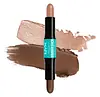
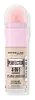
NYX Cosmetics Wonder Stick Highlight & Contour Versus Maybelline Instant Perfector 4-In-1 Glow Foundation

What's inside
What's inside
 Key Ingredients
Benefits
Concerns
Ingredients Side-by-side
Ethylhexyl Palmitate
Emollient




Cetearyl Ethylhexanoate
Emollient
Hydrogenated Polyisobutene
EmollientIsodecyl Neopentanoate
EmollientDimer Dilinoleyl Dimer Dilinoleate
EmollientSynthetic Wax
Abrasive
Polyglyceryl-2 Triisostearate
Emulsifying
Microcrystalline Wax
Emulsion StabilisingEuphorbia Cerifera Cera
Astringent
Hydrogenated Castor Oil
Emollient

Ricinus Communis Seed Oil
Masking
Tin Oxide
Abrasive
Tocopherol
Antioxidant






Tocopheryl Acetate
Antioxidant
Phenoxyethanol
Preservative
Ethylhexyl Palmitate, Cetearyl Ethylhexanoate, Hydrogenated Polyisobutene, Isodecyl Neopentanoate, Dimer Dilinoleyl Dimer Dilinoleate, Synthetic Wax, Polyglyceryl-2 Triisostearate, Microcrystalline Wax, Euphorbia Cerifera Cera, Hydrogenated Castor Oil, Ricinus Communis Seed Oil, Tin Oxide, Tocopherol, Tocopheryl Acetate, Phenoxyethanol
Water
Skin ConditioningIsohexadecane
EmollientDimethicone
Emollient

Glycerin
Humectant
Isododecane
EmollientDiisopropyl Adipate
EmollientPEG-9 Polydimethylsiloxyethyl Dimethicone
Emulsifying
Propylene Glycol
Humectant
Dimethicone Crosspolymer
Emulsion Stabilising
Disteardimonium Hectorite
StabilisingPEG-10 Dimethicone
Skin Conditioning
Cetyl PEG/PPG-10/1 Dimethicone
Emulsifying
Phenoxyethanol
Preservative
Kaolin
Abrasive


Sodium Chloride
MaskingPolyglyceryl-4 Isostearate
Emulsifying
Caprylyl Glycol
Emollient
Synthetic Fluorphlogopite
Butyrospermum Parkii Butter
Skin Conditioning
Ethylhexylglycerin
Skin ConditioningEthylhexyl Palmitate
Emollient
Disodium Stearoyl Glutamate
CleansingAluminum Hydroxide
EmollientSilica Dimethyl Silylate
EmollientButylene Glycol
Humectant
Sodium Hyaluronate
Humectant
Tocopherol
Antioxidant
Hexylene Glycol
EmulsifyingPentaerythrityl Tetra-Di-T-Butyl Hydroxyhydrocinnamate
Antioxidant
Citric Acid
Buffering
Water, Isohexadecane, Dimethicone, Glycerin, Isododecane, Diisopropyl Adipate, PEG-9 Polydimethylsiloxyethyl Dimethicone, Propylene Glycol, Dimethicone Crosspolymer, Disteardimonium Hectorite, PEG-10 Dimethicone, Cetyl PEG/PPG-10/1 Dimethicone, Phenoxyethanol, Kaolin, Sodium Chloride, Polyglyceryl-4 Isostearate, Caprylyl Glycol, Synthetic Fluorphlogopite, Butyrospermum Parkii Butter, Ethylhexylglycerin, Ethylhexyl Palmitate, Disodium Stearoyl Glutamate, Aluminum Hydroxide, Silica Dimethyl Silylate, Butylene Glycol, Sodium Hyaluronate, Tocopherol, Hexylene Glycol, Pentaerythrityl Tetra-Di-T-Butyl Hydroxyhydrocinnamate, Citric Acid
Reviews
Ingredients Explained
These ingredients are found in both products.
Ingredients higher up in an ingredient list are typically present in a larger amount.
Ethylhexyl Palmitate, also known as octyl palmitate, is created from 2-ethylhexyl alcohol and palmitic acid.
In cosmetics, it plays many roles:
One thing worth noting: a controlled study found this ingredient applied under occlusion to acne-prone subjects increased microcomedones. Just keep in mind this was under occlusive conditions and don't reflect how most products are used day-to-day.
For most people, this is a well-tolerated and lightweight ingredient.
This ingredient may not be fungal acne safe because it is an ester of palmitic acid, a C16 fatty acid that falls within the C11-24 range that Malassezia can metabolize.
You'll see this one rated 4 comedogenic all over the internet. That number isn't from a single study, and the actual research is more interesting.
The original rating comes from 1980s rabbit ear tests (which are a shaky basis for anything). But Ethylhexyl Palmitate is one of the few ingredients with real human data behind it. A 2021 controlled trial found this ingredient increased microcomedones by an average of 365% over four weeks.
Just know that test used the pure ingredient under an occlusive pad on back skin; most products use it at much lower levels alongside other ingredients and plenty of people use those with no issue.
Learn more about Ethylhexyl PalmitatePhenoxyethanol is one of the most widely used preservatives in skincare (and for good reason!).
It has a large spectrum of antimicrobial activity and especially effective bacteria, yeast, and mold while only having a weak effect on your skin's natural microbiome.
On a cellular level, it disrupts the cell membranes of microbes by poking holes that make the cell leak. This shuts down the chemical reactions the microbe needs to make energy so it can no longer survive.
Another perk of this ingredient is that it stays functional across a wide pH range (3-10).
You'll often see it paired with boosters like Ethylhexylglycerin; one study showed that a 1:9 ratio of Ethylhexylglycerin to Phenoxyethanol damages bacterial membranes as effectively as doubling the Phenoxyethanol concentration on its own.
Typical use concentrations range from 0.3-1% depending on the formula, and this ingredient is capped at 1% int the EU.
Safety-wise, the fear mongering does not hold up to the evidence. The EU's Scientific Committee on Consumer Safety and FDA consider it safe as a preservative at up to 1%, including for children of all ages.
Adverse systemic effects only showed up in animal studies at exposures roughly 200x higher than what people get from cosmetics. And despite its very widespread use, this ingredient is a rare sensitizer and allergic reactions are uncommon.
Learn more about PhenoxyethanolTocopherol is a fat-soluble antioxidant known as Vitamin E.
You'll find this ingredient in the vast majority of skincare (for good reason). It works to neutralize free radicals, or unstable molecules generated by UV exposure, pollution, and other environmental stressors, before they can cause oxidative damage to your skin cells.
Topically applied tocopherol has been shown to protect against UV damage by ramping up the skin's own natural defense enzymes.
It also acts as a skin conditioning agent; some studies show that regular topical use can improve the skin's water-binding capacity over 2-4 weeks.
This ingredient is especially loved for being a team player. When combined with Vitamin C, the photoprotective effect of both ingredients roughly doubles and the combo also helps reduce UV-induced DNA damage.
This ingredient has some brightening potential but it's more of a prevention ingredient than spot-fader. Cell studies show it can slow down melanin production but it's worth noting that it's not the most powerful brightener out there.
In formulations, it also serves as a stabilizer that helps protect other oxidation-prone ingredients from degrading.
Concentrations usually range from 0.1-1% in most leave-on products.
Learn more about Tocopherol

