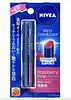
Nivea Rich Care & Color Lip Balm SPF 20 Versus Nivea Delicious Drop Lip Balm SPF 11 - Peach & Vanilla
This barrier-repair lip moisturizer is formulated around Persea Gratissima Oil and Simmondsia Chinensis Seed Oil to strengthen the lip barrier and hydrate lips.
This barrier-repair lip moisturizer is formulated around Olea Europaea Fruit Oil and Petrolatum to strengthen the lip barrier and hydrate lips.

What's inside
What's inside
 Key Ingredients

Benefits
Concerns
Ingredients Side-by-side
Hydrogenated Polyisobutene
EmollientNeopentyl Glycol Dicaprate
EmollientPentaerythrityl Tetraisostearate
Emollient

Diisostearyl Malate
EmollientDiphenylsiloxy Phenyl Trimethicone
Skin Conditioning
Polyethylene
Abrasive

Dipentaerythrityl Hexahydroxystearate
EmulsifyingStearic Acid
Cleansing

Ethylhexyl Methoxycinnamate
UV Absorber


Phytosteryl/Octyldodecyl Lauroyl Glutamate
Skin ConditioningPersea Gratissima Oil
Skin Conditioning

Simmondsia Chinensis Seed Oil
Emollient

Macadamia Integrifolia Seed Oil
Skin Conditioning
Tocopherol
Antioxidant





Polyglyceryl-2 Triisostearate
Emulsifying
Microcrystalline Wax
Emulsion StabilisingButyl Methoxydibenzoylmethane
UV Absorber
Mica
Cosmetic ColorantIron Oxides
Titanium Dioxide
Cosmetic Colorant
Aluminum Hydroxide
EmollientBarium Sulfate
Cosmetic ColorantCI 19140
Cosmetic ColorantCI 15850
Cosmetic ColorantCI 73360
Cosmetic ColorantHydrogenated Polyisobutene, Neopentyl Glycol Dicaprate, Pentaerythrityl Tetraisostearate, Diisostearyl Malate, Diphenylsiloxy Phenyl Trimethicone, Polyethylene, Dipentaerythrityl Hexahydroxystearate, Stearic Acid, Ethylhexyl Methoxycinnamate, Phytosteryl/Octyldodecyl Lauroyl Glutamate, Persea Gratissima Oil, Simmondsia Chinensis Seed Oil, Macadamia Integrifolia Seed Oil, Tocopherol, Polyglyceryl-2 Triisostearate, Microcrystalline Wax, Butyl Methoxydibenzoylmethane, Mica, Iron Oxides, Titanium Dioxide, Aluminum Hydroxide, Barium Sulfate, CI 19140, CI 15850, CI 73360
Olea Europaea Fruit Oil
Masking
Petrolatum
Emollient
Paraffinum Liquidum
Emollient
Diisostearyl Malate
EmollientCeresin
Emulsion StabilisingHydrogenated Coco-Glycerides
Emollient
Dipentaerythrityl Hexahydroxystearate/Hexastearate/Hexarosinate
Skin ConditioningCaprylic/Capric Triglyceride
Masking
Ethylhexyl Methoxycinnamate
UV Absorber
Cyclodextrin
AbsorbentPolyethylene
Abrasive
Dimethicone
Emollient
Squalane
Emollient
Tocopheryl Acetate
Antioxidant
Isotridecyl Isononanoate
EmollientMicrocrystalline Wax
Emulsion StabilisingParfum
Masking
Silica
Abrasive

Butyl Methoxydibenzoylmethane
UV Absorber
BHT
Antioxidant
CI 19140
Cosmetic ColorantCI 42090
Cosmetic ColorantCI 15850
Cosmetic ColorantOlea Europaea Fruit Oil, Petrolatum, Paraffinum Liquidum, Diisostearyl Malate, Ceresin, Hydrogenated Coco-Glycerides, Dipentaerythrityl Hexahydroxystearate/Hexastearate/Hexarosinate, Caprylic/Capric Triglyceride, Ethylhexyl Methoxycinnamate, Cyclodextrin, Polyethylene, Dimethicone, Squalane, Tocopheryl Acetate, Isotridecyl Isononanoate, Microcrystalline Wax, Parfum, Silica, Butyl Methoxydibenzoylmethane, BHT, CI 19140, CI 42090, CI 15850
Reviews
Ingredients Explained
These ingredients are found in both products.
Ingredients higher up in an ingredient list are typically present in a larger amount.
Also known as Avobenzone, this ingredient is an oil-soluble used to absorb the full spectrum of UVA rays (peak 357 nm).
It's one of the most effective UVA filters available but has a major caveat of photostability: avobenzone is susceptible to photodegradation.
This means it can lose efficacy when exposed to sunlight without the help of a stabilizing agent.
Studies show antioxidants (like vitamin E or vitamin C) and some UV filters (like octocrylene and Tinosorb S) can meaningfully improve its stability in a formulation.
The maximum allowable concentration according to regulation is 3% in the US + Canada, and 5% in the EU, Australia, China, Korea, and ASEAN countries.
It has a well-support safety profile: a comprehensive 2025 review found minimal toxicity with no evidence of carcinogenicity.
Overall, avobenzone is a safe and regulated ingredient used in sunscreen for over 40 years.
Learn more about Butyl MethoxydibenzoylmethaneCi 15850 is the pigment color red. It is an azo dye and created synthetically.
Azo dyes need to be thoroughly purified before use. This allows them to be more stable and longer-lasting.
This ingredient is common in foundations, lipsticks, and blushes. This color is described as brown/orangey red.
It has many secondary names such as Red 6 and Red 7. According to a manufacturer, Red 6 usually contains aluminum.
Learn more about CI 15850CI 19140 is also known as Tartrazine. Tartrazine is a synthetic dye used in cosmetics, foods, and medicine to add a yellow color.
Tartrazine is created from petroleum and is water-soluble.
Some people may experience allergies from this dye, especially asthmatics and those with an aspirin intolerance.
Learn more about CI 19140Diisostearyl Malate is an emollient and most often used in lip products. It comes from isostearyl alcohol, a fatty acid, and malic acid, an AHA.
As an emollient, Diisostearyl Malate helps create a thin film on your skin to trap moisture in. This helps keep your skin soft and smooth.
This ingredient is also known as Octinoxate and is one of the oldest and most widely used chemical UV filters in skincare.
It has a simple job: soap up UVB radiation (290-320 nm), the wavelengths responsible for sunburn and a big chunk of long-term sun damage.
In formulas, it's always paired with a separate UVA filter because octinoxate solely protects skin from UVB.
Because it's an oil-soluble liquid, it's easy to blend into the oil phase of lotions/creams and gives a cosmetically elegant feel.
The one quirk about formulating this ingredient is photostability; the molecule slowly changes shape into a less effective version when sunlight hits it. So the longer you're in the sun, the weaker its protection gets. The drop can be more than 30% in some formulas.
It also doesn't play nice with Avobenzone (the common UVA filter) since avobenzone destabilizes octinoxate and the two degrade each other. But don't worry: brands have solved this issue by adding photostabilizers like Tinosorb S to prevent degradation and keep SPF stable under heavy UV exposure.
The maximum allowed level is 10% in the EU and Australia, 7.5% in the US and Canada, and 20% in Japan.
The Cosmetic Ingredient Review Panel has concluded this ingredient to be safe in cosmetics up to 10%.
One last thing worth knowing for context:
Octinoxate has been the subject of ongoing review in Europe where the Scientific Committee on Consumer Safety's (SCCS) 2025 final opinion is that this ingredient is an endocrine-active substance.
Lab and animal studies suggest it can act a bit like a hormone in the body (mildly mimicking estrogen and slightly blocking male hormones). It's important to know this hasn't really been shown to happen in everyday human use.
This ingredient is also banned in Hawaii over coral reef concerns.
Learn more about Ethylhexyl MethoxycinnamateMicrocrystalline Wax is derived from petroleum through a de-oiling process, then highly refined and purified before use in cosmetics.
In skincare formulations, it is used to improve texture and create a smooth, even consistency. It also helps stabilize products by preventing ingredients from separating.
Polyethylene is a synthetic ingredient that helps the skin retain moisture. It is a polymer.
It is also typically used within product formulations to help bind solid ingredients together and thicken oil-based ingredients. When added to balms and emulsions, it helps increase the melting point temperature.


