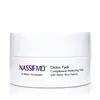
This smoothing toner pad uses a pre-saturated pad with Salicylic Acid and Glycolic Acid to refine skin texture and refine the look of pores.
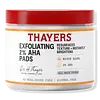
This brightening exfoliating pad uses a pre-saturated pad with Aloe Barbadensis Leaf Juice and Citric Acid to brighten dull-looking skin.

What's inside
What's inside
 Key Ingredients
No key ingredients
Benefits
Concerns
Ingredients Side-by-side
Water
Skin ConditioningButylene Glycol
Humectant

Hamamelis Virginiana Leaf Extract
Skin Conditioning

Methyl Gluceth-20
Humectant
Salicylic Acid
Masking








Phenoxyethanol
Preservative
Pentylene Glycol
Skin Conditioning
PPG-5-Ceteth-20
EmulsifyingGlycolic Acid
Buffering




Lactic Acid
Buffering
Salix Nigra Bark Extract
Skin ProtectingEctoin
Skin Conditioning


3-O-Ethyl Ascorbic Acid
Skin Conditioning
Sorbitol
Humectant
Dihydroxy Methylchromone
Antioxidant
Bakuchiol
Antimicrobial
Polysorbate 20
Emulsifying
Sodium PCA
Humectant
Allantoin
Skin Conditioning
Potassium Sorbate
Preservative
Sodium Hydroxide
BufferingParfum
Masking

Sodium Phytate
ChelatingEthylhexylglycerin
Skin ConditioningSodium Chloride
MaskingSodium Carbonate
BufferingAlpha-Isomethyl Ionone
Perfuming
Limonene
Perfuming
Water, Butylene Glycol, Hamamelis Virginiana Leaf Extract, Methyl Gluceth-20, Salicylic Acid, Phenoxyethanol, Pentylene Glycol, PPG-5-Ceteth-20, Glycolic Acid, Lactic Acid, Salix Nigra Bark Extract, Ectoin, 3-O-Ethyl Ascorbic Acid, Sorbitol, Dihydroxy Methylchromone, Bakuchiol, Polysorbate 20, Sodium PCA, Allantoin, Potassium Sorbate, Sodium Hydroxide, Parfum, Sodium Phytate, Ethylhexylglycerin, Sodium Chloride, Sodium Carbonate, Alpha-Isomethyl Ionone, Limonene
Water
Skin ConditioningAloe Barbadensis Leaf Juice
Skin Conditioning
Vaccinium Myrtillus Fruit Extract
Skin ConditioningHamamelis Virginiana Water
Astringent
Isoceteth-20
EmulsifyingPhenoxyethanol
Preservative
Saccharum Officinarum Extract
MoisturisingSodium Hydroxide
BufferingPvp
Emulsion StabilisingChlorphenesin
Antimicrobial
Citrus Aurantium Dulcis Fruit Extract
MaskingCitrus Limon Fruit Extract
Masking
Disodium EDTA
ChelatingAcer Saccharum Extract
Skin ConditioningCarvone
Masking
Citrus Aurantium Peel Oil

Limonene
Perfuming
Propylene Glycol
Humectant
Citric Acid
Buffering
Sodium Benzoate
Masking
Potassium Sorbate
Preservative
Chamomilla Recutita Flower Extract
Masking
Chamomilla Recutita Extract
Skin Conditioning
Water, Aloe Barbadensis Leaf Juice, Vaccinium Myrtillus Fruit Extract, Hamamelis Virginiana Water, Isoceteth-20, Phenoxyethanol, Saccharum Officinarum Extract, Sodium Hydroxide, Pvp, Chlorphenesin, Citrus Aurantium Dulcis Fruit Extract, Citrus Limon Fruit Extract, Disodium EDTA, Acer Saccharum Extract, Carvone, Citrus Aurantium Peel Oil, Limonene, Propylene Glycol, Citric Acid, Sodium Benzoate, Potassium Sorbate, Chamomilla Recutita Flower Extract, Chamomilla Recutita Extract
Ingredients Explained
These ingredients are found in both products.
Ingredients higher up in an ingredient list are typically present in a larger amount.
Limonene is the compound that gives citrus peel its smell.
In skincare, it shows up as a standalone fragrance ingredient or as a natural compound of citrus and other essential oils.
You'll typically see this ingredient used in very small amounts; anything above 0.001% in a leave-on product or 0.01% in a rinse-off has to be named on the label in the EU. The citrus oils that carry it sit around 0.5-1% in a finished formula.
Fresh limonene is a weak allergen; the real issue is that it slowly reacts with air and then breaks down from oxidation to create hydroperoxides (which are strong sensitizers). This is why suppliers are required to keep the peroxide value below 20 mmol.
Positive reactions in people being investigated for eczema vary:
It's worth skipping if you have a known fragrance allergy or a compromised barrier, but the risk is low for most people.
Older or long-opened products are also more likely to bother you than fresh ones due to oxidation.
Learn more about LimonenePhenoxyethanol is one of the most widely used preservatives in skincare (and for good reason!).
It has a large spectrum of antimicrobial activity and especially effective bacteria, yeast, and mold while only having a weak effect on your skin's natural microbiome.
On a cellular level, it disrupts the cell membranes of microbes by poking holes that make the cell leak. This shuts down the chemical reactions the microbe needs to make energy so it can no longer survive.
Another perk of this ingredient is that it stays functional across a wide pH range (3-10).
You'll often see it paired with boosters like Ethylhexylglycerin; one study showed that a 1:9 ratio of Ethylhexylglycerin to Phenoxyethanol damages bacterial membranes as effectively as doubling the Phenoxyethanol concentration on its own.
Typical use concentrations range from 0.3-1% depending on the formula, and this ingredient is capped at 1% int the EU.
Safety-wise, the fear mongering does not hold up to the evidence. The EU's Scientific Committee on Consumer Safety and FDA consider it safe as a preservative at up to 1%, including for children of all ages.
Adverse systemic effects only showed up in animal studies at exposures roughly 200x higher than what people get from cosmetics. And despite its very widespread use, this ingredient is a rare sensitizer and allergic reactions are uncommon.
Learn more about PhenoxyethanolPotassium Sorbate is a preservative used to prevent yeast and mold in products. It is commonly found in both cosmetic and food products.
This ingredient comes from potassium salt derived from sorbic acid. Sorbic acid is a natural antibiotic and effective against fungus.
Both potassium sorbate and sorbic acid can be found in baked goods, cheeses, dried meats, dried fruit, ice cream, pickles, wine, yogurt, and more.
You'll often find this ingredient used with other preservatives.
Learn more about Potassium SorbateSodium Hydroxide is also known as lye or caustic soda. It is used to adjust the pH of products; many ingredients require a specific pH to be effective.
In small amounts, sodium hydroxide is considered safe to use. However, large amounts may cause chemical burns due to its high alkaline.
Your skin has a natural pH and acid mantle. This acid mantle helps prevent harmful bacteria from breaking through. The acid mantle also helps keep your skin hydrated.
"Alkaline" refers to a high pH level. A low pH level would be considered acidic.
Learn more about Sodium HydroxideWater. It's the most common cosmetic ingredient of all. You'll usually see it at the top of ingredient lists, meaning that it makes up the largest part of the product.
So why is it so popular? Water most often acts as a solvent - this means that it helps dissolve other ingredients into the formulation.
You'll also recognize water as that liquid we all need to stay alive. If you see this, drink a glass of water. Remember to stay hydrated!
Learn more about Water

