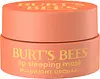
This hydrating lip mask is formulated around Squalane and Simmondsia Chinensis Seed Oil to hydrate lips and strengthen the lip barrier.


What's inside
What's inside
 Key Ingredients
Benefits
Concerns
Ingredients Side-by-side
Mango Butter Dimer Dilinoleyl Esters/Dimer Dilinoleate Copolymer
Emollient

Soybean Glycerides
EmollientButyrospermum Parkii Butter Unsaponifiables
Skin Conditioning
Jojoba Esters
Emollient
Ricinus Communis Seed Oil
Masking

Squalane
Emollient

Butyrospermum Parkii Butter Extract
Skin Conditioning
Oleic/Linoleic/Linolenic Polyglycerides
Emollient
Simmondsia Chinensis Seed Oil
Emollient
Caprylic/Capric Triglyceride
Masking
Moringa Oil/Hydrogenated Moringa Oil Esters
Skin Conditioning
C10-18 Triglycerides
Emollient
Isopropyl Palmitate
Emollient


Sodium Hyaluronate
Humectant

Hydrogenated Sunflower Seed Oil
Skin Conditioning
Raspberry Seed Oil/Tocopheryl Succinate Aminopropanediol Esters
Skin Conditioning
Tocopherol
Antioxidant



Swertia Chirata Extract
HumectantPunica Granatum Flower Extract
Skin Conditioning
Brassica Alba Sprout Extract
Skin ConditioningTriolein
Skin Conditioning
Candelilla Cera
Emollient
Brassica Campestris Sterols
EmollientAscorbyl Palmitate
Antioxidant
Glycine Soja Oil
Emollient
Glyceryl Dioleate
Emollient
Lecithin
Emollient
Polyglyceryl-3 Diisostearate
Emulsifying
Water
Skin ConditioningIsostearyl Alcohol
Emollient
Glyceryl Isostearate
Emollient
Aroma

Mango Butter Dimer Dilinoleyl Esters/Dimer Dilinoleate Copolymer, Soybean Glycerides, Butyrospermum Parkii Butter Unsaponifiables, Jojoba Esters, Ricinus Communis Seed Oil, Squalane, Butyrospermum Parkii Butter Extract, Oleic/Linoleic/Linolenic Polyglycerides, Simmondsia Chinensis Seed Oil, Caprylic/Capric Triglyceride, Moringa Oil/Hydrogenated Moringa Oil Esters, C10-18 Triglycerides, Isopropyl Palmitate, Sodium Hyaluronate, Hydrogenated Sunflower Seed Oil, Raspberry Seed Oil/Tocopheryl Succinate Aminopropanediol Esters, Tocopherol, Swertia Chirata Extract, Punica Granatum Flower Extract, Brassica Alba Sprout Extract, Triolein, Candelilla Cera, Brassica Campestris Sterols, Ascorbyl Palmitate, Glycine Soja Oil, Glyceryl Dioleate, Lecithin, Polyglyceryl-3 Diisostearate, Water, Isostearyl Alcohol, Glyceryl Isostearate, Aroma
Oleic/Linoleic/Linolenic Polyglycerides
Emollient
Prunus Amygdalus Dulcis Oil
Skin Conditioning
Ricinus Communis Seed Oil
Masking
Polyhydroxystearic Acid
Emulsifying
Squalane
Emollient
Aroma
Jojoba Esters
Emollient
Limnanthes Alba Seed Oil
Skin Conditioning
Beeswax
Emulsion Stabilising
Bakuchiol
Antimicrobial


Sodium Hyaluronate
Humectant
Hydrogenated Castor Oil
Emollient
Tocopherol
Antioxidant
Glycine Soja Oil
Emollient
Benzyl Cinnamate
Perfuming

Citral
Perfuming
Citronellol
Perfuming
Geraniol
Perfuming
Limonene
Perfuming
Linalool
Perfuming
Benzyl Benzoate
Antimicrobial
Mica
Cosmetic ColorantTitanium Dioxide
Cosmetic Colorant

Iron Oxides
CI 75470
Cosmetic ColorantOleic/Linoleic/Linolenic Polyglycerides, Prunus Amygdalus Dulcis Oil, Ricinus Communis Seed Oil, Polyhydroxystearic Acid, Squalane, Aroma, Jojoba Esters, Limnanthes Alba Seed Oil, Beeswax, Bakuchiol, Sodium Hyaluronate, Hydrogenated Castor Oil, Tocopherol, Glycine Soja Oil, Benzyl Cinnamate, Citral, Citronellol, Geraniol, Limonene, Linalool, Benzyl Benzoate, Mica, Titanium Dioxide, Iron Oxides, CI 75470
Ingredients Explained
These ingredients are found in both products.
Ingredients higher up in an ingredient list are typically present in a larger amount.
Aroma refers to an ingredient, or mixture of ingredients, that impart or mask a flavor.
The name is slightly confusing. This is because INCI associates aroma with flavor instead of smell.
Here is the official definition from the The International Cosmetic Ingredient Dictionary and Handbook:
“Aroma is a term for ingredient labeling used to identify that a product contains a material or combination of materials normally added to a cosmetic to produce or to mask a particular flavor.”
INCI shows the only purpose of aroma to be "flavouring".
However, due to regulation differences, some companies may use aroma in place of parfum.
In Canada, this ingredient only has to be listed in concentrations above 1%.
Learn more about AromaGlycine Soja Oil is a plant-derived oil from soybean seeds. Like other oils, it is rich in essential fatty acids (mostly linoleic and oleic) that support skin hydration and barrier function.
The fatty acids are able to integrate into the lipid matrix of the stratum corneum to help soften skin and reduce water loss.
On top of that, soybean oil is rich in vitamins like vitamin E, a potent antioxidant.
Research on soybean's active components also point to anti-inflammatory, collagen-stimulating, antioxidant activity, and protection against UV-induced oxidative damage.
Most of this research applies to the broader soybean plant and not just the oil fraction alone.
This ingredient may not be fungal acne safe due to the oleic acid content.
Learn more about Glycine Soja OilJojoba Esters is a wax created from Jojoba oil. It is an emollient and film-forming ingredient. In bead form, it is an exfoliator.
This ingredient has high oxidative stability, meaning it doesn't break down when exposed to oxygen.
Its similarity to our skin's natural oils makes it a great emollient. Emollients help soften and soothe our skin by creating a barrier on top. This barrier helps trap moisture in, keeping skin hydrated.
It is created using either the hydrogenation or transesterification processes on jojoba oil.
Learn more about Jojoba EstersOleic/Linoleic/Linolenic Polyglycerides isn't fungal acne safe.
This ingredient is also known as castor oil. It is a skin conditioning ingredient.
The star component of castor oil is ricinoleic acid, an unusual fatty acid that makes up ~80-92% of its composition.
In skincare, it is an emollient that dries down to a solid film with water-binding properties. This helps keep skin hydrated and helps reduce transepidermal water loss (TEWL).
A 2026 dermatology review pulls together its broader uses:
Human clinical testing found this ingredient to be non-irritating and non-sensitizing.
Because castor oil contains fatty acids in the C11-24 range, this ingredient may not be fungal acne safe.
At this time, the literature does not support castor oil in regrowing hair. A 2022 systematic review found no strong evidence that it supports hair growth and only weak evidence that it improves hair shine.
Castor oil itself carries "perfuming" and "masking" function tags according to the official CosIng database. This is because of its mild odor and odor-dampening properties.
Learn more about Ricinus Communis Seed OilSodium Hyaluronate is the salt form of hyaluronic acid. It is a long sugar chain that is naturally found in your skin, joints, and connective tissue that maintains hydration and elasticity.
In skincare, it works as a humectant. It pulls water from the environment and deeper layers of skin and binds it to the surface.
Interestingly, the size of the molecule affects its behavior:
Some clinical evidence links low molecular weight versions to improved wrinkle depth, elasticity, anti-inflammatory effects, and barrier repair.
Many serums use a blend of both weights so you can get surface hydration plus longer-lasting and deeper effects.
You'll typically see concentrations between 0.1-2% for this ingredient.
Learn more about Sodium HyaluronateSqualane is the hydrogenated and shelf-stable form of squalene (a lipid that naturally occurs in human sebum).
It is an emollient and skin conditioning agent that is able to integrate seamlessly into the skin's lipid barrier without clogging pores.
This is due to how structurally similar it is to what your skin already produces.
Though it is mostly an emollient that helps soften and hydrate skin, it also has some humectant and occlusive action. Humectants help the skin retain moisture while occlusives seal it in, making squalane a triple-threat moisturizer.
Research shows it has antioxidant capabilities that help protect against stressors like UV exposure, specifically UVA induced oxidative stress. This study also found that it supports collagen biosynthesis in human dermal fibroblasts.
No clinical study has reported significant adverse effects and irritation reactions are very rare from this ingredient (even at 100% concentration).
Overall, it's a fantastic ingredient for hydration and is suitable for all skin types.
This depends on the source. Squalane can be derived from both plants and animals. Most squalane used in skincare comes from plants.
Please note: the source of squalane is only known if disclosed by the brand. We recommend reaching out to the brand if you have any questions about their squalane.
Read more about squalene with an "e".
Though squalane is often called an oil, it’s technically not one. It is a hydrocarbon, meaning it is only made of carbon and hydrogen. True oils are triglycerides and made of fatty acids and glycerol.
The term “oil-free” isn’t regulated so companies can define it however they want. Some exclude all oils, while others just avoid mineral oil or comedogenic oils.
Squalane has a comedogenic rating of 1 from the original 1972 study that tested raw ingredients under occlusion on rabbit ears. This system is not standardized or peer-reviewed, and using the raw ingredients is very different from how diluted cosmetic formulations are used on human skin.
A comedogenic rating of 1 means it is "unlikely to clog pores" according to the original rating system.
The overall formula of a product matters more than the individual ingredients on whether or not it will cause clogged pores.
Learn more about SqualaneTocopherol is a fat-soluble antioxidant known as Vitamin E.
You'll find this ingredient in the vast majority of skincare (for good reason). It works to neutralize free radicals, or unstable molecules generated by UV exposure, pollution, and other environmental stressors, before they can cause oxidative damage to your skin cells.
Topically applied tocopherol has been shown to protect against UV damage by ramping up the skin's own natural defense enzymes.
It also acts as a skin conditioning agent; some studies show that regular topical use can improve the skin's water-binding capacity over 2-4 weeks.
This ingredient is especially loved for being a team player. When combined with Vitamin C, the photoprotective effect of both ingredients roughly doubles and the combo also helps reduce UV-induced DNA damage.
This ingredient has some brightening potential but it's more of a prevention ingredient than spot-fader. Cell studies show it can slow down melanin production but it's worth noting that it's not the most powerful brightener out there.
In formulations, it also serves as a stabilizer that helps protect other oxidation-prone ingredients from degrading.
Concentrations usually range from 0.1-1% in most leave-on products.
Learn more about Tocopherol

