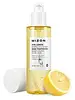
This toner is formulated around Panthenol to hydrate and support the skin barrier.
This calming toner is formulated around Beta-Glucan and Panthenol to calm redness and strengthen the skin barrier.


What's inside
What's inside
 Key Ingredients
Benefits
Concerns
Ingredients Side-by-side
Water
Skin ConditioningPanthenol
Skin Conditioning




Alcohol
Antimicrobial




Butylene Glycol
Humectant
Glycerin
Humectant
1,2-Hexanediol
Skin Conditioning
Citrus Medica Limonum Fruit Extract
Skin ConditioningSodium Hyaluronate
Humectant

Phenyl Trimethicone
Skin Conditioning
Acrylates/C10-30 Alkyl Acrylate Crosspolymer
Emulsion StabilisingPotassium Hydroxide
BufferingPEG-60 Hydrogenated Castor Oil
Emulsifying

Coptis Japonica Extract
AntimicrobialAllantoin
Skin Conditioning
Portulaca Oleracea Extract
Skin Conditioning
Beta-Glucan
Skin Conditioning
Betula Platyphylla Japonica Juice
Skin Conditioning
Hamamelis Virginiana Leaf Extract
Skin Conditioning
Carica Papaya Fruit Extract
Skin ConditioningPropylene Glycol
Humectant
Hedera Helix Extract
AntimicrobialPaeonia Albiflora Root Extract
Skin ConditioningConvallaria Majalis Extract
Skin ConditioningMagnolia Liliflora Flower Extract
Skin ConditioningLilium Candidum Flower Extract
Skin ConditioningLeontopodium Alpinum Flower/Leaf Extract
Skin ConditioningAscorbic Acid
Antioxidant




Sodium Ascorbyl Phosphate
Antioxidant
Citrus Limon Peel Oil
Masking


Citrus Grandis Peel Oil
Masking
Parfum
Masking
Water, Panthenol, Alcohol, Butylene Glycol, Glycerin, 1,2-Hexanediol, Citrus Medica Limonum Fruit Extract, Sodium Hyaluronate, Phenyl Trimethicone, Acrylates/C10-30 Alkyl Acrylate Crosspolymer, Potassium Hydroxide, PEG-60 Hydrogenated Castor Oil, Coptis Japonica Extract, Allantoin, Portulaca Oleracea Extract, Beta-Glucan, Betula Platyphylla Japonica Juice, Hamamelis Virginiana Leaf Extract, Carica Papaya Fruit Extract, Propylene Glycol, Hedera Helix Extract, Paeonia Albiflora Root Extract, Convallaria Majalis Extract, Magnolia Liliflora Flower Extract, Lilium Candidum Flower Extract, Leontopodium Alpinum Flower/Leaf Extract, Ascorbic Acid, Sodium Ascorbyl Phosphate, Citrus Limon Peel Oil, Citrus Grandis Peel Oil, Parfum
Reviews
Ingredients Explained
These ingredients are found in both products.
Ingredients higher up in an ingredient list are typically present in a larger amount.
Beta-Glucan is a soluble polysaccharide (a chain of glucose sugars) sourced from the cells walls of oats, baker's yeast, mushrooms, and seaweed.
It's a rare ingredient that pulls double-duty as a heavy-duty hydrator and skin-soothing repair agent.
On the surface, it acts as a humectant that holds water in place and reduces moisture loss for a plumper, smoother feel, while its anti-inflammatory and antioxidant properties make it a great pick for calming redness or sensitive skin
The more interesting story is underneath:
Despite its large molecular size, oat beta-glucan has been shown to penetrate the epidermis and reach the dermis by slipping between skin cells. Here, it interacts with fibroblasts and macrophages to nudge collagen synthesis and support wound repair.
A small 2005 split-face clinical study of 27 subjects found topical beta-glucan produced measurable reductions in wrinkle depth, height, and roughness after 8 weeks of use.
It is worth noting the trial was small and the penetration testing used frozen, irradiated skin so the anti-aging data is encouraging rather than definitive.
This ingredient gets along with pretty much everything and is typically used around 0.1-1%.
Fungal acne: This ingredient is not a food source for the Malassezia yeast because it is a glucose polysaccharide with no fatty acid or ester component.
Learn more about Beta-GlucanPanthenol is a common ingredient that helps hydrate and soothe the skin. It is found naturally in our skin and hair.
There are two forms of panthenol: D and L.
D-panthenol is also known as dexpanthenol. Most cosmetics use dexpanthenol or a mixture of D and L-panthenol.
Panthenol is famous due to its ability to go deeper into the skin's layers. Using this ingredient has numerous pros (and no cons):
Like hyaluronic acid, panthenol is a humectant. Humectants are able to bind and hold large amounts of water to keep skin hydrated.
This ingredient works well for wound healing. It works by increasing tissue in the wound and helps close open wounds.
Once oxidized, panthenol converts to pantothenic acid. Panthothenic acid is found in all living cells.
This ingredient is also referred to as pro-vitamin B5.
Learn more about PanthenolSodium Hyaluronate is the salt form of hyaluronic acid. It is a long sugar chain that is naturally found in your skin, joints, and connective tissue that maintains hydration and elasticity.
In skincare, it works as a humectant. It pulls water from the environment and deeper layers of skin and binds it to the surface.
Interestingly, the size of the molecule affects its behavior:
Some clinical evidence links low molecular weight versions to improved wrinkle depth, elasticity, anti-inflammatory effects, and barrier repair.
Many serums use a blend of both weights so you can get surface hydration plus longer-lasting and deeper effects.
You'll typically see concentrations between 0.1-2% for this ingredient.
Learn more about Sodium Hyaluronate

