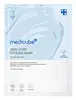
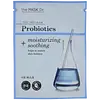
MediCube Zero Pore Cooling Sheet Mask Versus The Mask Dr. Probiotics Moisturizing + Soothing Face Sheet Mask
This pore-care sheet mask is formulated around Niacinamide and Allantoin to refine the look of pores and balance excess oil.
This hydrating sheet mask is formulated around Bifida Ferment Lysate and Dipotassium Glycyrrhizate to hydrate skin and calm redness.

What's inside
What's inside
 Key Ingredients
Benefits
Concerns
Ingredients Side-by-side
Water
Skin ConditioningGlycerin
Humectant


Propanediol
Solvent
Methylpropanediol
SolventNiacinamide
Smoothing









1,2-Hexanediol
Skin Conditioning
Saccharide Hydrolysate
HumectantCarbomer
Emulsion StabilisingTromethamine
BufferingButylene Glycol
Humectant
Ethylhexylglycerin
Skin ConditioningXanthan Gum
EmulsifyingAdenosine
Skin Conditioning
Allantoin
Skin Conditioning
Disodium EDTA
ChelatingMethyl Diisopropyl Propionamide
MaskingIndigofera Tinctoria Extract
MaskingHemerocallis Fulva Flower Extract
Skin ConditioningOenothera Biennis Flower Extract
AstringentPinus Palustris Leaf Extract
TonicPueraria Lobata Root Extract
HumectantUlmus Davidiana Root Extract
Skin Conditioning
Myosotis Sylvatica Flower/Leaf/Stem Extract
Skin ConditioningCamphor
Masking




Palmitoyl Tripeptide-5
Skin Conditioning
Hydroxycinnamic Acid
Skin ConditioningRutin
Antioxidant
Water, Glycerin, Propanediol, Methylpropanediol, Niacinamide, 1,2-Hexanediol, Saccharide Hydrolysate, Carbomer, Tromethamine, Butylene Glycol, Ethylhexylglycerin, Xanthan Gum, Adenosine, Allantoin, Disodium EDTA, Methyl Diisopropyl Propionamide, Indigofera Tinctoria Extract, Hemerocallis Fulva Flower Extract, Oenothera Biennis Flower Extract, Pinus Palustris Leaf Extract, Pueraria Lobata Root Extract, Ulmus Davidiana Root Extract, Myosotis Sylvatica Flower/Leaf/Stem Extract, Camphor, Palmitoyl Tripeptide-5, Hydroxycinnamic Acid, Rutin
Water
Skin ConditioningGlycerin
Humectant
Butylene Glycol
Humectant
Acrylates/C10-30 Alkyl Acrylate Crosspolymer
Emulsion Stabilising1,2-Hexanediol
Skin Conditioning
Dipropylene Glycol
HumectantPentylene Glycol
Skin Conditioning
Betaine
Humectant
Carbomer
Emulsion StabilisingHydroxyacetophenone
Antioxidant
Pinus Sylvestris Leaf Extract
TonicArginine
Masking
Illicium Verum Fruit Extract
Perfuming
Polyglyceryl-10 Laurate
Skin Conditioning
Bifida Ferment Lysate
Skin Conditioning
Caprylyl Glycol
Emollient
Xanthan Gum
EmulsifyingParfum
Masking
Sodium Gluconate
ChelatingDipotassium Glycyrrhizate
Humectant
Scutellaria Baicalensis Root Extract
Astringent
Lactobacillus Ferment
Skin Conditioning
Citric Acid
Buffering
Pinus Palustris Leaf Extract
TonicUlmus Davidiana Root Extract
Skin Conditioning
Oenothera Biennis Flower Extract
AstringentPueraria Lobata Root Extract
HumectantWater, Glycerin, Butylene Glycol, Acrylates/C10-30 Alkyl Acrylate Crosspolymer, 1,2-Hexanediol, Dipropylene Glycol, Pentylene Glycol, Betaine, Carbomer, Hydroxyacetophenone, Pinus Sylvestris Leaf Extract, Arginine, Illicium Verum Fruit Extract, Polyglyceryl-10 Laurate, Bifida Ferment Lysate, Caprylyl Glycol, Xanthan Gum, Parfum, Sodium Gluconate, Dipotassium Glycyrrhizate, Scutellaria Baicalensis Root Extract, Lactobacillus Ferment, Citric Acid, Pinus Palustris Leaf Extract, Ulmus Davidiana Root Extract, Oenothera Biennis Flower Extract, Pueraria Lobata Root Extract
Reviews
Ingredients Explained
These ingredients are found in both products.
Ingredients higher up in an ingredient list are typically present in a larger amount.
1,2-Hexanediol is a synthetic liquid and another multi-functional powerhouse.
It is a:
- Humectant, drawing moisture into the skin
- Emollient, helping to soften skin
- Solvent, dispersing and stabilizing formulas
- Preservative booster, enhancing the antimicrobial activity of other preservatives
Butylene Glycol (or BG) is used within cosmetic products for a few different reasons:
Overall, Butylene Glycol is a safe and well-rounded ingredient that works well with other ingredients.
Though this ingredient works well with most skin types, some people with sensitive skin may experience a reaction such as allergic rashes, closed comedones, or itchiness.
Learn more about Butylene GlycolCarbomer is a synthetic thickening and gelling agent. It's basically the ingredient that gives a lot of serums, gels, creams, and sunscreens their smooth, non-sticky texture.
Although legally permitted at very high levels, carbomers are normally used at concentrations below 1%.
It also needs to be neutralized to actually thicken, and because it is a large molecule, it doesn't really penetrate the skin barrier.
Allergy-wise, the risk is very low. Clinical studies show carbomers have low potential for skin irritation/sensitization even at concentrations up to 100%.
A 2024 UK study patch-tested 1,302 patients and found true allergy to the parent group of carbomer to be rare with no confirmed relevant reactions.
Learn more about CarbomerGlycerin (or glycerol) is a compound naturally found in your skin. It's a powerhouse humectant that pulls water into the stratum corneum.
Topically, glycerin does several things at once:
Your skin makes glycerin on its own (mostly from sebaceous oil breakdown) and shuttles it to your outermost layer of skin, or your epidermis, via aquaporin-3.
Aquaporin-3 is a transporter that is essential for normal skin hydration, elasticity, and repair. Interestingly, mice lacking in AQP3 have dry and less elastic skin that can be fully corrected with glycerin.
This ingredient is non-irritating, plays well with almost every ingredient, and works across all skin types. Typical use is anywhere between 3-10% but can go up to 79% in some leave-on products.
Just know very high concentrations (>40%) can feel tacky in low humidity.
Glycerin is the name for this ingredient in American English. British English uses Glycerol/Glycerine.
Learn more about GlycerinWe don't have a description for Oenothera Biennis Flower Extract yet.
We don't have a description for Pinus Palustris Leaf Extract yet.
This ingredient comes from the Kudzu root.
This tree is also known as the David Elm. It contains the ingredient bakuchiol.
Other great compounds found in this ingredient include galactose, glucose, and phenolics. The sugar content gives it great skin hydrating properties. Phenolics are potent antioxidants commonly found in fruits and veggies.
A 2020 study found the phenolics of this root to have an anti-inflammatory effect.
Fun fact: This ingredient is used in traditional Asian medicine.
Learn more about Ulmus Davidiana Root ExtractWater. It's the most common cosmetic ingredient of all. You'll usually see it at the top of ingredient lists, meaning that it makes up the largest part of the product.
So why is it so popular? Water most often acts as a solvent - this means that it helps dissolve other ingredients into the formulation.
You'll also recognize water as that liquid we all need to stay alive. If you see this, drink a glass of water. Remember to stay hydrated!
Learn more about WaterXanthan gum is used as a stabilizer and thickener within cosmetic products. It helps give products a sticky, thick feeling - preventing them from being too runny.
On the technical side of things, xanthan gum is a polysaccharide - a combination consisting of multiple sugar molecules bonded together.
Xanthan gum is a pretty common and great ingredient. It is a natural, non-toxic, non-irritating ingredient that is also commonly used in food products.
Learn more about Xanthan Gum

