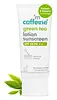
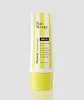
mCaffeine Green Tea Sunscreen SPF 50 PA++ with Niacinamide Versus Sunscoop Mineral Sunscreen SPF 50 PA++++
This chemical sunscreen covers most of the UV range, lighter on the deep UVA that drives aging.
This mineral sunscreen covers the full UV range and blocks ~98% of UVB at SPF 50.

What's inside
What's inside
 Key Ingredients
Benefits
Concerns
Ingredients Side-by-side
Water
Skin ConditioningDiisopropyl Adipate
EmollientPropylene Glycol Dicaprylate/Dicaprate
EmollientC12-15 Alkyl Benzoate
AntimicrobialDiisopropyl Sebacate
EmollientEthylhexyl Methoxycinnamate
UV Absorber


Butyl Methoxydibenzoylmethane
UV Absorber
Octocrylene
UV Absorber
Hydrogenated Polyisobutene
EmollientMethylpropanediol
SolventMethyl Methacrylate Crosspolymer

Camellia Sinensis Leaf Extract
Antimicrobial






Caffeine
Skin Conditioning
Hyaluronic Acid
Humectant


Niacinamide
Smoothing



Phenoxyethanol
Preservative
Ethylhexylglycerin
Skin ConditioningOctenidine Hcl
AntimicrobialPolyacrylate-13
Polyisobutene
Polysorbate 20
Emulsifying

Acrylates/C10-30 Alkyl Acrylate Crosspolymer
Emulsion StabilisingSodium Gluconate
ChelatingAcacia Senegal Gum
MaskingXanthan Gum
EmulsifyingSodium Hydroxide
BufferingLecithin
Emollient
Tocopherol
Antioxidant
Ascorbyl Palmitate
Antioxidant
Parfum
Masking

Colostrum
Skin Conditioning
Water, Diisopropyl Adipate, Propylene Glycol Dicaprylate/Dicaprate, C12-15 Alkyl Benzoate, Diisopropyl Sebacate, Ethylhexyl Methoxycinnamate, Butyl Methoxydibenzoylmethane, Octocrylene, Hydrogenated Polyisobutene, Methylpropanediol, Methyl Methacrylate Crosspolymer, Camellia Sinensis Leaf Extract, Caffeine, Hyaluronic Acid, Niacinamide, Phenoxyethanol, Ethylhexylglycerin, Octenidine Hcl, Polyacrylate-13, Polyisobutene, Polysorbate 20, Acrylates/C10-30 Alkyl Acrylate Crosspolymer, Sodium Gluconate, Acacia Senegal Gum, Xanthan Gum, Sodium Hydroxide, Lecithin, Tocopherol, Ascorbyl Palmitate, Parfum, Colostrum
PEG-12 Dimethicone/PPG-20 Crosspolymer

Zinc Oxide
Cosmetic Colorant
Coco-Caprylate
Emollient
Cyclopentasiloxane
Emollient
Dimethicone/Vinyl Dimethicone Crosspolymer
Skin Conditioning
Dicaprylyl Carbonate
EmollientC12-15 Alkyl Benzoate
AntimicrobialDecyl Oleate
Emollient

Propanediol
Solvent
Iron Oxides
Tocopheryl Acetate
Antioxidant
BHT
Antioxidant
Gardenia Taitensis Flower Extract
Skin ConditioningDaucus Carota Sativa Seed Oil
Emollient
Oryza Sativa Germ Extract
EmollientRubus Idaeus Fruit Extract
AstringentPEG-12 Dimethicone/PPG-20 Crosspolymer, Zinc Oxide, Coco-Caprylate, Cyclopentasiloxane, Dimethicone/Vinyl Dimethicone Crosspolymer, Dicaprylyl Carbonate, C12-15 Alkyl Benzoate, Decyl Oleate, Propanediol, Iron Oxides, Tocopheryl Acetate, BHT, Gardenia Taitensis Flower Extract, Daucus Carota Sativa Seed Oil, Oryza Sativa Germ Extract, Rubus Idaeus Fruit Extract
Ingredients Explained
These ingredients are found in both products.
Ingredients higher up in an ingredient list are typically present in a larger amount.
C12-15 Alkyl Benzoate is a lightweight emollient made by combinig benzoic acid with fatty alcohols that are 12-15 carbons long.
In cosmetics, it plays several roles:
The Cosmetic Review Expert Panel has concluded the alkyl benzoate group to be safe as used in cosmetics; it wasn't found to be a skin irritant and unlikely to be absorbed due to its low water solubility.
This report recorded almost 1000 reported uses with concentrations up to 59% in leave-on products but your cosmetics will typically use 0.5-15% depending on the product.
It's often called a "SPF booster": this is because it keeps UV filters properly dissolved and evenly distributed to support a sunscreen's performance. It doesn't actually raise SPF on its own.
Overall, this ingredient is well tolerated.
This ingredient is fungal acne safe because it is an ester of benzoic acid.
Think of this ingredient as two parts stuck together: an oily part and an acid part. Malassezia only gets a meal when it can snip off a fatty acid to eat. With C12-15 Alkyl Benzoate, the acid part is benzoic acid, which isn't a fatty acid and which the yeast can't use as food.
Benzoic acid is actually used as a preservative to stop yeast from growing.
The oily part is a blend of C12-15 fatty alcohols but fatty alcohols in this size range can support only a little Malassezia growth (mostly for one species of Malassezia as well).
In the ingredient, those alcohols stay locked inside the molecule. The yeast can only reach them by snipping the benzoate bond, and that type of bond is harder for it to cut than a normal fatty bond.
So not much gets released. And whatever does get snipped comes packaged with benzoic acid, which discourages yeast growth.
Learn more about C12-15 Alkyl Benzoate

