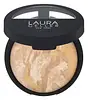
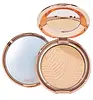
Laura Geller Baked Balance-N-Brighten Color Correcting Foundation Versus Tarte Amazonian Clay Blurring Powder Foundation

What's inside
What's inside
 Key Ingredients
Benefits
Concerns
Ingredients Side-by-side
Mica
Cosmetic ColorantTalc
Abrasive
Dimethicone
Emollient

Isopropyl Palmitate
Emollient




Polysorbate 20
Emulsifying
Magnesium Aluminum Silicate
Absorbent
Tocopherol
Antioxidant







Centella Asiatica Extract
Cleansing

Camellia Sinensis Leaf Extract
Antimicrobial
Simmondsia Chinensis Seed Oil
Emollient
Ethylhexyl Methoxycinnamate
UV Absorber


Tocopheryl Acetate
Antioxidant
Retinyl Palmitate
Skin Conditioning
Propylene Glycol Dicaprylate/Dicaprate
EmollientLauroyl Lysine
Skin Conditioning
Sodium Dehydroacetate
Preservative
Phenoxyethanol
Preservative
BHT
Antioxidant
Nylon-12
Tin Oxide
Abrasive
CI 77891
Cosmetic ColorantIron Oxides
CI 77288
Cosmetic ColorantCI 77742
Cosmetic ColorantMica, Talc, Dimethicone, Isopropyl Palmitate, Polysorbate 20, Magnesium Aluminum Silicate, Tocopherol, Centella Asiatica Extract, Camellia Sinensis Leaf Extract, Simmondsia Chinensis Seed Oil, Ethylhexyl Methoxycinnamate, Tocopheryl Acetate, Retinyl Palmitate, Propylene Glycol Dicaprylate/Dicaprate, Lauroyl Lysine, Sodium Dehydroacetate, Phenoxyethanol, BHT, Nylon-12, Tin Oxide, CI 77891, Iron Oxides, CI 77288, CI 77742
Mica
Cosmetic ColorantZinc Stearate
Cosmetic ColorantSilica
Abrasive
Coco-Caprylate/Caprate
Emollient
Octyldodecyl Stearoyl Stearate
Emollient
Sodium Starch Octenylsuccinate
AbsorbentMagnesium Myristate
Synthetic Fluorphlogopite
Lauroyl Lysine
Skin Conditioning
Kaolin
Abrasive
Glyceryl Caprylate
EmollientPentylene Glycol
Skin Conditioning
Cetyl Alcohol
Emollient
Tocopheryl Acetate
Antioxidant
Magnolia Officinalis Bark Extract
Antimicrobial
Squalane
Emollient
Boron Nitride
Absorbent
Ricinus Communis Seed Oil
Masking
Hydrolyzed Sodium Hyaluronate
Skin Conditioning
Sodium Hyaluronate
Humectant
Hydrogenated Castor Oil
Emollient
Tin Oxide
Abrasive
Alumina
Abrasive
Magnesium Oxide
AbsorbentTitanium Dioxide
Cosmetic Colorant
CI 19140
Cosmetic ColorantCI 77491
Cosmetic ColorantCI 77492
Cosmetic ColorantCI 77499
Cosmetic ColorantMica, Zinc Stearate, Silica, Coco-Caprylate/Caprate, Octyldodecyl Stearoyl Stearate, Sodium Starch Octenylsuccinate, Magnesium Myristate, Synthetic Fluorphlogopite, Lauroyl Lysine, Kaolin, Glyceryl Caprylate, Pentylene Glycol, Cetyl Alcohol, Tocopheryl Acetate, Magnolia Officinalis Bark Extract, Squalane, Boron Nitride, Ricinus Communis Seed Oil, Hydrolyzed Sodium Hyaluronate, Sodium Hyaluronate, Hydrogenated Castor Oil, Tin Oxide, Alumina, Magnesium Oxide, Titanium Dioxide, CI 19140, CI 77491, CI 77492, CI 77499
Reviews
Ingredients Explained
These ingredients are found in both products.
Ingredients higher up in an ingredient list are typically present in a larger amount.
This ingredient comes from a fatty acid (lauric acid) and amino acid (lysine). It is used to add a silky feel to cosmetics.
According to a manufacturer, its fatty acid base leaves a silky feeling on the skin. It also has emollient properties because of this. Emollients help soften skin by preventing water from evaporating.
Lauroyl lysine is barely soluble in water.
Learn more about Lauroyl LysineMica is a naturally occurring mineral used to add shimmer and color in cosmetics. It can also help improve the texture of a product or give it an opaque, white/silver color.
Serecite is the name for very fine but ragged grains of mica.
This ingredient is often coated with metal oxides like titanium dioxide. Trace amounts of heavy metals may be found in mica, but these metals are not harmful in our personal products.
Mica has been used since prehistoric times throughout the world. Ancient Egyptian, Indian, Greek, Roman, Aztec, and Chinese civilizations have used mica.
Learn more about MicaTin Oxide is an inorganic oxide used to add opacity and volume to a product. In nature, it is already found in mineral form. The main ore of tin is an opaque and shiny mineral called casseterite.
Tin Oxide helps remove translucency in a product, or make it more opaque. Besides adding opacity, tin oxide is used for bulking to add volume.
Tocopheryl Acetate is a stable, shelf-friendly form of vitamin E.
Formulators love it because plain vitamin E oxidizes quickly once it hits air. This acetate version stays stable and resists going off, helping to extend a product's shelf life.
It's actually inactive on its own and works like a slow-release "storage" form; the enzymes in your skin called esterases gradually convert it into active vitamin E over time.
One in vivo study showed 5% of the acetate in the living layer of the epidermis converted to vitamin E after 5 days of application. This study also found the skin gained protection against UV damage even though the conversion was slow and small.
Once converted, vitamin E acts as a skin's main fat-soluble antioxidant that fights free radicals to protect skin from damage.
Topical vitamin E generally boosts the skin's photoprotection, and it reduced UV-damage in animal models.
This ingredient has some brightening potential but it's more of a prevention ingredient than spot-fader. Cell studies show it can slow down melanin production but it's worth noting that it's not the most powerful brightener out there.
Overall, it has a pretty solid safety profile and has been found to be non-irritating and non-comedogenic. Allergic reactions may happen but stay rare due to how widely the ingredient gets used.
The concentration will vary depending on the formula; industry data shows 0.1% in baby lotions, 3% in lipsticks, and 5% in foot powders. You can also find this ingredient at 100% in a pure vitamin E oil.
Most leave-on skincare keeps it at the lower end, often between 0.5-1%.
Learn more about Tocopheryl Acetate

