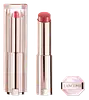
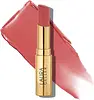
Lancôme Lip Idôle Squalane-12 Butterglow Hydrating Lip Balm Versus Laura Geller Jelly Balm Hydrating Lip Color
This barrier-repair lip moisturizer is formulated around Squalane and Butyrospermum Parkii Butter to strengthen the lip barrier and hydrate lips.


What's inside
What's inside
 Key Ingredients
Benefits
Concerns
Ingredients Side-by-side
Polyglyceryl-2 Triisostearate
Emulsifying

Squalane
Emollient


Bis-Behenyl/Isostearyl/Phytosteryl Dimer Dilinoleyl Dimer Dilinoleate
EmollientButyrospermum Parkii Butter
Skin Conditioning


Cellulose
Absorbent
Dimer Dilinoleyl Dimer Dilinoleate
EmollientPolyglyceryl-3 Beeswax
Emulsifying
Helianthus Annuus Seed Wax
Skin Conditioning
Hydrogenated Castor Oil Dimer Dilinoleate
Skin Conditioning
Simmondsia Chinensis Butter
Skin Conditioning
Hydrogenated Jojoba Oil
Abrasive
Euphorbia Cerifera Cera
Astringent
Rosa Centifolia Extract
Skin ConditioningRosa Centifolia Flower Extract
Astringent
Camelina Sativa Seed Oil
Skin Conditioning
Canola Oil
Emollient
Mentha Piperita Oil
Masking



Ceramide NP
Skin Conditioning


Saccharomyces Ferment Filtrate
Humectant
Silica
Abrasive
Aluminum Hydroxide
EmollientPropylene Glycol
Humectant
Citric Acid
Buffering

Tocopherol
Antioxidant


Pentaerythrityl Tetra-Di-T-Butyl Hydroxyhydrocinnamate
Antioxidant
CI 45380
Cosmetic ColorantCI 45410
Cosmetic ColorantCI 15850
Cosmetic ColorantCI 77891
Cosmetic ColorantCI 19140
Cosmetic ColorantLimonene
Perfuming
Benzyl Benzoate
Antimicrobial
Parfum
Masking
Polyglyceryl-2 Triisostearate, Squalane, Bis-Behenyl/Isostearyl/Phytosteryl Dimer Dilinoleyl Dimer Dilinoleate, Butyrospermum Parkii Butter, Cellulose, Dimer Dilinoleyl Dimer Dilinoleate, Polyglyceryl-3 Beeswax, Helianthus Annuus Seed Wax, Hydrogenated Castor Oil Dimer Dilinoleate, Simmondsia Chinensis Butter, Hydrogenated Jojoba Oil, Euphorbia Cerifera Cera, Rosa Centifolia Extract, Rosa Centifolia Flower Extract, Camelina Sativa Seed Oil, Canola Oil, Mentha Piperita Oil, Ceramide NP, Saccharomyces Ferment Filtrate, Silica, Aluminum Hydroxide, Propylene Glycol, Citric Acid, Tocopherol, Pentaerythrityl Tetra-Di-T-Butyl Hydroxyhydrocinnamate, CI 45380, CI 45410, CI 15850, CI 77891, CI 19140, Limonene, Benzyl Benzoate, Parfum
Ricinus Communis Seed Oil
Masking
Octyldodecanol
Emollient
Pentaerythrityl Tetraisostearate
Emollient
Bis-Diglyceryl Polyacyladipate-2
Emollient
Ethylhexyl Palmitate
Emollient
Euphorbia Cerifera Wax
Polyethylene
Abrasive
Squalane
Emollient
Kaolin
Abrasive
Mica
Cosmetic ColorantCopernicia Cerifera Wax
Diisostearoyl Polyglyceryl-3 Dimer Dilinoleate
Emollient
Aroma
Octyldodecyl PCA
EmollientTocopheryl Acetate
Antioxidant
Pentaerythrityl Tetra-Di-T-Butyl Hydroxyhydrocinnamate
Antioxidant
CI 77891
Cosmetic ColorantCI 77491
Cosmetic ColorantCI 19140
Cosmetic ColorantCI 15850
Cosmetic ColorantCI 45410
Cosmetic ColorantCI 42090
Cosmetic ColorantRicinus Communis Seed Oil, Octyldodecanol, Pentaerythrityl Tetraisostearate, Bis-Diglyceryl Polyacyladipate-2, Ethylhexyl Palmitate, Euphorbia Cerifera Wax, Polyethylene, Squalane, Kaolin, Mica, Copernicia Cerifera Wax, Diisostearoyl Polyglyceryl-3 Dimer Dilinoleate, Aroma, Octyldodecyl PCA, Tocopheryl Acetate, Pentaerythrityl Tetra-Di-T-Butyl Hydroxyhydrocinnamate, CI 77891, CI 77491, CI 19140, CI 15850, CI 45410, CI 42090
Reviews
Alternatives
Ingredients Explained
These ingredients are found in both products.
Ingredients higher up in an ingredient list are typically present in a larger amount.
Ci 15850 is the pigment color red. It is an azo dye and created synthetically.
Azo dyes need to be thoroughly purified before use. This allows them to be more stable and longer-lasting.
This ingredient is common in foundations, lipsticks, and blushes. This color is described as brown/orangey red.
It has many secondary names such as Red 6 and Red 7. According to a manufacturer, Red 6 usually contains aluminum.
Learn more about CI 15850CI 19140 is also known as Tartrazine. Tartrazine is a synthetic dye used in cosmetics, foods, and medicine to add a yellow color.
Tartrazine is created from petroleum and is water-soluble.
Some people may experience allergies from this dye, especially asthmatics and those with an aspirin intolerance.
Learn more about CI 19140CI 45410 is a synthetic red-pigment and dye.
It often goes by both Red 28 or Red 27; manufacturers label both ingredients as CI 45410.
This dye is commonly found in makeup because it imparts a vivid color. Some types of this dye change color based on pH level and interaction with moisture:
Your skin has a natural pH of around 4.5 - 5.5.
According to the FDA, CI 45410 is not permitted for use in eye products.
Red 27 is a flourescein dye and commonly used as a fluorescent tracer in medicine.
Learn more about CI 45410Ci 77891 is a white pigment from Titanium dioxide. It is naturally found in minerals such as rutile and ilmenite.
It's main function is to add a white color to cosmetics. It can also be mixed with other colors to create different shades.
Ci 77891 is commonly found in sunscreens due to its ability to block UV rays.
Learn more about CI 77891Pentaerythrityl Tetra-Di-T-Butyl Hydroxyhydrocinnamate (long name, huh?) is a synthetic antioxidant.
It is used to help stabilize other antioxidants or prevent the color from changing in a product.
As an antioxidant, it helps fight free-radical molecules. Free-radical molecules are capable of damaging our cells and other genetic material. Thus, antioxidants may reduce the signs of aging.
This ingredient is oil-soluble.
Learn more about Pentaerythrityl Tetra-Di-T-Butyl HydroxyhydrocinnamateSqualane is the hydrogenated and shelf-stable form of squalene (a lipid that naturally occurs in human sebum).
It is an emollient and skin conditioning agent that is able to integrate seamlessly into the skin's lipid barrier without clogging pores.
This is due to how structurally similar it is to what your skin already produces.
Though it is mostly an emollient that helps soften and hydrate skin, it also has some humectant and occlusive action. Humectants help the skin retain moisture while occlusives seal it in, making squalane a triple-threat moisturizer.
Research shows it has antioxidant capabilities that help protect against stressors like UV exposure, specifically UVA induced oxidative stress. This study also found that it supports collagen biosynthesis in human dermal fibroblasts.
No clinical study has reported significant adverse effects and irritation reactions are very rare from this ingredient (even at 100% concentration).
Overall, it's a fantastic ingredient for hydration and is suitable for all skin types.
This depends on the source. Squalane can be derived from both plants and animals. Most squalane used in skincare comes from plants.
Please note: the source of squalane is only known if disclosed by the brand. We recommend reaching out to the brand if you have any questions about their squalane.
Read more about squalene with an "e".
Though squalane is often called an oil, it’s technically not one. It is a hydrocarbon, meaning it is only made of carbon and hydrogen. True oils are triglycerides and made of fatty acids and glycerol.
The term “oil-free” isn’t regulated so companies can define it however they want. Some exclude all oils, while others just avoid mineral oil or comedogenic oils.
Squalane has a comedogenic rating of 1 from the original 1972 study that tested raw ingredients under occlusion on rabbit ears. This system is not standardized or peer-reviewed, and using the raw ingredients is very different from how diluted cosmetic formulations are used on human skin.
A comedogenic rating of 1 means it is "unlikely to clog pores" according to the original rating system.
The overall formula of a product matters more than the individual ingredients on whether or not it will cause clogged pores.
Learn more about Squalane

