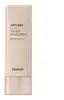
This chemical sunscreen covers the full UV range, though its SPF isn't confirmed on file yet.


What's inside
What's inside
 Key Ingredients
Benefits
Concerns
Ingredients Side-by-side
Water
Skin ConditioningButylene Glycol
Humectant

Ethylhexyl Methoxycinnamate
UV Absorber


Ethylhexyl Salicylate
UV Absorber
Phenylbenzimidazole Sulfonic Acid
UV Absorber
Stearyl Alcohol
Emollient


Triethanolamine
BufferingOctocrylene
UV Absorber
Niacinamide
Smoothing










Diethylamino Hydroxybenzoyl Hexyl Benzoate
UV Filter
Hydroxyethyl Acrylate/Sodium Acryloyldimethyl Taurate Copolymer
Emulsion StabilisingButyl Methoxydibenzoylmethane
UV Absorber
Synthetic Fluorphlogopite
CI 77891
Cosmetic ColorantMica
Cosmetic ColorantPEG-100 Stearate
Surfactant
Hydrogenated Lecithin
Emulsifying
Glyceryl Stearate
Emollient
Beeswax
Emulsion Stabilising

Caprylyl Glycol
Emollient
Carbomer
Emulsion StabilisingAdenosine
Skin Conditioning
Disodium EDTA
Tin Oxide
Abrasive
CI 75470
Cosmetic ColorantThymus Vulgaris Leaf Extract
Skin ProtectingOriganum Majorana Leaf Extract
AntiseborrhoeicMentha Piperita Leaf Extract
Skin ConditioningRosa Canina Fruit Extract
Astringent
Parfum
Masking

Water, Butylene Glycol, Ethylhexyl Methoxycinnamate, Ethylhexyl Salicylate, Phenylbenzimidazole Sulfonic Acid, Stearyl Alcohol, Triethanolamine, Octocrylene, Niacinamide, Diethylamino Hydroxybenzoyl Hexyl Benzoate, Hydroxyethyl Acrylate/Sodium Acryloyldimethyl Taurate Copolymer, Butyl Methoxydibenzoylmethane, Synthetic Fluorphlogopite, CI 77891, Mica, PEG-100 Stearate, Hydrogenated Lecithin, Glyceryl Stearate, Beeswax, Caprylyl Glycol, Carbomer, Adenosine, Disodium EDTA, Tin Oxide, CI 75470, Thymus Vulgaris Leaf Extract, Origanum Majorana Leaf Extract, Mentha Piperita Leaf Extract, Rosa Canina Fruit Extract, Parfum
Water
Skin ConditioningHomosalate
Skin Conditioning
Dicaprylyl Ether
Emollient
Glycerin
Humectant
Silica
Abrasive
Alcohol Denat.
Antimicrobial

Ethylhexyl Salicylate
UV Absorber
Octocrylene
UV Absorber
Polyglyceryl-4 Isostearate
Emulsifying
Disteardimonium Hectorite
StabilisingTribehenin
Emollient
PEG-30 Dipolyhydroxystearate
Emulsifying
Synthetic Fluorphlogopite
Sodium Chloride
MaskingPhenoxyethanol
Preservative
Silica Silylate
Emollient
Ascorbyl Glucoside
Antioxidant

Disodium Stearoyl Glutamate
CleansingEthylhexylglycerin
Skin ConditioningAdenosine
Skin Conditioning
Aluminum Hydroxide
EmollientTocopherol
Antioxidant
CI 77891
Cosmetic ColorantCI 77491
Cosmetic ColorantCI 77492
Cosmetic ColorantCI 77499
Cosmetic ColorantWater, Homosalate, Dicaprylyl Ether, Glycerin, Silica, Alcohol Denat., Ethylhexyl Salicylate, Octocrylene, Polyglyceryl-4 Isostearate, Disteardimonium Hectorite, Tribehenin, PEG-30 Dipolyhydroxystearate, Synthetic Fluorphlogopite, Sodium Chloride, Phenoxyethanol, Silica Silylate, Ascorbyl Glucoside, Disodium Stearoyl Glutamate, Ethylhexylglycerin, Adenosine, Aluminum Hydroxide, Tocopherol, CI 77891, CI 77491, CI 77492, CI 77499
Reviews
Ingredients Explained
These ingredients are found in both products.
Ingredients higher up in an ingredient list are typically present in a larger amount.
Adenosine is a purine nucleoside that your body already makes in every cell. In skincare, it acts mainly as a skin conditioning and anti-aging agent.
The way it works is fairly well mapped out:
Your skin has cells called fibroblasts that build collagen (the stuff that keeps skin firm and smooth). Adenosine basically flips a switch on these cells that tells them to get to work making more collagen and other proteins. These cells slow down on their own as skin ages, so Adenosine helps give them a little nudge to keep going.
The clinical backing is pretty solid too.
A blind, randomized, placebo-controlled trial of 126 women aged 45-65 tested a 0.1% cream twice daily and found real improvements in crow's feet and frown lines using a precise 3D skin-mapping technique; these changes showed up by week 3 and held at 2 months.
A later study using Adenosine-loaded dissolving microneedle patches reported gains in wrinkle depth, dermal density, elasticity, and hydration.
On concentrations, South Korea's Ministry of Food and Drug Safety has set 0.04% as the approved functional anti-wrinkle level. You'll typically see this ingredient used somewhere in the 0.04-0.1% range since it works at low doses.
This ingredient has been found safe for cosmetics with the data showing no irritation or sensitization.
Overall, this is a great ingredient for any anti-aging routine and has no photosensitizing effect, so it suits both AM and PM use.
Learn more about AdenosineCi 77891 is a white pigment from Titanium dioxide. It is naturally found in minerals such as rutile and ilmenite.
It's main function is to add a white color to cosmetics. It can also be mixed with other colors to create different shades.
Ci 77891 is commonly found in sunscreens due to its ability to block UV rays.
Learn more about CI 77891Ethylhexyl Salicylate (also called Octisalate or Octyl Salicylate) is an oil-soluble organic UV filter that's been used in sunscreen since the 1950's.
It absorbs UVB light in the 280-320 nm range with a peak absorbance around 306 nm.
You'll often see it paired with other UV filters to boost overall SPF because octisalate is a fairly week filter on its own.
The reason you'll see it so often is because it can help solubilize and stabilize the trickier filters like oxybenzone and avobenzone.
Unlike these filters, octisalate has pretty good photostability and doesn't create skin-damaging free radicals when exposed to sunlight.
The fatty-alcohol part of the molecule also gives it a light, emollient feel so it doubles as a nice texture enhancer.
Usage levels vary around the world:
Safety-wise, this ingredient has a pretty reassuring track record. The EU's Scientific Committee on Consumer Products (SCCP) found very low skin penetration in human skin tests and negative results for irritation, phototoxicity, and photoallergy.
The real-world allergy risk is pretty low too; a 2012 European study of 1,031 people recorded only 2 reactions to it (a rate of 0.19%).
You might have seen scary headlines about sunscreen getting into your blood.
In 2019, the FDA found that several chemical filters can absorb through the skin and show up in the bloodstream at small but measurable levels.
Here's the important part: these tiny levels are just a cutoff the FDA uses to decide which ingredients need more testing and doesn't mean anything harmful was found.
The researchers were clear that the results are no reason to stop wearing sunscreen.
Learn more about Ethylhexyl SalicylateOctocrylene is an oil-soluble organic UV filter that mainly absorbs UVB and short wave UVA II light.
Its real superpower is teamwork: octocrylene is remarkably photostable and is most famous for stabilizing avobenzone (the workhorse UVA filter).
This ingredient is commonly used to enhance both UVB and UVA protection due to its unique property in stabilizing avobenzone. It also pulls double duty by boosting water resistance and giving formulas a smooth, spreadable feel.
The EU's Scientific Committee on Consumer Safety (SCCS) has deemed octocrylene to be safe as a UV-filter at concentrations up to 10% (capped at 9% in propellant sprays). The US also permits it up to 10%.
Two things worth knowing:
You'll usually see this ingredient used in concentrations between 2-10% (higher amounts when used as a stabilizer for avobenzone).
Learn more about OctocryleneSynthetic Fluorphlogopite is the synthethic version of mica. It consists of fluorine, aluminum and silicate.
Synthetic Fluorphlogopite is used to add volume to products.
It is considered non-irritating on the skin.
Learn more about Synthetic FluorphlogopiteWater. It's the most common cosmetic ingredient of all. You'll usually see it at the top of ingredient lists, meaning that it makes up the largest part of the product.
So why is it so popular? Water most often acts as a solvent - this means that it helps dissolve other ingredients into the formulation.
You'll also recognize water as that liquid we all need to stay alive. If you see this, drink a glass of water. Remember to stay hydrated!
Learn more about Water

