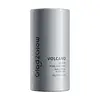
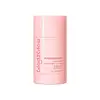
Glad2Glow Volcano 3D Acid Pore Clay Stick Versus Glad2Glow Pomegranate Niacinamide Brightening Clay Stick
This wash off mask is made with Kaolin and Capryloyl Salicylic Acid for a rinse-off pore-care boost.
This wash off mask is made with Kaolin and Niacinamide for a rinse-off oil-control boost.

What's inside
What's inside
 Key Ingredients
Benefits
Concerns
Ingredients Side-by-side
Water
Skin ConditioningGlycerin
Humectant


Volcanic Soil
Skin Conditioning
Butylene Glycol
Humectant
CI 77891
Cosmetic ColorantSodium Palmitate
CleansingKaolin
Abrasive



Mica
Cosmetic ColorantCharcoal Powder
Abrasive
CI 77499
Cosmetic ColorantCapryloyl Salicylic Acid
Exfoliating
Lactobionic Acid
Buffering



Mandelic Acid
Antimicrobial


Beta-Glucan
Skin Conditioning

Jojoba Wax PEG-120 Esters
Surfactant
PEG-40 Hydrogenated Castor Oil
Emulsifying
Aroma


Methyl Lactate
Perfuming
Verbascum Thapsus Extract
Skin ConditioningSaccharide Isomerate
Humectant
Rhamnose
HumectantPropylene Glycol
Humectant
Glyceryl Acrylate/Acrylic Acid Copolymer
HumectantPvm/Ma Copolymer
Emulsion StabilisingPhenoxyethanol
Preservative
Caprylyl Glycol
Emollient
Ethylhexylglycerin
Skin ConditioningWater, Glycerin, Volcanic Soil, Butylene Glycol, CI 77891, Sodium Palmitate, Kaolin, Mica, Charcoal Powder, CI 77499, Capryloyl Salicylic Acid, Lactobionic Acid, Mandelic Acid, Beta-Glucan, Jojoba Wax PEG-120 Esters, PEG-40 Hydrogenated Castor Oil, Aroma, Methyl Lactate, Verbascum Thapsus Extract, Saccharide Isomerate, Rhamnose, Propylene Glycol, Glyceryl Acrylate/Acrylic Acid Copolymer, Pvm/Ma Copolymer, Phenoxyethanol, Caprylyl Glycol, Ethylhexylglycerin
Water
Skin ConditioningKaolin
Abrasive
Volcanic Soil
Skin Conditioning
Butylene Glycol
Humectant
Glycerin
Humectant
Titanium Dioxide
Cosmetic Colorant

Sodium Palmitate
CleansingMica
Cosmetic ColorantCetearyl Olivate
Sorbitan Olivate
Emulsifying
Beta-Glucan
Skin Conditioning
Niacinamide
Smoothing
Punica Granatum Fruit Extract
Antioxidant
Phenoxyethanol
Preservative
CI 77491
Cosmetic ColorantCI 45380
Cosmetic ColorantSaccharide Isomerate
Humectant
Hydroxypropyl Cyclodextrin
MaskingPistacia Lentiscus Gum
MaskingMyrtus Communis Leaf Extract
Perfuming
Saccharomyces Ferment Lysate Filtrate
Skin Conditioning
Hydrolyzed Algin
Caprylyl Glycol
Emollient
Rhamnose
HumectantMenthyl Lactate
Masking
PEG-40 Hydrogenated Castor Oil
Emulsifying
Aroma
Potassium Sorbate
Preservative
Citric Acid
Buffering
Sodium Benzoate
Masking
Ethylhexylglycerin
Skin ConditioningWater, Kaolin, Volcanic Soil, Butylene Glycol, Glycerin, Titanium Dioxide, Sodium Palmitate, Mica, Cetearyl Olivate, Sorbitan Olivate, Beta-Glucan, Niacinamide, Punica Granatum Fruit Extract, Phenoxyethanol, CI 77491, CI 45380, Saccharide Isomerate, Hydroxypropyl Cyclodextrin, Pistacia Lentiscus Gum, Myrtus Communis Leaf Extract, Saccharomyces Ferment Lysate Filtrate, Hydrolyzed Algin, Caprylyl Glycol, Rhamnose, Menthyl Lactate, PEG-40 Hydrogenated Castor Oil, Aroma, Potassium Sorbate, Citric Acid, Sodium Benzoate, Ethylhexylglycerin
Reviews
Ingredients Explained
These ingredients are found in both products.
Ingredients higher up in an ingredient list are typically present in a larger amount.
Aroma refers to an ingredient, or mixture of ingredients, that impart or mask a flavor.
The name is slightly confusing. This is because INCI associates aroma with flavor instead of smell.
Here is the official definition from the The International Cosmetic Ingredient Dictionary and Handbook:
“Aroma is a term for ingredient labeling used to identify that a product contains a material or combination of materials normally added to a cosmetic to produce or to mask a particular flavor.”
INCI shows the only purpose of aroma to be "flavouring".
However, due to regulation differences, some companies may use aroma in place of parfum.
In Canada, this ingredient only has to be listed in concentrations above 1%.
Learn more about AromaBeta-Glucan is a soluble polysaccharide (a chain of glucose sugars) sourced from the cells walls of oats, baker's yeast, mushrooms, and seaweed.
It's a rare ingredient that pulls double-duty as a heavy-duty hydrator and skin-soothing repair agent.
On the surface, it acts as a humectant that holds water in place and reduces moisture loss for a plumper, smoother feel, while its anti-inflammatory and antioxidant properties make it a great pick for calming redness or sensitive skin
The more interesting story is underneath:
Despite its large molecular size, oat beta-glucan has been shown to penetrate the epidermis and reach the dermis by slipping between skin cells. Here, it interacts with fibroblasts and macrophages to nudge collagen synthesis and support wound repair.
A small 2005 split-face clinical study of 27 subjects found topical beta-glucan produced measurable reductions in wrinkle depth, height, and roughness after 8 weeks of use.
It is worth noting the trial was small and the penetration testing used frozen, irradiated skin so the anti-aging data is encouraging rather than definitive.
This ingredient gets along with pretty much everything and is typically used around 0.1-1%.
Fungal acne: This ingredient is not a food source for the Malassezia yeast because it is a glucose polysaccharide with no fatty acid or ester component.
Learn more about Beta-GlucanButylene Glycol (or BG) is used within cosmetic products for a few different reasons:
Overall, Butylene Glycol is a safe and well-rounded ingredient that works well with other ingredients.
Though this ingredient works well with most skin types, some people with sensitive skin may experience a reaction such as allergic rashes, closed comedones, or itchiness.
Learn more about Butylene GlycolCaprylyl Glycol is a humectant, skin conditioner, emollient, and preservative booster derived from either caprylic acid or synthetically created.
Typical use levels vary from 0.3-1% as a preservative booster and go up to 2% to condition skin.
Because it is not a free-fatty acid, this ingredient is fungal acne safe (there's nothing for Malassezia to feed on).
Learn more about Caprylyl GlycolEthylhexylglycerin is created from glycerin. It is a multitasker ingredient that:
The CIR Expert Panel found minimal skin absorption or sensitization of any kind in a safety assessment. Though this ingredient is considered well-tolerated, a small number of cases of allergic dermatitis have been published since 2002. Just be sure to patch test if you are unsure.
Industry-reported use ranges from 8% in rinse-off products and 2% in leave-on formulations.
Learn more about EthylhexylglycerinGlycerin (or glycerol) is a compound naturally found in your skin. It's a powerhouse humectant that pulls water into the stratum corneum.
Topically, glycerin does several things at once:
Your skin makes glycerin on its own (mostly from sebaceous oil breakdown) and shuttles it to your outermost layer of skin, or your epidermis, via aquaporin-3.
Aquaporin-3 is a transporter that is essential for normal skin hydration, elasticity, and repair. Interestingly, mice lacking in AQP3 have dry and less elastic skin that can be fully corrected with glycerin.
This ingredient is non-irritating, plays well with almost every ingredient, and works across all skin types. Typical use is anywhere between 3-10% but can go up to 79% in some leave-on products.
Just know very high concentrations (>40%) can feel tacky in low humidity.
Glycerin is the name for this ingredient in American English. British English uses Glycerol/Glycerine.
Learn more about GlycerinKaolin is a clay. It is used for oil control and to help minimize pores. Like other clays, kaolin has the ability to absorb excess sebum or oil. This can help clean out pores and mattify the skin.
Some types of kaolin may have exfoliating properties. When water is added to kaolin, it becomes a paste with small abrasive particles.
Most kaolin is a white color, but may be pink/orange/red depending on where it comes from.
The name 'kaolin' comes from a Chinese village named 'Gaoling'. Kaolin clay comes from rocks rich in kaolinite. Kaolinite, the mineral, has a silicate layered structure. Kaolinite is formed from chemical weathering of aluminum siilicate minerals.
Besides skincare, kaolin is commonly used to make glossy paper, in ceramics, toothpaste, and as medicine to soothe stomach issues.
Learn more about KaolinMica is a naturally occurring mineral used to add shimmer and color in cosmetics. It can also help improve the texture of a product or give it an opaque, white/silver color.
Serecite is the name for very fine but ragged grains of mica.
This ingredient is often coated with metal oxides like titanium dioxide. Trace amounts of heavy metals may be found in mica, but these metals are not harmful in our personal products.
Mica has been used since prehistoric times throughout the world. Ancient Egyptian, Indian, Greek, Roman, Aztec, and Chinese civilizations have used mica.
Learn more about MicaPEG-40 Hydrogenated Castor Oil is an emulsifier derived from castor oil.
As an emulsifying agent, it helps other ingredients like fragrances and fat-soluble vitamins dissolve cohesively.
Due to its large molecule size, it doesn't penetrate beyond the skin's surface.
This ingredient has a solid regulatory track record; the CIR Expert Panel first concluded it was safe for use in cosmetics at concentrations up to 100% in 1997. A 2012 reassessment reaffirmed that finding. Safety studies have also found no irritation or evidence of toxicity.
A 2019 study did find this ingredient to grow Malassezia, so this ingredient may not be fungal acne safe.
Learn more about PEG-40 Hydrogenated Castor OilPhenoxyethanol is one of the most widely used preservatives in skincare (and for good reason!).
It has a large spectrum of antimicrobial activity and especially effective bacteria, yeast, and mold while only having a weak effect on your skin's natural microbiome.
On a cellular level, it disrupts the cell membranes of microbes by poking holes that make the cell leak. This shuts down the chemical reactions the microbe needs to make energy so it can no longer survive.
Another perk of this ingredient is that it stays functional across a wide pH range (3-10).
You'll often see it paired with boosters like Ethylhexylglycerin; one study showed that a 1:9 ratio of Ethylhexylglycerin to Phenoxyethanol damages bacterial membranes as effectively as doubling the Phenoxyethanol concentration on its own.
Typical use concentrations range from 0.3-1% depending on the formula, and this ingredient is capped at 1% int the EU.
Safety-wise, the fear mongering does not hold up to the evidence. The EU's Scientific Committee on Consumer Safety and FDA consider it safe as a preservative at up to 1%, including for children of all ages.
Adverse systemic effects only showed up in animal studies at exposures roughly 200x higher than what people get from cosmetics. And despite its very widespread use, this ingredient is a rare sensitizer and allergic reactions are uncommon.
Learn more about PhenoxyethanolWe don't have a description for Rhamnose yet.
Saccharide Isomerate comes from sugars found in corn. It is a skin hydrator.
The structure of this ingredient can be altered to be more similar to the carbohydrates found in our skin. This ability to mimic our skin gives it hydrating properties.
Specifically, saccharide Isomerate is a humectant. Humectants draw moisture from the air to our skin.
Research shows Saccharide Isomerate to be an effective moisturizer.
Learn more about Saccharide IsomerateWe don't have a description for Sodium Palmitate yet.
Volcanic Soil is an oil.
Water. It's the most common cosmetic ingredient of all. You'll usually see it at the top of ingredient lists, meaning that it makes up the largest part of the product.
So why is it so popular? Water most often acts as a solvent - this means that it helps dissolve other ingredients into the formulation.
You'll also recognize water as that liquid we all need to stay alive. If you see this, drink a glass of water. Remember to stay hydrated!
Learn more about Water

