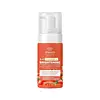
Fresh Skinlab Tomato Glass Skin 3 In 1 Vitamin C Brightening Foam Cleanser Versus Soul Apothecary Gentle Brightening Cleanser
This mild foaming cleanser is made to cleanse without leaving your skin tight or dry.
This mild gel cleanser is mild enough to cleanse without leaving skin feeling tight or stripped.

What's inside
What's inside
 Key Ingredients
Benefits
Concerns
Ingredients Side-by-side
Water
Skin ConditioningCocamidopropyl Betaine
Cleansing



Butylene Glycol
Humectant

Methyl Gluceth-20
Humectant
Hyaluronic Acid
Humectant


Hydrolyzed Collagen
Emollient
PEG-60 Hydrogenated Castor Oil
Emulsifying

Solanum Lycopersicum Fruit Extract
Antioxidant
Centella Asiatica Extract
Cleansing


Phenoxyethanol
Preservative
Parfum
Masking

Allantoin
Skin Conditioning
Chlorphenesin
Antimicrobial
PEG-12 Dimethicone
Skin Conditioning
Melaleuca Alternifolia Leaf Extract
Perfuming
Vitis Vinifera Fruit Extract
Skin ConditioningHamamelis Virginiana Leaf Extract
Skin Conditioning
Citric Acid
Buffering

Glycyrrhiza Glabra Root Extract
Bleaching
Morus Alba Bark Extract
Skin ConditioningArbutin
Antioxidant
Disodium EDTA
Portulaca Oleracea Extract
Skin Conditioning
Hydrolyzed Hyaluronic Acid
Humectant
Ascorbyl Glucoside
Antioxidant
Ascorbic Acid
Antioxidant
Water, Cocamidopropyl Betaine, Butylene Glycol, Methyl Gluceth-20, Hyaluronic Acid, Hydrolyzed Collagen, PEG-60 Hydrogenated Castor Oil, Solanum Lycopersicum Fruit Extract, Centella Asiatica Extract, Phenoxyethanol, Parfum, Allantoin, Chlorphenesin, PEG-12 Dimethicone, Melaleuca Alternifolia Leaf Extract, Vitis Vinifera Fruit Extract, Hamamelis Virginiana Leaf Extract, Citric Acid, Glycyrrhiza Glabra Root Extract, Morus Alba Bark Extract, Arbutin, Disodium EDTA, Portulaca Oleracea Extract, Hydrolyzed Hyaluronic Acid, Ascorbyl Glucoside, Ascorbic Acid
Camellia Sinensis Leaf Water
Masking
Potassium Cocoyl Glycinate
Surfactant
Glycerin
Humectant
Morus Alba Root Extract
BleachingC12-14 Pareth-12
EmulsifyingPEG-60 Hydrogenated Castor Oil
Emulsifying
Ethylhexylglycerin
Skin ConditioningRumex Occidentalis Extract
Skin ConditioningTrehalose
Humectant
Allantoin
Skin Conditioning
Portulaca Oleracea Extract
Skin Conditioning
Ceramide NP
Skin Conditioning
Aloe Barbadensis Leaf Extract
Emollient
Cocos Nucifera Fruit Extract
Emollient
Sodium PCA
Humectant
Saccharide Isomerate
Humectant
Glycyrrhiza Glabra Root Extract
Bleaching
Disodium EDTA
Camellia Sinensis Leaf Water, Potassium Cocoyl Glycinate, Glycerin, Morus Alba Root Extract, C12-14 Pareth-12, PEG-60 Hydrogenated Castor Oil, Ethylhexylglycerin, Rumex Occidentalis Extract, Trehalose, Allantoin, Portulaca Oleracea Extract, Ceramide NP, Aloe Barbadensis Leaf Extract, Cocos Nucifera Fruit Extract, Sodium PCA, Saccharide Isomerate, Glycyrrhiza Glabra Root Extract, Disodium EDTA
Reviews
Alternatives
Ingredients Explained
These ingredients are found in both products.
Ingredients higher up in an ingredient list are typically present in a larger amount.
Allantoin is a soothing ingredient known for its protective and moisturizing properties; it's basically a quiet workhorse ingredient you can find in a huge range of cosmetics.
Though it can be derived from the comfrey plant, allantoin is produced synthetically for cosmetic products to ensure purity.
Research shows it can encourage your skin cells to turn over and renew by stimulating keratinocyte and fibroblast proliferation.
It also has mild keratolytic properties to help loosen and shed dead skin cells without being harsh.
Studies also suggest allantoin can help calm inflammation by dialing down some of the chemical signals your skin sends out when it is irritated.
This ingredient is typically used in the 0.1-0.5% range, and the FDA recognizes it as a skin protectant in OTC products up to 2%.
Overall, allantoin is a wonderful addition to most routines; it is stable across a wide pH range (~4-8), works well with other ingredients, and is considered non-sensitizing/non-irritating.
Fun fact: Allantoin is naturally occurring in comfrey root, beets, chamomile, and wheat sprouts. Our bodies even produce it as a byproduct of uric acid metabolism.
Learn more about AllantoinDisodium EDTA is a chelating agent. It grabs onto and deactivates metal ions that sneak into your products from water, packaging, or air.
This ingredient mainly works behind the scenes and helps with:
On top of that, this ingredient can counteract the effects of hard water by binding to the minerals in it.
One thing worth knowing is that Disodium EDTA has been shown to be a mild penetration enhancer. It can help other ingredients absorb into skin more effectively which can be a double-edged sword (great for actives, but can also make the active too strong if you have sensitive skin).
Clinical patch testing showed no significant skin irritation at typical use concentrations and minimal dermal absorption.
You'll most likely see this ingredient near the end of an ingredient list. It's typically found in concentrations less than 1%.
Learn more about Disodium EDTAGlycyrrhiza Glabra Root Extract is an extract of the roots of Licorice. It has been found to have several benefits such as skin hydrating, conditioning, and soothing.
One component, glabridin, has extra potent antioxidant and soothing properties. It has also been found to block pigmentation from UVB rays in guinea pigs.
Licorice Root also contains a flavonoid. Flavonoids are a natural substance from in plants. Flavonoids also have antioxidant properties.
Another component, glycyrrhizin, has been found to have anti-inflammatory and antimicrobial benefits. This may make licorice root extract effective at treating acne. However, more research is needed to support this.
Liquiritin is one of the flavone compounds found in licorice. It has been found to help lighten skin by preventing tyrosinase from reacting with tyrosine. When the two react, protein is converted to melanin. Melanin is the substance in your body that gives your features pigmentation.
Learn more about Glycyrrhiza Glabra Root ExtractPeg-60 Hydrogenated Castor Oil comes from hydrogenated castor oil. It is a solubilizer and emulsifier.
As a solubilizer, it helps dissolve ingredients into a water-based version. It is also an emulsifer. Emulsifier help prevent oils and water from separating. Both these properties help create evenly-spread and uniform products.
Basically, Peg-60 Hydrogenated Castor Oil helps hold ingredients together.
Learn more about PEG-60 Hydrogenated Castor OilThis extract comes from Purslane, a succulent. It has anti-inflammatory, antioxidant, and hydrating properties.
Purslane is very nutritious. It contains omega-3 fatty acids, NMFs, many vitamins, minerals, and antioxidants. The vitamins found in purslane include: Vitamin C, Vitamin A, and Vitamin E.
Fun fact: Purslane is a succulent with an extensive habitat. It is used in traditional Korean medicine to treat irritated skin.
Nowadays, purslane is becoming a superfood due to its highly nutritious content.
Learn more about Portulaca Oleracea Extract

