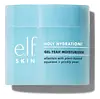
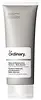
e.l.f. cosmetics Holy Hydration! Gel-Yeah Moisturizer Versus The Ordinary Natural Moisturizing Factors + Beta Glucan
This barrier-repair moisturizer is formulated around Trehalose and Squalane to strengthen the skin barrier and hydrate skin.
This barrier-repair moisturizer is formulated around Beta-Glucan to strengthen the skin barrier and hydrate skin.


What's inside
What's inside
 Key Ingredients
Benefits
Concerns
Ingredients Side-by-side
Water
Skin ConditioningButylene Glycol
Humectant

Trehalose
Humectant
Bis-PEG-18 Methyl Ether Dimethyl Silane
EmollientDiglycerin
Humectant
Squalane
Emollient
Opunta Dillenii Extract
Allantoin
Skin Conditioning


Sodium Hyaluronate
Humectant
Tocopherol
Antioxidant



Dipropylene Glycol
HumectantAcrylates/C10-30 Alkyl Acrylate Crosspolymer
Emulsion StabilisingArginine
Masking
Hydroxyacetophenone
Antioxidant
1,2-Hexanediol
Skin Conditioning
Dimethicone
Emollient
Disodium EDTA
Parfum
Masking




Geraniol
Perfuming
Linalool
Perfuming
Water, Butylene Glycol, Trehalose, Bis-PEG-18 Methyl Ether Dimethyl Silane, Diglycerin, Squalane, Opunta Dillenii Extract, Allantoin, Sodium Hyaluronate, Tocopherol, Dipropylene Glycol, Acrylates/C10-30 Alkyl Acrylate Crosspolymer, Arginine, Hydroxyacetophenone, 1,2-Hexanediol, Dimethicone, Disodium EDTA, Parfum, Geraniol, Linalool
Water
Skin ConditioningPPG-24-Glycereth-24
EmulsifyingPropanediol
Solvent
Betaine
Humectant
Beta-Glucan
Skin Conditioning
Arginine
Masking
Glycine
Buffering
Alanine
Masking
Serine
Masking
Proline
Skin Conditioning
Threonine
Glutamic Acid
Humectant
Lysine Hcl
Skin Conditioning
Glucose
Humectant
Maltose
MaskingFructose
Humectant
Trehalose
Humectant
Xylitol
Humectant
Anhydroxylitol
Humectant
Xylitylglucoside
Humectant
Sodium PCA
Humectant
PCA
Humectant
Sodium Lactate
Buffering
Urea
Buffering

Allantoin
Skin Conditioning
Sodium Hyaluronate
Humectant
Phospholipids
Skin Conditioning
Sphingolipids
Emollient
Glycerin
Humectant
Pentylene Glycol
Skin Conditioning
Acrylates/C10-30 Alkyl Acrylate Crosspolymer
Emulsion StabilisingSodium Hydroxide
BufferingSodium Chloride
MaskingSodium Citrate
BufferingCitric Acid
Buffering
Tocopherol
Antioxidant
P-Anisic Acid
MaskingAminomethyl Propanol
BufferingPhenoxyethanol
Preservative
Chlorphenesin
Antimicrobial
Water, PPG-24-Glycereth-24, Propanediol, Betaine, Beta-Glucan, Arginine, Glycine, Alanine, Serine, Proline, Threonine, Glutamic Acid, Lysine Hcl, Glucose, Maltose, Fructose, Trehalose, Xylitol, Anhydroxylitol, Xylitylglucoside, Sodium PCA, PCA, Sodium Lactate, Urea, Allantoin, Sodium Hyaluronate, Phospholipids, Sphingolipids, Glycerin, Pentylene Glycol, Acrylates/C10-30 Alkyl Acrylate Crosspolymer, Sodium Hydroxide, Sodium Chloride, Sodium Citrate, Citric Acid, Tocopherol, P-Anisic Acid, Aminomethyl Propanol, Phenoxyethanol, Chlorphenesin
Reviews
Ingredients Explained
These ingredients are found in both products.
Ingredients higher up in an ingredient list are typically present in a larger amount.
Acrylates/C10-30 Alkyl Acrylate Crosspolymer is a synthetic polymer. It is used to thicken, emulsify, and improve the texture of products.
As an emulsifier, it helps stabilize oil-in-water emulsions to give products an elegant feel when applied.
It can also form a thin protective film on skin. One study found that a formula using this polymer helped slow down how quickly other ingredients (like DEET) were absorbed through skin.
A 2024 study of over 1,300 patients confirmed that sensitization to this ingredient is rare. It is also non-mutagenic and has a clean track record.
Learn more about Acrylates/C10-30 Alkyl Acrylate CrosspolymerAllantoin is a soothing ingredient known for its protective and moisturizing properties; it's basically a quiet workhorse ingredient you can find in a huge range of cosmetics.
Though it can be derived from the comfrey plant, allantoin is produced synthetically for cosmetic products to ensure purity.
Research shows it can encourage your skin cells to turn over and renew by stimulating keratinocyte and fibroblast proliferation.
It also has mild keratolytic properties to help loosen and shed dead skin cells without being harsh.
Studies also suggest allantoin can help calm inflammation by dialing down some of the chemical signals your skin sends out when it is irritated.
This ingredient is typically used in the 0.1-0.5% range, and the FDA recognizes it as a skin protectant in OTC products up to 2%.
Overall, allantoin is a wonderful addition to most routines; it is stable across a wide pH range (~4-8), works well with other ingredients, and is considered non-sensitizing/non-irritating.
Fun fact: Allantoin is naturally occurring in comfrey root, beets, chamomile, and wheat sprouts. Our bodies even produce it as a byproduct of uric acid metabolism.
Learn more about AllantoinArginine is a semi-essential amino acid. This just means our bodies can product a bit on its own, but sometimes needs a little boost from food sources.
It is a part of your skin's natural moisturizing factor (NMF), or the water-loving molecules in your outermost layer of skin (stratum corneum) that keeps everything hydrated and happy.
Here's an interesting thing about Arginine: your skin converts it into urea through the Krebs-Henseleit urea cycle. Urea is one of the most effective humectants your skin naturally produces.
A clinical study showed applying 2.5% arginine hydrochloride to atopic dermatitis skin showed significant urea levels in the stratum corneum and improved moisture in just four weeks.
Arginine is also a precursor to nitric oxide; nitric oxide improves microcirculation and supports wound healing and collagen synthesis.
One study found that an amino acid complex containing Arginine reduced skin irritation, improved hydration, and accelerated skin repair in clinical / in-vivo studies.
Arginine itself is an amino acid and not a fatty acid, oil, or ester. On its own, it's not a direct food source for Malassezia, or the yeast that causes fungal acne.
Learn more about ArginineSodium Hyaluronate is the salt form of hyaluronic acid. It is a long sugar chain that is naturally found in your skin, joints, and connective tissue that maintains hydration and elasticity.
In skincare, it works as a humectant. It pulls water from the environment and deeper layers of skin and binds it to the surface.
Interestingly, the size of the molecule affects its behavior:
Some clinical evidence links low molecular weight versions to improved wrinkle depth, elasticity, anti-inflammatory effects, and barrier repair.
Many serums use a blend of both weights so you can get surface hydration plus longer-lasting and deeper effects.
You'll typically see concentrations between 0.1-2% for this ingredient.
Learn more about Sodium HyaluronateTocopherol is a fat-soluble antioxidant known as Vitamin E.
You'll find this ingredient in the vast majority of skincare (for good reason). It works to neutralize free radicals, or unstable molecules generated by UV exposure, pollution, and other environmental stressors, before they can cause oxidative damage to your skin cells.
Topically applied tocopherol has been shown to protect against UV damage by ramping up the skin's own natural defense enzymes.
It also acts as a skin conditioning agent; some studies show that regular topical use can improve the skin's water-binding capacity over 2-4 weeks.
This ingredient is especially loved for being a team player. When combined with Vitamin C, the photoprotective effect of both ingredients roughly doubles and the combo also helps reduce UV-induced DNA damage.
This ingredient has some brightening potential but it's more of a prevention ingredient than spot-fader. Cell studies show it can slow down melanin production but it's worth noting that it's not the most powerful brightener out there.
In formulations, it also serves as a stabilizer that helps protect other oxidation-prone ingredients from degrading.
Concentrations usually range from 0.1-1% in most leave-on products.
Learn more about TocopherolTrehalose is a disaccharide made of two glucose molecules (glucose is sugar!). Trehalose is used to help moisturize skin. It also has antioxidant properties.
As a humectant, trehalose helps draw moisture from the air to your skin. This helps keep your skin hydrated.
Due to its antioxidant properties, trehalose may help with signs of aging. Antioxidants help fight free-radical molecules, unstable molecules that may damage your skin.
In medicine, trehalose and hyaluronic acid are used to help treat dry eyes.
Some animals, plants, and bacteria create trehalose as a source of energy to survive freeze or lack of water.
Learn more about TrehaloseWater. It's the most common cosmetic ingredient of all. You'll usually see it at the top of ingredient lists, meaning that it makes up the largest part of the product.
So why is it so popular? Water most often acts as a solvent - this means that it helps dissolve other ingredients into the formulation.
You'll also recognize water as that liquid we all need to stay alive. If you see this, drink a glass of water. Remember to stay hydrated!
Learn more about Water

