This wash off mask is made with Kaolin and Cucurbita Pepo Fruit Extract for a rinse-off oil-control boost.
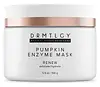
This wash off mask is made with Cucurbita Pepo Fruit Extract and Papain for a rinse-off smoothing boost.

What's inside
What's inside
 Key Ingredients
Benefits
Concerns
Ingredients Side-by-side
PEG-8
HumectantKaolin
Abrasive



Glyceryl Stearate
Emollient

Glycerin
Humectant


Jojoba Esters
Emollient
Steareth-21
CleansingTitanium Dioxide
Cosmetic Colorant

Hydroxypropylcellulose
EmulsifyingCucurbita Pepo Fruit Extract
Skin Conditioning
Tocopherol
Antioxidant





Colloidal Silver
AntimicrobialPPG-15 Stearyl Ether
EmollientEthylhexylglycerin
Skin ConditioningTalc
Abrasive
Water
Skin ConditioningCI 73360
Cosmetic ColorantIron Oxides
Parfum
Masking



Phenoxyethanol
Preservative
Aloe Barbadensis Leaf Juice
Skin Conditioning
Stearic Acid
Cleansing
Cucurbita Pepo Fruit Extract
Skin Conditioning
Glycerin
Humectant
Vaccinium Myrtillus Fruit Extract
Skin ConditioningSaccharum Officinarum Extract
MoisturisingAcer Saccharum Extract
Skin ConditioningCitrus Aurantium Dulcis Fruit Extract
MaskingCitrus Limon Fruit Extract
Masking
Cocos Nucifera Oil
Masking


Cetyl Alcohol
Emollient
Vanilla Planifolia Fruit Extract
Skin Conditioning
Glyceryl Stearate
Emollient
Papain
Skin Conditioning
Bromelain
Skin Conditioning
Epigallocatechin Gallate
Antioxidant
Curcuma Longa Root Powder
Skin ConditioningXanthan Gum
EmulsifyingCaprylhydroxamic Acid
ChelatingGlyceryl Caprylate
EmollientAloe Barbadensis Leaf Juice, Stearic Acid, Cucurbita Pepo Fruit Extract, Glycerin, Vaccinium Myrtillus Fruit Extract, Saccharum Officinarum Extract, Acer Saccharum Extract, Citrus Aurantium Dulcis Fruit Extract, Citrus Limon Fruit Extract, Cocos Nucifera Oil, Cetyl Alcohol, Vanilla Planifolia Fruit Extract, Glyceryl Stearate, Papain, Bromelain, Epigallocatechin Gallate, Curcuma Longa Root Powder, Xanthan Gum, Caprylhydroxamic Acid, Glyceryl Caprylate
Ingredients Explained
These ingredients are found in both products.
Ingredients higher up in an ingredient list are typically present in a larger amount.
Cucurbita Pepo Fruit Extract comes from the field pumpkin, including winter squash and the traditional orange pumpkin we see in Autumn.
Studies show pumpkin extract to have antioxidant, anti-inflammatory, and healing properties.
Pumpkins are rich in dietary fiber, vitamin A, vitamin C, vitamin E, and Vitamin C, manganese, magnesium, and potassium.
These vitamins and minerals all help hydrate, nourish, and protect skin.
The beta-carotene content provides excellent antioxidant properties. In fact, the antioxidant and nourishing potential of pumpkin has been studied extensively.
According to dermatologists, pumpkin enzyme is an AHA with similar properties to glycolic and lactic acid.
However, further studies are needed to look into just how this enzyme works on human skin.
Fun fact: Pumpkins were first domesticated in Southern Mexico about 10,000 years ago.
Learn more about Cucurbita Pepo Fruit ExtractGlycerin (or glycerol) is a compound naturally found in your skin. It's a powerhouse humectant that pulls water into the stratum corneum.
Topically, glycerin does several things at once:
Your skin makes glycerin on its own (mostly from sebaceous oil breakdown) and shuttles it to your outermost layer of skin, or your epidermis, via aquaporin-3.
Aquaporin-3 is a transporter that is essential for normal skin hydration, elasticity, and repair. Interestingly, mice lacking in AQP3 have dry and less elastic skin that can be fully corrected with glycerin.
This ingredient is non-irritating, plays well with almost every ingredient, and works across all skin types. Typical use is anywhere between 3-10% but can go up to 79% in some leave-on products.
Just know very high concentrations (>40%) can feel tacky in low humidity.
Glycerin is the name for this ingredient in American English. British English uses Glycerol/Glycerine.
Learn more about GlycerinGlyceryl Stearate is made by reacting glycerin with stearic acid (typically sourced from plant oils like palm or coconut). It's an emulsifier, emollient, and mild occlusive.
Emulsifiers help ingredients like oil and water stay mixed so your formula stays nicely blended and uniform in texture.
This ingredient is typically used in concentrations between 1-10%. Studies have found it to be non-sensitizing, non-phototoxic, and non-photoallergenic.
A close cousin of this ingredient is Glyceryl Stearate SE ("self-emulsifying"). This just has a small amount of sodium or potassium stearate added so it can emulsify without a co-emulsifier.
Since this ingredient is an ester of a C18 fatty acid, it may not be fungal acne safe. The Malassezia yeast can potentially metabolize within the C11-C24 range.
Fun fact: The human body also creates Glyceryl Stearate naturally.
Learn more about Glyceryl Stearate

