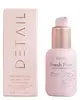
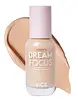
Detail Cosmetics Fresh Filter Natural Finish Foundation Versus Vice Cosmetics Endlezz Dream Focus Weightless Foundation

What's inside
What's inside
 Key Ingredients
Benefits
Concerns
Ingredients Side-by-side
Rosa Rugosa Flower Water
Masking
Cyclopentasiloxane
Emollient
Caprylic/Capric Triglyceride
Masking


Dimethicone
Emollient
PEG-8 Dimethicone
Emulsifying
Glycereth-12
HumectantTrimethylsiloxysilicate
Emollient
Silica
Abrasive


Phenyl Trimethicone
Skin Conditioning
PEG-10 Dimethicone
Skin Conditioning
Betaine
Humectant
Magnesium Stearate
Cosmetic ColorantMagnesium Sulfate
Tremella Fuciformis Polysaccharide
Emulsion Stabilising
Diazolidinyl Urea
Preservative


Centella Asiatica Extract
Cleansing

Tocopheryl Acetate
Antioxidant


Sodium Hyaluronate
Humectant
Niacinamide
Smoothing


CI 77891
Cosmetic ColorantCI 77492
Cosmetic ColorantCI 77491
Cosmetic ColorantCI 77499
Cosmetic ColorantRosa Rugosa Flower Water, Cyclopentasiloxane, Caprylic/Capric Triglyceride, Dimethicone, PEG-8 Dimethicone, Glycereth-12, Trimethylsiloxysilicate, Silica, Phenyl Trimethicone, PEG-10 Dimethicone, Betaine, Magnesium Stearate, Magnesium Sulfate, Tremella Fuciformis Polysaccharide, Diazolidinyl Urea, Centella Asiatica Extract, Tocopheryl Acetate, Sodium Hyaluronate, Niacinamide, CI 77891, CI 77492, CI 77491, CI 77499
Water
Skin ConditioningTalc
Abrasive
Cyclopentasiloxane
Emollient
Dimethicone
Emollient
Synthetic Wax
Abrasive
Propylene Glycol
Humectant
Caprylyl Methicone
Skin Conditioning
Glycerin
Humectant
Hexyl Laurate
Emollient
PEG-10 Dimethicone
Skin Conditioning
Dimethicone/Vinyl Dimethicone Crosspolymer
Skin Conditioning
Magnesium Stearate
Cosmetic ColorantPolyglyceryl-2 Diisostearate
Emulsifying
Magnesium Sulfate
Disteardimonium Hectorite
StabilisingPhenoxyethanol
Preservative
Cetyl PEG/PPG-10/1 Dimethicone
Emulsifying
Methicone
Emollient
Triethoxycaprylylsilane
Alumina
Abrasive
Silica
Abrasive
Parfum
Masking
Ethylhexylglycerin
Skin ConditioningTocopherol
Antioxidant
Cyclotetrasiloxane
Emollient
Maltodextrin
Absorbent
Cyclohexasiloxane
Emollient
Lactobacillus Ferment
Skin Conditioning
CI 77491
Cosmetic ColorantCI 77492
Cosmetic ColorantCI 77499
Cosmetic ColorantCI 77891
Cosmetic ColorantWater, Talc, Cyclopentasiloxane, Dimethicone, Synthetic Wax, Propylene Glycol, Caprylyl Methicone, Glycerin, Hexyl Laurate, PEG-10 Dimethicone, Dimethicone/Vinyl Dimethicone Crosspolymer, Magnesium Stearate, Polyglyceryl-2 Diisostearate, Magnesium Sulfate, Disteardimonium Hectorite, Phenoxyethanol, Cetyl PEG/PPG-10/1 Dimethicone, Methicone, Triethoxycaprylylsilane, Alumina, Silica, Parfum, Ethylhexylglycerin, Tocopherol, Cyclotetrasiloxane, Maltodextrin, Cyclohexasiloxane, Lactobacillus Ferment, CI 77491, CI 77492, CI 77499, CI 77891
Reviews
Ingredients Explained
These ingredients are found in both products.
Ingredients higher up in an ingredient list are typically present in a larger amount.
Ci 77491 is also hydrated iron III oxide. It's sole purpose is to give a red/pink hue to products.
Iron III oxides are classified as inorganic chemicals for coloring.
Synthetically created Ci 77491 is considered safer than those naturally found. This is because the synthetically created version may contain less impurities. Iron oxides are generally non-toxic and non-allergenic.
Learn more about CI 77491CI 77492 is also hydrated iron III oxide. It's sole purpose is to give a yellow hue to products.
Iron III oxides are classified as inorganic chemicals for coloring.
Synthetically created CI 77492 is considered safer than those naturally found. This is because the synthetically created version may contain less impurities. Iron oxides are generally non-toxic and non-allergenic.
Learn more about CI 77492Ci 77499 is also hydrated iron III oxide. It is created from mixing red and black iron oxides. This helps give shades of darkness to a product.
Iron III oxides are classified as inorganic chemicals for coloring.
Ci 77891 is a white pigment from Titanium dioxide. It is naturally found in minerals such as rutile and ilmenite.
It's main function is to add a white color to cosmetics. It can also be mixed with other colors to create different shades.
Ci 77891 is commonly found in sunscreens due to its ability to block UV rays.
Learn more about CI 77891Cyclopentasiloxane (D5) is a lightweight silicone that mostly acts as an emollient and solvent in cosmetics. Its the reason your products feel silky, fast-spreading, and non-greasy.
Since D5 is volatile, it does its thing and then evaporates off the skin quickly.
The safety profile of this ingredient is reassuring; the US CIR Expert Panel concluded D5 is safe as used in cosmetics and Health Canada concluded that D5 is not harmful to human health or the environment as currently used in cosmetics
There's a study that people mention about D5 in a rat study showing tumors. This study is related to long-term inhalation of high D5 levels.
Regulatory bodies have judged this study to be not applicable in topical skincare since skin absorption of D5 is very low and we're not really inhaling huge amounts of D5.
The only restriction for this ingredient is environmental. The European Chemicals Agency (ECHA) restricted D5 in wash-off cosmetics at or above 0.1% due to their persistence in water.
Learn more about CyclopentasiloxaneDimethicone is a type of synthetic silicone created from natural materials such as quartz. It is also known as polydimethylsiloxane.
What it does:
Dimethicone comes in different viscosities:
Depending on the viscosity, dimethicone has different properties.
Ingredients lists don't always show which type is used, so we recommend reaching out to the brand if you have questions about the viscosity.
This ingredient is unlikely to cause irritation because it does not get absorbed into skin. However, people with silicone allergies should be careful about using this ingredient.
Note: Dimethicone may contribute to pilling. This is because it is not oil or water soluble, so pilling may occur when layered with products. When mixed with heavy oils in a formula, the outcome is also quite greasy.
Learn more about DimethiconeMagnesium Stearate is a salt that is 2 parts stearic acid and 1 part magnesium.
It is a white powder that can be used to add bulk and color to products by binding to oil ingredients.
Magnesium Sulfate is a salt. More specifically, it is an epsom salt, or the bath salt used to help relieve muscle aches.
Despite having ‘sulfate’ in the name, it isn’t a surfactant or cleansing agent like sodium lauryl sulfate. Unlike those sulfates, magnesium sulfate doesn’t have the same cleansing or foaming properties (it's simply a type of salt).
In cosmetics, Magnesium Sulfate is used to thicken a product or help dilute other solids. It is a non-reactive and non-irritating ingredient.
One study shows magnesium deficiency may lead to inflammation of the skin. Applying magnesium topically may help reduce inflammation.
You can find this ingredient in sea water or mineral deposits.
Learn more about Magnesium SulfatePeg-10 Dimethicone is silicone with conditioner and emulsifier properties. It mostly acts as an emollient in skincare and and humectant in haircare.
According to the manufacturer, acidic formulations decrease the stability of this ingredient. It works best in neutral or near neutral formulations.
Silica, also known as silicon dioxide, is a naturally occurring mineral. It is used as a fine, spherical, and porous powder in cosmetics.
Though it has exfoliant properties, the function of silica varies depending on the product.
The unique structure of silica enhances the spreadability and adds smoothness, making it a great texture enhancer.
It is also used as an active carrier, emulsifier, and mattifier due to its ability to absorb excess oil.
In some products, tiny microneedles called spicules are made from silica or hydrolyzed sponge. When you rub them in, they lightly polish away dead skin layers and enhance the penetration of active ingredients.
Learn more about Silica

