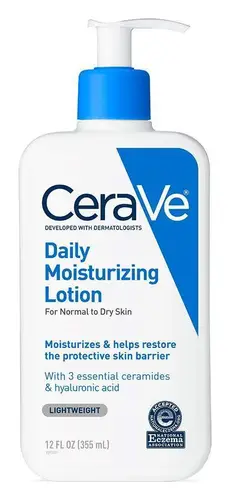
This barrier-repair moisturizer is formulated around Betula Platyphylla Japonica Juice and Panthenol to strengthen the skin barrier and hydrate skin.
This barrier-repair moisturizer is formulated around Panthenol to strengthen the skin barrier and calm redness.

What's inside
What's inside
 Key Ingredients
No key ingredients
Benefits
Concerns
Ingredients Side-by-side
Betula Platyphylla Japonica Juice
Skin Conditioning
Caprylic/Capric Triglyceride
Masking

Propanediol
Solvent
Glycerin
Humectant
Water
Skin ConditioningCetearyl Alcohol
Emollient





Polyglyceryl-3 Methylglucose Distearate
Emulsifying
1,2-Hexanediol
Skin Conditioning
Olea Europaea Fruit Oil
Masking

Glyceryl Stearate Se
Emulsifying
Panthenol
Skin Conditioning

Stearic Acid
Cleansing
Simethicone
Emollient
Glyceryl Stearate
Emollient
Hydrogenated Lecithin
Emulsifying
Ceramide NP
Skin Conditioning

Methyl Glucose Sesquistearate
Emollient
Cholesterol
Emollient
Carbomer
Emulsion StabilisingArginine
Masking
Xanthan Gum
EmulsifyingEthylhexylglycerin
Skin ConditioningOleic Acid
Emollient
Macadamia Ternifolia Seed Oil
Emollient
Squalane
Emollient
Brassica Campestris Sterols
EmollientTocopherol
Antioxidant



Disodium EDTA
ChelatingBetula Platyphylla Japonica Juice, Caprylic/Capric Triglyceride, Propanediol, Glycerin, Water, Cetearyl Alcohol, Polyglyceryl-3 Methylglucose Distearate, 1,2-Hexanediol, Olea Europaea Fruit Oil, Glyceryl Stearate Se, Panthenol, Stearic Acid, Simethicone, Glyceryl Stearate, Hydrogenated Lecithin, Ceramide NP, Methyl Glucose Sesquistearate, Cholesterol, Carbomer, Arginine, Xanthan Gum, Ethylhexylglycerin, Oleic Acid, Macadamia Ternifolia Seed Oil, Squalane, Brassica Campestris Sterols, Tocopherol, Disodium EDTA
Water
Skin ConditioningPanthenol
Skin Conditioning
Pentaerythrityl Tetraethylhexanoate
Emollient
Coco-Caprylate/Caprate
Emollient
Pentylene Glycol
Skin Conditioning
Potassium Cetyl Phosphate
Emulsifying1,2-Hexanediol
Skin Conditioning
Cetearyl Olivate
Cetearyl Alcohol
Emollient
Sorbitan Olivate
Emulsifying
Ammonium Acryloyldimethyltaurate/Vp Copolymer
Glyceryl Stearate Se
Emulsifying
Methyl Methacrylate Crosspolymer

Carbomer
Emulsion StabilisingEthylhexylglycerin
Skin ConditioningDisodium EDTA
ChelatingGuaiazulene
Antimicrobial
Water, Panthenol, Pentaerythrityl Tetraethylhexanoate, Coco-Caprylate/Caprate, Pentylene Glycol, Potassium Cetyl Phosphate, 1,2-Hexanediol, Cetearyl Olivate, Cetearyl Alcohol, Sorbitan Olivate, Ammonium Acryloyldimethyltaurate/Vp Copolymer, Glyceryl Stearate Se, Methyl Methacrylate Crosspolymer, Carbomer, Ethylhexylglycerin, Disodium EDTA, Guaiazulene
Reviews
Ingredients Explained
These ingredients are found in both products.
Ingredients higher up in an ingredient list are typically present in a larger amount.
1,2-Hexanediol is a synthetic liquid and another multi-functional powerhouse.
It is a:
- Humectant, drawing moisture into the skin
- Emollient, helping to soften skin
- Solvent, dispersing and stabilizing formulas
- Preservative booster, enhancing the antimicrobial activity of other preservatives
Carbomer is a synthetic thickening and gelling agent. It's basically the ingredient that gives a lot of serums, gels, creams, and sunscreens their smooth, non-sticky texture.
Although legally permitted at very high levels, carbomers are normally used at concentrations below 1%.
It also needs to be neutralized to actually thicken, and because it is a large molecule, it doesn't really penetrate the skin barrier.
Allergy-wise, the risk is very low. Clinical studies show carbomers have low potential for skin irritation/sensitization even at concentrations up to 100%.
A 2024 UK study patch-tested 1,302 patients and found true allergy to the parent group of carbomer to be rare with no confirmed relevant reactions.
Learn more about CarbomerCetearyl alcohol is a waxy mixture of two fatty alcohols: cetyl alcohol and stearyl alcohol. It is an emollient and emulsifier.
Despite having "alcohol" in its name, it has nothing to do with drying solvent alcohols; the FDA also allows "alcohol-free" products to contain fatty alcohols like this ingredient.
It plays several roles in a formula:
Typical use levels for this ingredient sit around 1-10% and the Cosmetic Ingredient Review Expert Panel has affirmed safety at concentrations up to 25% in leave-on products.
Multiple assessments have found it to be non-irritating and non-sensitizing to most people.
However, there have been some cases of allergic contact dermatitis in patients with chronically compromised skin barriers.
Cetearyl alcohol has a comedogenic rating of 2 and irritancy rating of 1. Both of these numbers come from the 1989 study that used rabbit ears; a "2" means mildly comedogenic and a "1" means low irritancy.
Here's the catch: rabbit skin is more sensitive than human skin and throws a lot of false positives. A 1996 reappraisal found that ingredients rated 1-2 in the rabbit ear tests are generally safe for humans.
Remember comedogenic ratings are unable to assess the entire formula of a product or how it will react on your skin. Just be sure to patch test if you are unsure about certain ingredients.
This ingredient is not fungal acne safe. Cetearyl alcohol is a fatty alcohol with chain lengths that fall within the range that Malassezia can metabolize.
A 2019 study has also observed Malassezia growth in the presence of this ingredient, confirming it to be not-fungal acne safe.
Learn more about Cetearyl AlcoholDisodium EDTA is a chelating agent. It grabs onto and deactivates metal ions that sneak into your products from water, packaging, or air.
This ingredient mainly works behind the scenes and helps with:
On top of that, this ingredient can counteract the effects of hard water by binding to the minerals in it.
One thing worth knowing is that Disodium EDTA has been shown to be a mild penetration enhancer. It can help other ingredients absorb into skin more effectively which can be a double-edged sword (great for actives, but can also make the active too strong if you have sensitive skin).
Clinical patch testing showed no significant skin irritation at typical use concentrations and minimal dermal absorption.
You'll most likely see this ingredient near the end of an ingredient list. It's typically found in concentrations less than 1%.
Learn more about Disodium EDTAEthylhexylglycerin is created from glycerin. It is a multitasker ingredient that:
The CIR Expert Panel found minimal skin absorption or sensitization of any kind in a safety assessment. Though this ingredient is considered well-tolerated, a small number of cases of allergic dermatitis have been published since 2002. Just be sure to patch test if you are unsure.
Industry-reported use ranges from 8% in rinse-off products and 2% in leave-on formulations.
Learn more about EthylhexylglycerinGlyceryl Stearate SE is a self-emulsifying (SE) form of Glyceryl Stearate. It comes with a small amount of soap (usually potassium or sodium stearate) that gives it the "SE" part.
That soap lets it pull oil and water together on its own which is why it shows up as an emulsifier, thickener, and emollient.
Industry survey data shows this ingredient is used around 1-5% but Glyceryl Stearate goes as high at 17% in a leave-on deodorant.
Safety-wise, it's pretty boring: it's been deemed safe for topical use in 1982 and again most recently in 2021 by the CIR. Human repeat insult patch tests come back non-irritating, non-sensitizing, non-phototoxic, and non-photoallergenic.
This ingredient does carry a comedogenic rating of 3 from the old rabbit-ear assay. Just remember testing finished products in humans showed that formulas built with "comedogenic" ingredients are not necessarily comedogenic themselves. It's worth patch testing if you're breakout prone, and always listen to your skin.
The Malassezia yeast can potentially metabolize the stearic acid in this ingredient, so it may not be fungal acne safe.
Allergy is rare: a 310-patient patch test study of common emulsifiers found this ingredient was not a meaningful reactor. Isolated case reports do exist so a true contact allergy is possible but uncommon.
Learn more about Glyceryl Stearate SePanthenol is a common ingredient that helps hydrate and soothe the skin. It is found naturally in our skin and hair.
There are two forms of panthenol: D and L.
D-panthenol is also known as dexpanthenol. Most cosmetics use dexpanthenol or a mixture of D and L-panthenol.
Panthenol is famous due to its ability to go deeper into the skin's layers. Using this ingredient has numerous pros (and no cons):
Like hyaluronic acid, panthenol is a humectant. Humectants are able to bind and hold large amounts of water to keep skin hydrated.
This ingredient works well for wound healing. It works by increasing tissue in the wound and helps close open wounds.
Once oxidized, panthenol converts to pantothenic acid. Panthothenic acid is found in all living cells.
This ingredient is also referred to as pro-vitamin B5.
Learn more about PanthenolWater. It's the most common cosmetic ingredient of all. You'll usually see it at the top of ingredient lists, meaning that it makes up the largest part of the product.
So why is it so popular? Water most often acts as a solvent - this means that it helps dissolve other ingredients into the formulation.
You'll also recognize water as that liquid we all need to stay alive. If you see this, drink a glass of water. Remember to stay hydrated!
Learn more about Water