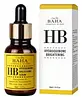
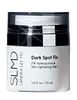
Cos De BAHA 2% Hydroquinone + Arbutin + Niacinamide 4% Serum Versus SLMD Dark Spot Fix Correcting Gel
This brightening serum is formulated around Hydroquinone and Arbutin to fade the look of dark spots and brighten dull-looking skin.
This brightening moisturizer is formulated around Hydroquinone and Kojic Acid to fade the look of dark spots and brighten dull-looking skin.


What's inside
What's inside
 Key Ingredients
Benefits
Concerns
Ingredients Side-by-side
Aloe Barbadensis Leaf Extract
Emollient


Propanediol
Solvent
Arbutin
Antioxidant




Niacinamide
Smoothing





1,2-Hexanediol
Skin Conditioning
Hydroquinone
Stabilising
Citric Acid
Buffering
Sodium Citrate
BufferingSodium Hyaluronate
Humectant
Salicylic Acid
Masking




Kojic Acid
Antioxidant
Lactic Acid
Buffering
Hamamelis Virginiana Leaf Extract
Skin Conditioning
Rosmarinus Officinalis Extract
AntimicrobialEucalyptus Globulus Leaf
Skin ConditioningThymus Vulgaris Extract
Perfuming
Aspalathus Linearis Extract
Skin ConditioningDisodium EDTA
ChelatingAloe Barbadensis Leaf Extract, Propanediol, Arbutin, Niacinamide, 1,2-Hexanediol, Hydroquinone, Citric Acid, Sodium Citrate, Sodium Hyaluronate, Salicylic Acid, Kojic Acid, Lactic Acid, Hamamelis Virginiana Leaf Extract, Rosmarinus Officinalis Extract, Eucalyptus Globulus Leaf, Thymus Vulgaris Extract, Aspalathus Linearis Extract, Disodium EDTA
Hydroquinone 2%
Stabilising
Water
Skin ConditioningButylene Glycol
Humectant
Caprylic/Capric Triglyceride
Masking
Glycerin
Humectant
Hydroxyethyl Acrylate/Sodium Acryloyldimethyl Taurate Copolymer
Emulsion StabilisingSalicylic Acid
Masking
Kojic Acid
Antioxidant
Squalane
Emollient
Phenoxyethanol
Preservative
Niacinamide
Smoothing
Xanthan Gum
EmulsifyingSodium Metabisulfite
Antioxidant
Ethylhexylglycerin
Skin ConditioningSodium Hyaluronate
Humectant
Reviews
Ingredients Explained
These ingredients are found in both products.
Ingredients higher up in an ingredient list are typically present in a larger amount.
Hydroquinone is a classic ingredient dermatologists use to fade dark spots (things like melasma, acne marks, sun spots, and freckles).
It works in two ways:
1. By blocking an enzyme called tyrosinase; your skin uses this to make melanin, or the pigment that causes dark spots.
2. By interfering with the pigment making cells themselves so less pigment shows up over time
Just know this ingredient fades spots near the surface of skin and not the deeper ones. It's usually used at 2-4% / twice a day for 3 months, and ALWAYS with sunscreen.
This ingredient is usually well tolerated with short-term use under medical guidance. But possible reactions include irritation, contact dermatitis, and lightening of the skin around the spot you're treating.
You might hear hydroquinone called "cancer-causing". That concern comes from studies where rats were fed high oral doses; no skin cancer cases have been linked to it after more than 50 years of people putting it on their skin.
Long-term, high-strength, and unsupervised use can lead to a condition called ochronosis. This is where the skin turns blue-grey color and sometimes causes nails to turn dark as well.
The rules around it vary by country.
The EU bans it in regular cosmetics and it is prescription only in the US, EU, Japan, Canada, and Australia. Anything you see on the shelf without a prescription is technically not allowed.
Check out the European alternative to hydroquinone here.
SkinSort would like to remind friends from around the world that all skin tones are beautiful!
Learn more about HydroquinoneKojic Acid is a naturally occurring organic acid that is produced during the fermentation of certain fungi. It is one of the most well-studied brightening ingredients (tyrosinase inhibitors) out there.
That's why you'll see Kojic Acid in products that target dark spots, hyperpigmentation, and general uneven skin tone. It also pairs well with other brightening actives like Alpha Arbutin, Glycolic Acid, and Vitamin C derivatives.
By latching onto the copper that the enzyme tyrosinase needs to function, Kojic Acid prevents less pigment from being made. It's so well-established that researchers regularly use it as the go-to benchmark when testing new brightening ingredients.
Some other perks include documented antioxidant and antimicrobial properties. The The CIR (Cosmetic Ingredient Review) Expert Panel concluded Kojic Acid is safe for use in cosmetic products at concentrations up to 1% and the EU's SCCS (Scientific Committee on Consumer Safety) considers it safe as a skin lightening agent at concentrations up to 0.7%.
One thing to know about Kojic Acid is that stability is its weak spot; it is sensitive to light, heat, and air exposure and will oxidize/turn brown in formulations. Its derivative, Kojic Dipalmitate, was developed as a stable alternative.
Some individuals have reported contact sensitization so be sure to patch test if you have reactive or sensitive skin.
Fun fact: It was first discovered in 1907 and naturally occurs in the production of sake, soy sauce, and miso.
Learn more about Kojic AcidNiacinamide is a multitasking form of vitamin B3 that strengthens the skin barrier, reduces pores and dark spots, regulates oil, and improves signs of aging.
And the best part? It's gentle and well-tolerated by most skin types, including sensitive and reactive skin.
You might have heard of "niacin flush", or the reddening of skin that causes itchiness. Niacinamide has not been found to cause this.
In very rare cases, some individuals may not be able to tolerate niacinamide at all or experience an allergic reaction to it.
If you are experiencing flaking, irritation, and dryness with this ingredient, be sure to double check all your products as this ingredient can be found in all categories of skincare.
When incorporating niacinamide into your routine, look out for concentration amounts. Typically, 5% niacinamide provides benefits such as fading dark spots. However, if you have sensitive skin, it is better to begin with a smaller concentration.
When you apply niacinamide to your skin, your body converts it into nicotinamide adenine dinucleotide (NAD). NAD is an essential coenzyme that is already found in your cells as "fuel" and powers countless biological processes.
In your skin, NAD helps repair cell damage, produce new healthy cells, support collagen production, strengthen the skin barrier, and fight environmental stressors (like UV and pollution).
Our natural NAD levels start to decline with age, leading to slower skin repair, visible aging, and a weaker skin barrier. By providing your skin niacinamide, you're recharging your skin's NAD levels. This leads to stronger, healthier, and younger looking skin.
Another name for vitamin B3 is nicotinamide. This vitamin is water-soluble and our bodies don't store it. We obtain Vitamin B3 from either food or skincare. Meat, fish, wheat, yeast, and leafy greens contain vitamin B3.
The type of niacinamide used in skincare is synthetically created.
Learn more about NiacinamideSalicylic Acid (also known as beta hydroxy acid or BHA) is a well-known ingredient for treating skin that struggles with acne and clogged pores. It exfoliates both the skin's surface and deep within the pores to help clear out buildup, control oil, and reduce inflammation.
Unlike AHAs (alpha hydroxy acids), salicylic acid is oil-soluble. This allows it to penetrate into pores which makes it especially effective for treating blackheads and preventing future breakouts.
Salicylic acid is also known for its soothing properties. It has a similar structure to aspirin and can calm inflamed or irritated skin, making it a good option for acne-prone skin that is also sensitive.
Concentrations of 0.5-2% are recognized by the U.S. FDA as an over-the-counter topical acne product.
It can cause irritation and/or dryness if one's skin already has a compromised moisture barrier, so it's best to focus on repairing that before introducing this ingredient into your routine.
While salicylic acid does not increase sun sensitivity, it’s still important to wear sunscreen daily to protect your skin.
If you are looking for the ingredient called BHA or Butylated Hydroxyanisole, click here.
Learn more about Salicylic AcidSodium Hyaluronate is the salt form of hyaluronic acid. It is a long sugar chain that is naturally found in your skin, joints, and connective tissue that maintains hydration and elasticity.
In skincare, it works as a humectant. It pulls water from the environment and deeper layers of skin and binds it to the surface.
Interestingly, the size of the molecule affects its behavior:
Some clinical evidence links low molecular weight versions to improved wrinkle depth, elasticity, anti-inflammatory effects, and barrier repair.
Many serums use a blend of both weights so you can get surface hydration plus longer-lasting and deeper effects.
You'll typically see concentrations between 0.1-2% for this ingredient.
Learn more about Sodium Hyaluronate

