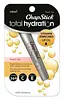
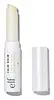
ChapStick Total Hydration Vitamin Enriched Peach Tea Lip Oil Versus e.l.f. cosmetics Calm Balm + Hemp-Derived Cannabis Sativa Seed Oil
This barrier-repair lip moisturizer is formulated around Ricinus Communis Seed Oil and Caprylic/Capric Triglyceride to strengthen the lip barrier and hydrate lips.
This lip moisturizer is formulated around Limnanthes Alba Seed Oil and Simmondsia Chinensis Seed Oil to hydrate lips.

What's inside
What's inside
 Key Ingredients
Benefits
Concerns
Ingredients Side-by-side
Octyldodecanol
Emollient
Ricinus Communis Seed Oil
Masking




Ethylcellulose
Caprylic/Capric Triglyceride
Masking

Phenoxyethanol
Preservative
Polyglyceryl-3 Diisostearate
Emulsifying


Aroma

Linum Usitatissimum Seed Oil
Perfuming
Olea Europaea Fruit Oil
Masking
Ribes Nigrum Seed Oil
Emollient
Helianthus Annuus Seed Oil
Emollient
Tocopherol
Antioxidant





Ethylhexylglycerin
Skin ConditioningAscorbyl Palmitate
Antioxidant

Water
Skin ConditioningGlycine Soja Oil
Emollient
Bixa Orellana Seed Oil
Emollient
Citrus Grandis Peel Extract
Astringent
Octyldodecanol, Ricinus Communis Seed Oil, Ethylcellulose, Caprylic/Capric Triglyceride, Phenoxyethanol, Polyglyceryl-3 Diisostearate, Aroma, Linum Usitatissimum Seed Oil, Olea Europaea Fruit Oil, Ribes Nigrum Seed Oil, Helianthus Annuus Seed Oil, Tocopherol, Ethylhexylglycerin, Ascorbyl Palmitate, Water, Glycine Soja Oil, Bixa Orellana Seed Oil, Citrus Grandis Peel Extract
Pentaerythrityl Tetraethylhexanoate
Emollient
Bis-Diglyceryl Polyacyladipate-2
Emollient
Dipentaerythrityl Hexa C5-9 Acid Esters
Skin ConditioningPolyethylene
Abrasive
Limnanthes Alba Seed Oil
Skin Conditioning
Simmondsia Chinensis Seed Oil
Emollient
Cannabis Sativa Seed Oil
Emollient
Ceresin
Emulsion StabilisingDaucus Carota Sativa Seed Oil
Emollient
Zea Mays Oil
Emulsifying
Helianthus Annuus Seed Oil
Emollient
Ascorbyl Palmitate
Antioxidant
Daucus Carota Sativa Root Extract
Skin Conditioning
Caprylyl Glycol
Emollient
Phenoxyethanol
Preservative
BHT
Antioxidant
Pentaerythrityl Tetraethylhexanoate, Bis-Diglyceryl Polyacyladipate-2, Dipentaerythrityl Hexa C5-9 Acid Esters, Polyethylene, Limnanthes Alba Seed Oil, Simmondsia Chinensis Seed Oil, Cannabis Sativa Seed Oil, Ceresin, Daucus Carota Sativa Seed Oil, Zea Mays Oil, Helianthus Annuus Seed Oil, Ascorbyl Palmitate, Daucus Carota Sativa Root Extract, Caprylyl Glycol, Phenoxyethanol, BHT
Alternatives
Ingredients Explained
These ingredients are found in both products.
Ingredients higher up in an ingredient list are typically present in a larger amount.
Ascorbyl Palmitate is a fat-soluble form of vitamin C (Ascorbic Acid) made by combining it with palmitic acid.
It is able to blend easily into creams and oil-based formulas because it dissolves in oils rather than water.
As you may know, regular vitamin C is notorious for breaking down when exposed to sunlight and air. Ascorbyl Palmitate is more stable and degrades at a slower rate.
Research on whether it converts efficiently into active vitamin C once it's applied on your skin is still limited.
Some in-vitro studies suggest it may support collagen production, but it is not considered one of the stronger vitamin C derivatives, like:
Due to the palmitic acid base, this ingredient may not be fungal acne safe. Comedogenic studies have also shown this ingredient to have a rating of 2.
It's also worth keeping in mind that comedogenic and irritancy ratings are tested on individual ingredients, not finished formulas. The final product's formulation, concentration, and other ingredients all play a role in how something actually behaves on your skin.
Learn more about Ascorbyl PalmitateHelianthus Annuus Seed Oil is a plant oil derived from the seeds of a sunflower.
It is rich in fatty acids, primarily linoleic acid and oleic acid. This gives it emollient and skin conditioning properties.
The reason this ingredient is so effective is because it forms a thin film on the skin that reduces transepidermal water loss (TEWL) while supplying linoleic acid to the stratum corneum to improve barrier strength.
The high linoleic acid content is particularly noteworthy for acne-prone skin.
Research suggests that acne-prone skin tends to be deficient in linoleic acid in sebum. Topical application may help replenish this to support a healthier follicular environment and less comedone-promoting sebum.
One randomized study found sunflower seed oil preserved skin barrier integrity in adult volunteers with and without atopic dermatitis (outperforming olive oil).
This ingredient is well-studied, gentle, and an effective emollient suitable for most skin types.
On fungal acne: This ingredient may not be Fungal acne (Malassezia folliculitis) safe. This is because it contains fatty acids with carbon chain lengths in the C11-C24 range.
Learn more about Helianthus Annuus Seed OilPhenoxyethanol is one of the most widely used preservatives in skincare (and for good reason!).
It has a large spectrum of antimicrobial activity and especially effective bacteria, yeast, and mold while only having a weak effect on your skin's natural microbiome.
On a cellular level, it disrupts the cell membranes of microbes by poking holes that make the cell leak. This shuts down the chemical reactions the microbe needs to make energy so it can no longer survive.
Another perk of this ingredient is that it stays functional across a wide pH range (3-10).
You'll often see it paired with boosters like Ethylhexylglycerin; one study showed that a 1:9 ratio of Ethylhexylglycerin to Phenoxyethanol damages bacterial membranes as effectively as doubling the Phenoxyethanol concentration on its own.
Typical use concentrations range from 0.3-1% depending on the formula, and this ingredient is capped at 1% int the EU.
Safety-wise, the fear mongering does not hold up to the evidence. The EU's Scientific Committee on Consumer Safety and FDA consider it safe as a preservative at up to 1%, including for children of all ages.
Adverse systemic effects only showed up in animal studies at exposures roughly 200x higher than what people get from cosmetics. And despite its very widespread use, this ingredient is a rare sensitizer and allergic reactions are uncommon.
Learn more about Phenoxyethanol

