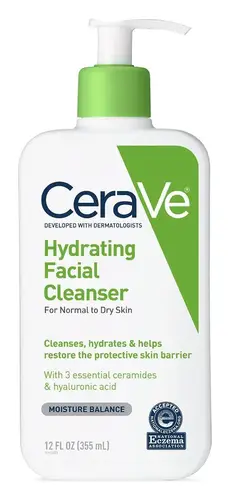
Celenes by Sweden Sea Buckthorn Vitamin C+ Cleansing Foaming Gel Versus CeraVe Hydrating Facial Cleanser
This mild gel cleanser is made to cleanse while calming and soothing your skin.
This mild cream cleanser is made to cleanse without leaving your skin tight or dry.


What's inside
What's inside
 Key Ingredients
Benefits
Concerns
Ingredients Side-by-side
Water
Skin ConditioningSodium Lauroyl Methyl Isethionate
CleansingSodium Cocoamphoacetate
CleansingCoco-Glucoside
Cleansing
Glyceryl Oleate
Emollient



Steareth-100/PEG-136/Hdi Copolymer
Propanediol
Solvent

Phenethyl Alcohol
MaskingUndecyl Alcohol
AntiseborrhoeicTocopherol
Antioxidant





Anhydroxylitol
Humectant
Xylitol
Humectant
Hexylene Glycol
EmulsifyingCapryloyl Glycine
CleansingXylitylglucoside
Humectant
Magnesium Aspartate
Skin ConditioningZinc Gluconate
Skin Conditioning



Copper Gluconate
Skin Conditioning
Hippophae Rhamnoides Fruit Extract
Skin Conditioning
Citrus Limon Peel Extract
EmollientChamomilla Recutita Flower Extract
Masking
Camellia Sinensis Leaf Extract
Antimicrobial
Citric Acid
Buffering
Disodium EDTA
ChelatingWater, Sodium Lauroyl Methyl Isethionate, Sodium Cocoamphoacetate, Coco-Glucoside, Glyceryl Oleate, Steareth-100/PEG-136/Hdi Copolymer, Propanediol, Phenethyl Alcohol, Undecyl Alcohol, Tocopherol, Anhydroxylitol, Xylitol, Hexylene Glycol, Capryloyl Glycine, Xylitylglucoside, Magnesium Aspartate, Zinc Gluconate, Copper Gluconate, Hippophae Rhamnoides Fruit Extract, Citrus Limon Peel Extract, Chamomilla Recutita Flower Extract, Camellia Sinensis Leaf Extract, Citric Acid, Disodium EDTA
Water
Skin ConditioningGlycerin
Humectant
Cetearyl Alcohol
Emollient



PEG-40 Stearate
Emulsifying
Stearyl Alcohol
Emollient
Potassium Phosphate
BufferingCeramide NP
Skin Conditioning
Ceramide AP
Skin Conditioning
Ceramide EOP
Skin Conditioning
Carbomer
Emulsion StabilisingGlyceryl Stearate
Emollient
Behentrimonium Methosulfate
SurfactantSodium Lauroyl Lactylate
EmulsifyingSodium Hyaluronate
Humectant
Cholesterol
Emollient
Phenoxyethanol
Preservative
Disodium EDTA
ChelatingDipotassium Phosphate
BufferingTocopherol
Antioxidant
Phytosphingosine
Skin Conditioning
Xanthan Gum
EmulsifyingCetyl Alcohol
Emollient
Polysorbate 20
Emulsifying
Ethylhexylglycerin
Skin ConditioningWater, Glycerin, Cetearyl Alcohol, PEG-40 Stearate, Stearyl Alcohol, Potassium Phosphate, Ceramide NP, Ceramide AP, Ceramide EOP, Carbomer, Glyceryl Stearate, Behentrimonium Methosulfate, Sodium Lauroyl Lactylate, Sodium Hyaluronate, Cholesterol, Phenoxyethanol, Disodium EDTA, Dipotassium Phosphate, Tocopherol, Phytosphingosine, Xanthan Gum, Cetyl Alcohol, Polysorbate 20, Ethylhexylglycerin
Reviews
Ingredients Explained
These ingredients are found in both products.
Ingredients higher up in an ingredient list are typically present in a larger amount.
Disodium EDTA is a chelating agent. It grabs onto and deactivates metal ions that sneak into your products from water, packaging, or air.
This ingredient mainly works behind the scenes and helps with:
On top of that, this ingredient can counteract the effects of hard water by binding to the minerals in it.
One thing worth knowing is that Disodium EDTA has been shown to be a mild penetration enhancer. It can help other ingredients absorb into skin more effectively which can be a double-edged sword (great for actives, but can also make the active too strong if you have sensitive skin).
Clinical patch testing showed no significant skin irritation at typical use concentrations and minimal dermal absorption.
You'll most likely see this ingredient near the end of an ingredient list. It's typically found in concentrations less than 1%.
Learn more about Disodium EDTATocopherol is a fat-soluble antioxidant known as Vitamin E.
You'll find this ingredient in the vast majority of skincare (for good reason). It works to neutralize free radicals, or unstable molecules generated by UV exposure, pollution, and other environmental stressors, before they can cause oxidative damage to your skin cells.
Topically applied tocopherol has been shown to protect against UV damage by ramping up the skin's own natural defense enzymes.
It also acts as a skin conditioning agent; some studies show that regular topical use can improve the skin's water-binding capacity over 2-4 weeks.
This ingredient is especially loved for being a team player. When combined with Vitamin C, the photoprotective effect of both ingredients roughly doubles and the combo also helps reduce UV-induced DNA damage.
This ingredient has some brightening potential but it's more of a prevention ingredient than spot-fader. Cell studies show it can slow down melanin production but it's worth noting that it's not the most powerful brightener out there.
In formulations, it also serves as a stabilizer that helps protect other oxidation-prone ingredients from degrading.
Concentrations usually range from 0.1-1% in most leave-on products.
Learn more about TocopherolWater. It's the most common cosmetic ingredient of all. You'll usually see it at the top of ingredient lists, meaning that it makes up the largest part of the product.
So why is it so popular? Water most often acts as a solvent - this means that it helps dissolve other ingredients into the formulation.
You'll also recognize water as that liquid we all need to stay alive. If you see this, drink a glass of water. Remember to stay hydrated!
Learn more about Water

