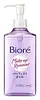
This oil-based makeup remover is made to dissolve makeup, sunscreen, and daily buildup.
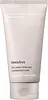
This salicylic acid foaming cleanser is formulated around Salicylic Acid to clear breakouts and unclog pores.


What's inside
What's inside
 Key Ingredients
Benefits
No benefits
Concerns
Ingredients Side-by-side
Paraffinum Liquidum
Emollient


PEG-12
HumectantLauric Acid
Cleansing



Isododecane
EmollientIsopropyl Palmitate
Emollient
Water
Skin ConditioningPolyglyceryl-2 Isostearate
Emulsifying
Decyl Glucoside
Cleansing
Polysorbate 85
Emulsifying
Glyceryl Oleate
Emollient

Isostearic Acid
Cleansing
Isostearyl Glyceryl Ether
Skin ConditioningMyristyl Alcohol
Emollient
Isostearyl Glyceryl Pentaerythrityl Ether
EmollientAlcohol Denat.
Antimicrobial

Citric Acid
Buffering

BHT
Antioxidant
Parfum
Masking
Paraffinum Liquidum, PEG-12, Lauric Acid, Isododecane, Isopropyl Palmitate, Water, Polyglyceryl-2 Isostearate, Decyl Glucoside, Polysorbate 85, Glyceryl Oleate, Isostearic Acid, Isostearyl Glyceryl Ether, Myristyl Alcohol, Isostearyl Glyceryl Pentaerythrityl Ether, Alcohol Denat., Citric Acid, BHT, Parfum
Water
Skin ConditioningGlycerin
Humectant


Myristic Acid
Cleansing
Lauric Acid
Cleansing
Potassium Hydroxide
BufferingKaolin
Abrasive



Stearic Acid
Cleansing
Glyceryl Stearate
Emollient
Lauryl Hydroxysultaine
CleansingGlycol Distearate
Emollient
Palmitic Acid
Emollient
Lauryl Glucoside
CleansingPolyquaternium-22
Parfum
Masking
Salicylic Acid
Masking


Silica
Abrasive
Onsen-Sui
Zinc PCA
Humectant

Volcanic Ash
Abrasive
Disodium EDTA
Propanediol
Solvent
Lactic Acid/Glycolic Acid Copolymer
Skin Conditioning1,2-Hexanediol
Skin Conditioning
Madecassoside
Antioxidant

Polyquaternium-10
Ethylhexylglycerin
Skin ConditioningWater, Glycerin, Myristic Acid, Lauric Acid, Potassium Hydroxide, Kaolin, Stearic Acid, Glyceryl Stearate, Lauryl Hydroxysultaine, Glycol Distearate, Palmitic Acid, Lauryl Glucoside, Polyquaternium-22, Parfum, Salicylic Acid, Silica, Onsen-Sui, Zinc PCA, Volcanic Ash, Disodium EDTA, Propanediol, Lactic Acid/Glycolic Acid Copolymer, 1,2-Hexanediol, Madecassoside, Polyquaternium-10, Ethylhexylglycerin
Reviews
Alternatives
Ingredients Explained
These ingredients are found in both products.
Ingredients higher up in an ingredient list are typically present in a larger amount.
Lauric Acid is a saturated fatty acid naturally found in coconut oil, palm kernel oil, and even breast milk.
In cosmetics, it is an:
Lab studies have found that lauric acid is surprisingly good at killing acne-causing bacteria. However, these tests were done on bacteria in a petri dish and not on real skin, so we can't say for certain it works the same in a formulation on a real face.
The comedogenic rating of 4 comes from the 1972 rabbit ear model using undiluted ingredients. Comedogenicity is highly individual and one comedogenic ingredient cannot predict how a formula will behave on skin.
This ingredient is not fungal acne safe and research has confirmed Malassezia can use it as a food source. Even though "fungal acne" has the word "acne" in it, they are completely different. Regular acne is driven by a bacteria called Cutibacterium acnes, clogged pores, and excess oil. Fungal acne isn't really acne; it's caused by an overgrowth of a yeast called Malassezia that already lives on everyone's skin. Because one is bacterial and the other is fungal, they respond to different ingredients.
Learn more about Lauric AcidParfum is a catch-all term for an ingredient or more that is used to give a scent to products.
Also called "fragrance", this ingredient can be a blend of hundreds of chemicals or plant oils. This means every product with "fragrance" or "parfum" in the ingredients list is a different mixture.
For instance, Habanolide is a proprietary trade name for a specific aroma chemical. When used as a fragrance ingredient in cosmetics, most aroma chemicals fall under the broad labeling category of “FRAGRANCE” or “PARFUM” according to EU and US regulations.
The term 'parfum' or 'fragrance' is not regulated in many countries. In many cases, it is up to the brand to define this term.
For instance, many brands choose to label themselves as "fragrance-free" because they are not using synthetic fragrances. However, their products may still contain ingredients such as essential oils that are considered a fragrance by INCI standards.
One example is Calendula flower extract. Calendula is an essential oil that still imparts a scent or 'fragrance'.
Depending on the blend, the ingredients in the mixture can cause allergies and sensitivities on the skin. Some ingredients that are known EU allergens include linalool and citronellol.
Parfum can also be used to mask or cover an unpleasant scent.
The bottom line is: not all fragrances/parfum/ingredients are created equally. If you are worried about fragrances, we recommend taking a closer look at an ingredient. And of course, we always recommend speaking with a professional.
Learn more about ParfumWater. It's the most common cosmetic ingredient of all. You'll usually see it at the top of ingredient lists, meaning that it makes up the largest part of the product.
So why is it so popular? Water most often acts as a solvent - this means that it helps dissolve other ingredients into the formulation.
You'll also recognize water as that liquid we all need to stay alive. If you see this, drink a glass of water. Remember to stay hydrated!
Learn more about Water

