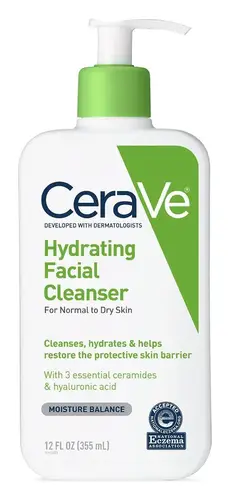
This oil-based makeup remover is made to dissolve makeup, sunscreen, and daily buildup.
This oil-based makeup remover is made to dissolve makeup, sunscreen, and daily buildup.

What's inside
What's inside
 Key Ingredients
Benefits
No benefits
Concerns
Ingredients Side-by-side
Paraffinum Liquidum
Emollient


Isononyl Isononanoate
EmollientPEG-12 Laurate
Emulsifying

Octyldodecanol
Emollient
Polysorbate 80
Emulsifying
Sorbeth-230 Tetraoleate
Emulsifying
Dimethicone
Emollient

Isododecane
EmollientCetyl Dimethylbutyl Ether
Skin ConditioningPolyglyceryl-2 Isostearate
Emulsifying
Polysorbate 85
Emulsifying
Isostearyl Glyceryl Ether
Skin ConditioningWater
Skin ConditioningSorbeth-60 Tetraoleate
Emulsifying
Dipropylene Glycol
HumectantMyristyl Alcohol
Emollient

Butylene Glycol
Humectant

PEG-5 Hydrogenated Castor Oil
Emulsifying
Cholesteryl Isostearate
EmollientIsostearyl Glyceryl Pentaerythrityl Ether
EmollientPEG-6 Sorbitan Oleate
EmulsifyingSorbeth-40 Tetraoleate
Emulsifying
PEG-10 Hydrogenated Castor Oil
Emollient
Dipotassium Glycyrrhizate
Humectant

Succinic Acid
BufferingBHT
Antioxidant
Tocopherol
Antioxidant



Phenoxyethanol
Preservative
Paraffinum Liquidum, Isononyl Isononanoate, PEG-12 Laurate, Octyldodecanol, Polysorbate 80, Sorbeth-230 Tetraoleate, Dimethicone, Isododecane, Cetyl Dimethylbutyl Ether, Polyglyceryl-2 Isostearate, Polysorbate 85, Isostearyl Glyceryl Ether, Water, Sorbeth-60 Tetraoleate, Dipropylene Glycol, Myristyl Alcohol, Butylene Glycol, PEG-5 Hydrogenated Castor Oil, Cholesteryl Isostearate, Isostearyl Glyceryl Pentaerythrityl Ether, PEG-6 Sorbitan Oleate, Sorbeth-40 Tetraoleate, PEG-10 Hydrogenated Castor Oil, Dipotassium Glycyrrhizate, Succinic Acid, BHT, Tocopherol, Phenoxyethanol
Paraffinum Liquidum
Emollient
PEG-12
HumectantLauric Acid
Cleansing
Isododecane
EmollientIsopropyl Palmitate
Emollient
Water
Skin ConditioningPolyglyceryl-2 Isostearate
Emulsifying
Decyl Glucoside
Cleansing
Polysorbate 85
Emulsifying
Glyceryl Oleate
Emollient

Isostearic Acid
Cleansing
Isostearyl Glyceryl Ether
Skin ConditioningMyristyl Alcohol
Emollient
Isostearyl Glyceryl Pentaerythrityl Ether
EmollientAlcohol Denat.
Antimicrobial

Citric Acid
Buffering
BHT
Antioxidant
Parfum
Masking
Paraffinum Liquidum, PEG-12, Lauric Acid, Isododecane, Isopropyl Palmitate, Water, Polyglyceryl-2 Isostearate, Decyl Glucoside, Polysorbate 85, Glyceryl Oleate, Isostearic Acid, Isostearyl Glyceryl Ether, Myristyl Alcohol, Isostearyl Glyceryl Pentaerythrityl Ether, Alcohol Denat., Citric Acid, BHT, Parfum
Reviews
Alternatives
Ingredients Explained
These ingredients are found in both products.
Ingredients higher up in an ingredient list are typically present in a larger amount.
BHT is a synthetic antioxidant and preservative.
As an antioxidant, it helps your body fight off free-radicals. Free-radicals are molecules that may damage your skin cells.
As a preservative, it is used to stabilize products and prevent them from degrading. Specifically, BHT prevents degradation from oxidation.
The concerns related to BHT come from oral studies; this ingredient is currently allowed for use by both the FDA and EU.
However, it was recently restricted for use in the UK as of April 2024.
Learn more about BHTIsododecane is a fragrance, emollient, and solvent.
As an emollient, it helps your skin stay soft and hydrated. Emollients help trap moisture into your skin.
Isododecane's role as a solvent makes it a great texture enhancer. It spreads smoothly on skin and does not leave a sticky feeling behind. Isododecane also helps prevent color transfer in makeup products.
Isododecane is not absorbed into skin.
The chemical name for this ingredient is 2,2,4,6,6-PENTAMETHYLHEPTANE.
Learn more about IsododecaneWe don't have a description for Isostearyl Glyceryl Ether yet.
We don't have a description for Isostearyl Glyceryl Pentaerythrityl Ether yet.
Myristyl Alcohol is type of fatty alcohol. Fatty Alcohols are most often used as an emollient or to thicken a product.
As an emollient, myristyl alcohol hydrates the skin by trapping moisture in.
Fatty alcohols are usually derived from natural fats and oils and therefore do not have the same drying or irritating effect as solvent alcohols.
The FDA allows "alcohol-free" products to contain fatty alcohols.
Learn more about Myristyl AlcoholParaffinum Liquidum is a highly-refined cosmetic-grade mineral oil. It is also known as liquid paraffin.
Despite its controversial reputation, the science is pretty clear: it's one of the most well-studied and effective moisturizing ingredients out there.
As an occlusive, it forms a protective layer on the skin that locks in moisture and prevents transepidermal water loss (TEWL). This makes it especially great for compromised skin barriers.
The "it clogs your pores" myth has been around for decades; a study found that industrial-grade mineral oil may be comedogenic but cosmetic-grade mineral oil is not (these two are very, very different).
A 2017 review concluded that cosmetic use of mineral oils and waxes does not present a risk to consumers due to absorption.
Mineral oil got a bad rap from the old rabbit ear studies. When tested on actual human skin, cosmetic-grade mineral oil showed no comedogenic activity. The rating of 0 is a correction of outdated science.
Mineral oil is an inert substance with no fatty acids so there's nothing to feed Malassezia. This ingredient is fungal acne safe.
Learn more about Paraffinum LiquidumPolyglyceryl-2 Isostearate isn't fungal acne safe.
Polysorbate 85 isn't fungal acne safe.
Water. It's the most common cosmetic ingredient of all. You'll usually see it at the top of ingredient lists, meaning that it makes up the largest part of the product.
So why is it so popular? Water most often acts as a solvent - this means that it helps dissolve other ingredients into the formulation.
You'll also recognize water as that liquid we all need to stay alive. If you see this, drink a glass of water. Remember to stay hydrated!
Learn more about Water