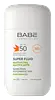
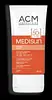
BABE Laboratorios Super Fluid Sunscreen Mattifying SPF 50 Versus Laboratoire ACM Medisun Cream SPF 50+
This chemical sunscreen covers the full UV range and blocks ~98% of UVB at SPF 50.
This hybrid sunscreen covers the full UV range and blocks ~98% of UVB at SPF 50.


What's inside
What's inside
 Key Ingredients
Benefits
Concerns
Ingredients Side-by-side
Water
Skin ConditioningDicaprylyl Carbonate
EmollientEthylhexyl Methoxycinnamate
UV Absorber


Propanediol
Solvent

Silica
Abrasive


Niacinamide
Smoothing








Dibutyl Adipate
EmollientButyl Methoxydibenzoylmethane
UV Absorber
Ethylhexyl Triazone
UV Absorber
Bis-Ethylhexyloxyphenol Methoxyphenyl Triazine
UV Absorber
C20-22 Alkyl Phosphate
EmulsifyingC20-22 Alcohols
Emulsion Stabilising
Benzotriazolyl Dodecyl P-Cresol
UV AbsorberCarnosine
Skin Conditioning
Tocopherol
Antioxidant

Parfum
Masking



Caprylyl/Capryl Glucoside
Cleansing1,2-Hexanediol
Skin Conditioning
Sodium Gluconate
ChelatingXanthan Gum
EmulsifyingPolyacrylate Crosspolymer-6
Emulsion StabilisingBHT
Antioxidant
Sodium Hydroxide
BufferingO-Cymen-5-Ol
Antimicrobial
Water, Dicaprylyl Carbonate, Ethylhexyl Methoxycinnamate, Propanediol, Silica, Niacinamide, Dibutyl Adipate, Butyl Methoxydibenzoylmethane, Ethylhexyl Triazone, Bis-Ethylhexyloxyphenol Methoxyphenyl Triazine, C20-22 Alkyl Phosphate, C20-22 Alcohols, Benzotriazolyl Dodecyl P-Cresol, Carnosine, Tocopherol, Parfum, Caprylyl/Capryl Glucoside, 1,2-Hexanediol, Sodium Gluconate, Xanthan Gum, Polyacrylate Crosspolymer-6, BHT, Sodium Hydroxide, O-Cymen-5-Ol
Water
Skin ConditioningEthylhexyl Stearate
Emollient


Isopropyl Palmitate
Emollient
Butyl Methoxydibenzoylmethane
UV Absorber
Glycerin
Humectant
Dicaprylyl Ether
Emollient
Ethylhexyl Salicylate
UV Absorber
Octocrylene
UV Absorber
Ethylhexyl Triazone
UV Absorber
Cetearyl Alcohol
Emollient
Glyceryl Stearate
Emollient
Sodium Stearoyl Glutamate
CleansingDiethylhexyl Butamido Triazone
UV Absorber
Microcrystalline Cellulose
AbsorbentPhenylbenzimidazole Sulfonic Acid
UV Absorber
Sodium Hydroxide
BufferingTocopheryl Acetate
Antioxidant
Cellulose Gum
Emulsion StabilisingTitanium Dioxide
Cosmetic Colorant
Caprylyl Glycol
Emollient
Decylene Glycol
Skin ConditioningPiroctone Olamine
Preservative
Xanthan Gum
EmulsifyingDiethylhexyl Sodium Sulfosuccinate
CleansingSilver Chloride
Preservative
Propylene Glycol
Humectant
Water, Ethylhexyl Stearate, Isopropyl Palmitate, Butyl Methoxydibenzoylmethane, Glycerin, Dicaprylyl Ether, Ethylhexyl Salicylate, Octocrylene, Ethylhexyl Triazone, Cetearyl Alcohol, Glyceryl Stearate, Sodium Stearoyl Glutamate, Diethylhexyl Butamido Triazone, Microcrystalline Cellulose, Phenylbenzimidazole Sulfonic Acid, Sodium Hydroxide, Tocopheryl Acetate, Cellulose Gum, Titanium Dioxide, Caprylyl Glycol, Decylene Glycol, Piroctone Olamine, Xanthan Gum, Diethylhexyl Sodium Sulfosuccinate, Silver Chloride, Propylene Glycol
Reviews
Ingredients Explained
These ingredients are found in both products.
Ingredients higher up in an ingredient list are typically present in a larger amount.
Also known as Avobenzone, this ingredient is an oil-soluble used to absorb the full spectrum of UVA rays (peak 357 nm).
It's one of the most effective UVA filters available but has a major caveat of photostability: avobenzone is susceptible to photodegradation.
This means it can lose efficacy when exposed to sunlight without the help of a stabilizing agent.
Studies show antioxidants (like vitamin E or vitamin C) and some UV filters (like octocrylene and Tinosorb S) can meaningfully improve its stability in a formulation.
The maximum allowable concentration according to regulation is 3% in the US + Canada, and 5% in the EU, Australia, China, Korea, and ASEAN countries.
It has a well-support safety profile: a comprehensive 2025 review found minimal toxicity with no evidence of carcinogenicity.
Overall, avobenzone is a safe and regulated ingredient used in sunscreen for over 40 years.
Learn more about Butyl MethoxydibenzoylmethaneEthylhexyl Triazone (aka Octyl Triazone) is an oil-soluble organic UVB filter. It has peak absorption around 314 nm, right in the middle of the UVB range.
This ingredient is described as one of the most effective UVB filters available and small concentrations are enough to deliver a high SPF thanks to its strong UV absorbing power.
Formulators love it for its stability; its ability to filter UV stays practically unchanged even under intense radiation and it can also help boost the photostability of less stable filters like avobenzone.
It's also a great pick for water resistant products because it's insoluble in water and has a good affinity for keratin.
Because it's a big, heavy molecule, the European Scientific Committee has found to to have very low dermal penetration and negative results for allergenicity.
In vitro testing also showed a low absorption rate and clean results on irritation.
Typical use levels are 1-5% with 5% being the maximum in the EU, Japan, and other markets that allow it. However, this ingredient is not approved yet in the US or Canada.
Learn more about Ethylhexyl TriazoneSodium Hydroxide is also known as lye or caustic soda. It is used to adjust the pH of products; many ingredients require a specific pH to be effective.
In small amounts, sodium hydroxide is considered safe to use. However, large amounts may cause chemical burns due to its high alkaline.
Your skin has a natural pH and acid mantle. This acid mantle helps prevent harmful bacteria from breaking through. The acid mantle also helps keep your skin hydrated.
"Alkaline" refers to a high pH level. A low pH level would be considered acidic.
Learn more about Sodium HydroxideWater. It's the most common cosmetic ingredient of all. You'll usually see it at the top of ingredient lists, meaning that it makes up the largest part of the product.
So why is it so popular? Water most often acts as a solvent - this means that it helps dissolve other ingredients into the formulation.
You'll also recognize water as that liquid we all need to stay alive. If you see this, drink a glass of water. Remember to stay hydrated!
Learn more about WaterXanthan gum is used as a stabilizer and thickener within cosmetic products. It helps give products a sticky, thick feeling - preventing them from being too runny.
On the technical side of things, xanthan gum is a polysaccharide - a combination consisting of multiple sugar molecules bonded together.
Xanthan gum is a pretty common and great ingredient. It is a natural, non-toxic, non-irritating ingredient that is also commonly used in food products.
Learn more about Xanthan Gum

