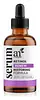
This anti-aging serum is formulated around Retinol and Aloe Barbadensis Leaf Juice to soften the look of wrinkles and refine skin texture.
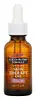
This hydrating oil is formulated around Prunus Amygdalus Dulcis Oil and Vitis Vinifera Seed Oil to hydrate skin and soften the look of wrinkles.

What's inside
What's inside
 Key Ingredients
Benefits
Concerns
Ingredients Side-by-side


Prunus Amygdalus Dulcis Oil
Skin Conditioning





Vitis Vinifera Seed Oil
Emollient
Isopropyl Myristate
Emollient

Cetearyl Ethylhexanoate
Emollient
Camelina Sativa Seed Oil
Skin Conditioning
Macadamia Ternifolia Seed Oil
Emollient
Sesamum Indicum Seed Oil
Emollient
PEG-40 Sorbitan Peroleate
Emulsifying
Cocos Nucifera Oil
Masking

Prunus Armeniaca Kernel Oil
Masking
Caprylyl Methicone
Skin Conditioning
Theobroma Cacao Seed Butter
Emollient
Tocopheryl Acetate
Antioxidant


Retinol
Skin Conditioning







Ascorbyl Palmitate
Antioxidant
Centella Asiatica Extract
Cleansing

Rosa Canina Seed Extract
EmollientArgania Spinosa Kernel Oil
Emollient
Helianthus Annuus Seed Oil
Emollient
Dimethicone
Emollient
Hydrogenated Methyl Abietate
Parfum
Masking
Caprylic/Capric Triglyceride
Masking
BHT
Antioxidant
Benzyl Benzoate
Antimicrobial
Citronellol
Perfuming
Alpha-Isomethyl Ionone
Perfuming
Geraniol
Perfuming
Hydroxyisohexyl 3-Cyclohexene Carboxaldehyde
Masking
Hexyl Cinnamal
Perfuming
Butylphenyl Methylpropional
Perfuming
Prunus Amygdalus Dulcis Oil, Vitis Vinifera Seed Oil, Isopropyl Myristate, Cetearyl Ethylhexanoate, Camelina Sativa Seed Oil, Macadamia Ternifolia Seed Oil, Sesamum Indicum Seed Oil, PEG-40 Sorbitan Peroleate, Cocos Nucifera Oil, Prunus Armeniaca Kernel Oil, Caprylyl Methicone, Theobroma Cacao Seed Butter, Tocopheryl Acetate, Retinol, Ascorbyl Palmitate, Centella Asiatica Extract, Rosa Canina Seed Extract, Argania Spinosa Kernel Oil, Helianthus Annuus Seed Oil, Dimethicone, Hydrogenated Methyl Abietate, Parfum, Caprylic/Capric Triglyceride, BHT, Benzyl Benzoate, Citronellol, Alpha-Isomethyl Ionone, Geraniol, Hydroxyisohexyl 3-Cyclohexene Carboxaldehyde, Hexyl Cinnamal, Butylphenyl Methylpropional
Reviews
Ingredients Explained
These ingredients are found in both products.
Ingredients higher up in an ingredient list are typically present in a larger amount.
Caprylic/Capric Triglyceride (aka MCT Oil) is a lightweight emollient, solvent, and texture enhancer. It is considered a skin-softener by helping to prevent moisture loss.
Though it behaves like an oil, it is not technically one due to its chemical composition. One perk of this ingredient is that it is very stable, resistant to oxidation, and unlikely to go rancid.
In practice, that translates to a long shelf life and a consistently elegant skin feel.
While there is an assumption Caprylic Triglyceride can clog pores due to it being derived from coconut oil, there is no research supporting this. Just patch test if you have concerns.
Fractionated coconut oil and MCT Oil are both listed as Caprylic/Capric Triglyceride according to INCI. This is because INCI names are based on the ingredient’s final chemical composition and not its marketing name or source.
This ingredient is treated as the gold standard fungal acne safe oil. Even though it is coconut derived, the problematic lauric acid is stripped out.
This leaves just caprylic (C8) and capric (C10) acid. These chain lengths actually trend antifungal; a 2020 study found caprylic acid was enough to disrupt Malassezia furfur cell membrane, with a caprylic acid derivative damaging membrane structures at concentrations as low as 0.2%.
Learn more about Caprylic/Capric TriglycerideCentella Asiatica Extract (Centella) is one of the most researched botanical extracts in skincare with decades of studies backing its effects on inflammation, collagen, and the skin barrier.
That research keeps pointing back to the same four triterpenoid saponins: Asiaticoside, Madecassoside, Asiatic Acid, and Madecassic Acid.
These compounds allow centella to dial back inflammation, encourage the skin to build and hold onto collagen, support the barrier and hydration, and bring solid antioxidant activity to protect against signs of aging.
Centella also carries a nice supporting cast of Vitamin A, vitamin C, several B vitamins, and amino acids. Put it all together and you get an ingredient that soothes, hydrates, and protects, all at once.
Most of centella's magic comes from the four big compounds (Asiaticoside, Madecassoside, Asiatic Acid, and Madecassic Acid). These are the actives doing the heavy lifting in almost every centella study.
Here is the short version of what they do in the skin:
So it is not just soothing for the sake of soothing. Centella calms the skin AND helps it rebuild.
Just FYI, not all centella on an ingredient list is the same. What you are getting actually depends on the extract:
Fun fact on the ratios: the leaves tend to be richest in Madecassoside and Asiaticoside, and lower in the two acids. The exact amounts shift with where the plant is grown and how it is processed. This means purity really does vary brand to brand.
Centella is one of the most easygoing actives out there.
It layers well with basically everything: niacinamide, hyaluronic acid, peptides, and vitamin C, and also pairs nicely with stronger actives like retinoids and exfoliating acids where it can help take the edge off irritation.
On the safety side, centella and its triterpenes are classified as weak sensitizers, meaning allergic reactions are possible but uncommon.
Patch tests at 1% and 5% came back negative in test panels, and creams at typical use levels did not cause allergic reactions across large groups of people.
But as with any new active, a patch test is still a smart move for very reactive skin.
Centella is widely used because it is effective at low percentages. For context, human safety testing found no meaningful irritation from creams containing centella extract at everyday use levels (the tested amounts were well under 1%).
The irritancy threshold in animal testing was also above 30% (so real-world formulas sit far below anything concerning).
In collagen lab studies, higher concentrations drove more collagen synthesis, so serums built around centella tend to feature it more prominently.
Bottom line: you will find centella working nicely anywhere from a fraction of a percent up to hero-ingredient levels depending on whether it is a supporting soother or the main event.
Fun fact: Centella has been used as a medicine and in food for many centuries. As a medicine, it is used to treat burns, scratches, and wounds.
Learn more about Centella Asiatica ExtractRetinol is one of the most studied anti-aging ingredients in skincare (and for good reason!).
It's a form of vitamin A that your skin converts into Retinoic Acid, the active molecule that actually does the work in your cells.
That conversion happens in two steps: your skin first turns Retinol into Retinaldehyde (also called Retinal), then turns Retinaldehyde into Retinoic Acid.
Retinol is converted to biologically active retinoic acid via retinaldehyde by dehydrogenases in a two-step oxidation process.
Each step is a little "upgrade" toward the active form which is part of why Retinol is gentler than prescription Retinoic Acid; your skin does the work gradually. This also explains where Retinol sits in the retinoid family.
Here is the retinoid family ranked roughly by strength: Retinyl Esters (like Retinyl Palmitate) < Retinol < Retinaldehyde < Retinoic Acid.
Retinoid activity increases in that order, while tolerance runs in reverse; retinyl esters are the gentlest and retinoic acid the most irritating.
The more conversion steps an ingredient needs, the gentler (and slower) it tends to be, so Retinol lands in a nice middle spot. It's more effective than the esters, gentler than prescription options.
Once it becomes Retinoic Acid, it binds to receptors inside your cells' nuclei (called RARs and RXRs). These receptor pairs bind to specific DNA motifs called retinoic acid response elements and act like switches that turn certain genes on or off.
In practice, this means a few things happen in a formula. It:
That last two are worth a closer look.
A study that tested Retinol directly (not just prescription Retinoic Acid) found that four weeks of retinol thickened the epidermis and switched on the genes for Collagen I and Collagen III, with more procollagen I and III showing up in the skin. And after twelve weeks, facial wrinkles were visibly reduced.
Retinoids more broadly stimulate the skin's synthesis of hyaluronan and other glycosaminoglycans, part of what gives skin a plumper, more hydrated look over time.
So even the gentler OTC form is doing real structural work (not just sitting on the surface).
It's also worth knowing Retinol isn't only a wrinkle ingredient; it can help with uneven tone, dark spots, rough texture, and the look of pores as well because it speeds up turnover and influences pigment.
The research backs this up as well.
A pooled analysis of six clinical studies found that 0.1% stabilized retinol improved all signs of photoaging versus vehicle as early as week 4 and through 12 weeks, with only a few mild cases of irritation.
Another study comparing concentrations found that 0.3% and 1% Retinol were similarly effective at remodeling photodamaged skin, but 0.3% caused fewer adverse reactions when used daily (a useful reminder that more isn't always better).
Retinol is about tenfold less potent than Retinoic Acid. This is why it works as a gentler, non-prescription option that builds results over time.
Typical concentrations range from 0.1-1%, with 0.1% to 0.3% being a well-supported sweet spot for visible benefits with good tolerability.
One quirk worth mentioning: Retinol is famously unstable.
It's highly sensitive to light and oxygen, and UV exposure breaks it down into a range of degradation products.
Real-world testing bears this out, with retinoid content in some products dropping anywhere from 0% to 80% after six months at room temperature, and even more at higher temperatures.
This is why good formulations lean on opaque, air-tight packaging (think tubes and pumps, not clear jars) and often "encapsulate" the Retinol to shield it.
Signs of oxidation include your product turning yellow or smelling "off". Keeping it somewhere cool and dark, and using it up within a few months of opening helps it stay effective.
The most common side effects are mild and temporary: usually some dryness, redness, or light peeling as your skin adjusts. These tend to settle with consistent and lower-frequency use.
Like all retinoids, Retinol works best with nightly use, a good moisturizer, and daytime sunscreen.
The "ramp up" method works well: start with Retinol once a week to give your skin time to adjust, which keeps irritation low. Slowly add more nights until you reach your goal frequency once your skin feels comfortable.
Retinoids also make your skin more sensitive to the sun in the first few weeks, so wear sunscreen every morning and protect your skin from direct sun while you build up tolerance.
One safety note: topical Retinoids aren't recommended during pregnancy or breastfeeding. Systemic absorption from creams is low but because high oral vitamin A is a known teratogen and topical safety data are limited, most clinicians recommend stopping retinoids when pregnant or trying to conceive.
Learn more about RetinolTocopheryl Acetate is a stable, shelf-friendly form of vitamin E.
Formulators love it because plain vitamin E oxidizes quickly once it hits air. This acetate version stays stable and resists going off, helping to extend a product's shelf life.
It's actually inactive on its own and works like a slow-release "storage" form; the enzymes in your skin called esterases gradually convert it into active vitamin E over time.
One in vivo study showed 5% of the acetate in the living layer of the epidermis converted to vitamin E after 5 days of application. This study also found the skin gained protection against UV damage even though the conversion was slow and small.
Once converted, vitamin E acts as a skin's main fat-soluble antioxidant that fights free radicals to protect skin from damage.
Topical vitamin E generally boosts the skin's photoprotection, and it reduced UV-damage in animal models.
This ingredient has some brightening potential but it's more of a prevention ingredient than spot-fader. Cell studies show it can slow down melanin production but it's worth noting that it's not the most powerful brightener out there.
Overall, it has a pretty solid safety profile and has been found to be non-irritating and non-comedogenic. Allergic reactions may happen but stay rare due to how widely the ingredient gets used.
The concentration will vary depending on the formula; industry data shows 0.1% in baby lotions, 3% in lipsticks, and 5% in foot powders. You can also find this ingredient at 100% in a pure vitamin E oil.
Most leave-on skincare keeps it at the lower end, often between 0.5-1%.
Learn more about Tocopheryl Acetate

