NK Age Reverse Oil Cleanser
A makeup remover with 22 ingredients, including niacinamide, vitamin E, and hyaluronic acid.
This oil-based makeup remover is made to dissolve makeup, sunscreen, and daily buildup.
Worth noting
Contains Lavandula Angustifolia Oil, an EU-listed fragrance allergen.
We independently verify ingredients, backed by peer-reviewed research. Suggest an update.
What's inside
Ingredients List
Caprylic/Capric Triglyceride
Masking


Vitis Vinifera Seed Oil
Emollient



Olea Europaea Fruit Oil
Masking


Polyglyceryl-2 Triisostearate
Emulsifying
Persea Gratissima Oil
Skin Conditioning
Helianthus Annuus Seed Oil
Emollient
Mipa-Laureth Sulfate
Cleansing
Laureth-4
Emulsifying
Propylene Glycol
Humectant
Lavandula Angustifolia Oil
Masking


Tocopheryl Acetate
Antioxidant


Phenoxyethanol
Preservative
Ethylhexylglycerin
Skin ConditioningWater
Skin Conditioning1,2-Hexanediol
Skin Conditioning
Bee Venom
Astringent
Hibiscus Sabdariffa Flower Extract
Skin ConditioningCamellia Japonica Flower Extract
EmollientPaeonia Albiflora Flower Extract
TonicNiacinamide
Smoothing







Panthenol
Skin Conditioning
Sodium Hyaluronate
Humectant
Caprylic/Capric Triglyceride, Vitis Vinifera Seed Oil, Olea Europaea Fruit Oil, Polyglyceryl-2 Triisostearate, Persea Gratissima Oil, Helianthus Annuus Seed Oil, Mipa-Laureth Sulfate, Laureth-4, Propylene Glycol, Lavandula Angustifolia Oil, Tocopheryl Acetate, Phenoxyethanol, Ethylhexylglycerin, Water, 1,2-Hexanediol, Bee Venom, Hibiscus Sabdariffa Flower Extract, Camellia Japonica Flower Extract, Paeonia Albiflora Flower Extract, Niacinamide, Panthenol, Sodium Hyaluronate
Key Ingredients
Benefits
Concerns
Ingredients Explained
Caprylic/Capric Triglyceride (aka MCT Oil) is a lightweight emollient, solvent, and texture enhancer. It is considered a skin-softener by helping to prevent moisture loss.
Though it behaves like an oil, it is not technically one due to its chemical composition. One perk of this ingredient is that it is very stable, resistant to oxidation, and unlikely to go rancid.
In practice, that translates to a long shelf life and a consistently elegant skin feel.
While there is an assumption Caprylic Triglyceride can clog pores due to it being derived from coconut oil, there is no research supporting this. Just patch test if you have concerns.
Fractionated coconut oil and MCT Oil are both listed as Caprylic/Capric Triglyceride according to INCI. This is because INCI names are based on the ingredient’s final chemical composition and not its marketing name or source.
This ingredient is treated as the gold standard fungal acne safe oil. Even though it is coconut derived, the problematic lauric acid is stripped out.
This leaves just caprylic (C8) and capric (C10) acid. These chain lengths actually trend antifungal; a 2020 study found caprylic acid was enough to disrupt Malassezia furfur cell membrane, with a caprylic acid derivative damaging membrane structures at concentrations as low as 0.2%.
Learn more about Caprylic/Capric TriglycerideVitis Vinifera Seed Oil comes from the grape vine. Grape seeds are a byproduct of creating grape juice or wine.
The components of grape seeds have many skin benefits. Research has found it to be antimicrobial and anti-inflammatory. It also contains many potent antioxidants such as Vitamin E , Vitamin C, proanthocyanidins, polyphenols, flavonoids, and anthocyanins. Proanthocyanidin has been shown to help even out skin tone.
Antioxidants help fight free-radical molecules. Free-radical molecules are capable of damaging our cells and other genetic material. Antioxidants help stabilize free-radicals by donating extra electrons. Grape seed extract may help reduce the signs of aging.
The antimicrobial properties of grape seed may help treat acne. However, more research is needed to support this claim.
Grape seed has also been found to help absorb UV rays. Grape seed extract should not replace your sunscreen.
The fatty acids of grape seed oil give it emollient properties. Emollients help soothe and soften your skin by creating a film. This film traps moisture within, keeping your skin hydrated.
Learn more about Vitis Vinifera Seed OilThis ingredient is also known as olive oil. It has been used in skincare for centuries and science largely backs up its reputation as a nourishing emollient.
The main components of olive oil are oleic acid (55-83%), linoleic acid (3.5-20%), and palmitic acid (7-20%). Oleic acid promotes skin regeneration and helps regulate inflammatory responses.
Squalene is also naturally present in olive oil and exhibits moisturizing and antioxidant properties.
The polyphenols in olive oil also show anti-aging promise; one clinical study found a measurable improvement in skin appearance after 30 days of topical serum use.
Just be aware that applying olive oil directly to skin can weaken the barrier and cause redness. One study with volunteers found even people without sensitive skin experienced a significant reduction in stratum corneum integrity and induced mild erythema.
It's best to use this ingredient as part of a carefully crafted formula (instead of putting it on skin directly from the bottle).
Because it has a 0-2 on the comedogenic scale, it is low risk for acne-prone skin. Just remember the overall formulation of a product matters more than a few ingredients with comedogenic ratings.
This ingredient may not be fungal acne safe because of the oleic and palmitic acid content. These fall within the C11-24 fatty acid range that the Malassezia yeast can metabolize to grow.
Overall, olive oil is a well-studied and nourishing skincare ingredient.
Learn more about Olea Europaea Fruit OilPolyglyceryl-2 Triisostearate is a plant-derived emulsifier and pigment-dispersing agent with a non-sticky skin feel.
It helps products glide on smoothly and prevents oil and water from separating in a formula, making it suitable for sunscreen and makeup formulations.
The EU inventory of cosmetics has no use restrictions on this ingredient and it is considered well-tolerated.
This ingredient may not be fungal acne safe because it is derived from isostearic acid.
Learn more about Polyglyceryl-2 TriisostearateThis ingredient is also known as Avocado oil. It's the cold-pressed oil from the flesh of the avocado fruit packed with fatty acids (mostly oleic acid).
The rich fatty acid profile allows it to function as a skin conditioning agent and emollient; it helps soften and smooth skin while reducing water loss.
Preclinical research has found that topical avocado oil increased collagen synthesis and reduced inflammation during wound healing, giving it some skin-repairing credibility.
The unsaponifiable fraction of the oil is also interesting: studies on avocado unsaponifiables showed that it helped skin produce more collagen and other structural compounds that support healing.
The CIR Expert Panel has found this ingredient to be non-irritating in formulations.
This ingredient may not be fungal acne safe. This is because the oleic acid content falls within the range that Malassezia can use as a food source.
This ingredient does have a comedogenic rating of 0-3, but this doesn't mean a formula with this ingredient will clog pores. Human testing has proved that any finished product with a comedogenic ingredient won't automatically make you break out; it really comes down to concentration, formula, and your skin.
Learn more about Persea Gratissima OilHelianthus Annuus Seed Oil is a plant oil derived from the seeds of a sunflower.
It is rich in fatty acids, primarily linoleic acid and oleic acid. This gives it emollient and skin conditioning properties.
The reason this ingredient is so effective is because it forms a thin film on the skin that reduces transepidermal water loss (TEWL) while supplying linoleic acid to the stratum corneum to improve barrier strength.
The high linoleic acid content is particularly noteworthy for acne-prone skin.
Research suggests that acne-prone skin tends to be deficient in linoleic acid in sebum. Topical application may help replenish this to support a healthier follicular environment and less comedone-promoting sebum.
One randomized study found sunflower seed oil preserved skin barrier integrity in adult volunteers with and without atopic dermatitis (outperforming olive oil).
This ingredient is well-studied, gentle, and an effective emollient suitable for most skin types.
On fungal acne: This ingredient may not be Fungal acne (Malassezia folliculitis) safe. This is because it contains fatty acids with carbon chain lengths in the C11-C24 range.
Learn more about Helianthus Annuus Seed OilMipa-Laureth Sulfate is a type of sulfate.
Laureth-4 is a nonionic surfactant made by attaching an average of four ethylene oxide units to Lauryl Alcohol, a fatty alcohol from coconut or palm kernel oil.
In a formula, it does two jobs:
A 2012 assessment found this ingredient is used in leave-on products at up to 21%, which is at the very high end for the category; most cosmetic use is far lower and typically in the single digits.
A true allergy to Laureth-4 is rare; similar alcohol ethoxylates tested negative for skin sensitization in undiluted guinea pig studies, and related compounds were non-sensitizing in Magnusson-Kligman maximization tests.
There is one caveat for this whole ingredient family: ethoxylated surfactants slowly oxidize when exposed to air, and it's the oxidation products, not the fresh material, that act as sensitizers. This is mostly a formulation and shelf life issue.
Dr. James Fulton's rabbit ear test from the 1980's scored this ingredient as a 5 on the comedogenic scale. Fulton himself described the rabbit ear as not an ideal model and the tests used undiluted ingredients on rabbit ears, which are more reactive than human facial skin.
Dr. Draelos later used a human assay on finished cosmetic products and found that products built with so-called comedogenic ingredients are not necessarily comedogenic themselves.
This ingredient can be potentially pore clogging if it appears high in the ingredient list of a leave-on product.
The fungal acne picture is actually reassuring: Malassezia uses fatty acids from its surroundings (C11-24). This ingredient has nothing for the Malassezia yeast to use since it is an alcohol and not an acid.
Supporting this, closely related ethoxylated alcohol detergents like Ceteth-20 get used in Malassezia lab work as neutral carriers to disperse a separately added fatty acid (not as the food source itself).
Learn more about Laureth-4Propylene Glycol is a synthetic, colorless, odorless liquid that has been a staple in cosmetics for decades. It is a skin conditioning agent, humectant, and solvent.
As a humectant, it draw water to the skin to reduce flaking and restore suppleness. It's also a solvent that helps dissolve other actives and keeps formulas stable across temperature changes.
The CIR Expert Panel has confirmed this ingredient to be nontoxic and clinical studies show no sensitization at cosmetic use concentrations.
True allergic reactions are quite rare: a 15-year retrospective study of 6,751 patients found only 0.31% had a positive reaction (and less than half were considered clinically relevant).
It seemed that when sensitization does occur, it's most commonly linked to topical medication (like corticosteroids) and not cosmetics. Allergic contact dermatitis also appears largely limited to individuals with underlying skin conditions.
Overall, propylene glycol is a well-studied ingredient that most people can tolerate without issue.
Learn more about Propylene GlycolLavandula Angustifolia Oil is more commonly known as lavender essential oil. It is considered a fragrancing ingredient.
Lavender imparts a famous scent. While the smell is lovely, this ingredient and may sensitize skin in topical products. This is because about 85% of the oil is made up of linalool and linalyl acetate.
When exposed to air, these two compounds become strong allergens. This ingredient exhibits cytotoxicity at low concentrations; amounts of 0.25% have been shown to damage skin cells.
A study from Japan found this ingredient caused lavender sensitivity after widespread exposure.
Lavender essential oil has some antimicrobial, antibacterial, and anti-inflammatory properties. However, the cons of this ingredient may outweight the pros.
More research is needed to confirm lavender essential oil's effects when used in aromatherapy.
Lavandula Angustifolia is known as the English Lavender and famous for creating purple fields in Provence, France.
Learn more about Lavandula Angustifolia OilTocopheryl Acetate is a stable, shelf-friendly form of vitamin E.
Formulators love it because plain vitamin E oxidizes quickly once it hits air. This acetate version stays stable and resists going off, helping to extend a product's shelf life.
It's actually inactive on its own and works like a slow-release "storage" form; the enzymes in your skin called esterases gradually convert it into active vitamin E over time.
One in vivo study showed 5% of the acetate in the living layer of the epidermis converted to vitamin E after 5 days of application. This study also found the skin gained protection against UV damage even though the conversion was slow and small.
Once converted, vitamin E acts as a skin's main fat-soluble antioxidant that fights free radicals to protect skin from damage.
Topical vitamin E generally boosts the skin's photoprotection, and it reduced UV-damage in animal models.
This ingredient has some brightening potential but it's more of a prevention ingredient than spot-fader. Cell studies show it can slow down melanin production but it's worth noting that it's not the most powerful brightener out there.
Overall, it has a pretty solid safety profile and has been found to be non-irritating and non-comedogenic. Allergic reactions may happen but stay rare due to how widely the ingredient gets used.
The concentration will vary depending on the formula; industry data shows 0.1% in baby lotions, 3% in lipsticks, and 5% in foot powders. You can also find this ingredient at 100% in a pure vitamin E oil.
Most leave-on skincare keeps it at the lower end, often between 0.5-1%.
Learn more about Tocopheryl AcetatePhenoxyethanol is one of the most widely used preservatives in skincare (and for good reason!).
It has a large spectrum of antimicrobial activity and especially effective bacteria, yeast, and mold while only having a weak effect on your skin's natural microbiome.
On a cellular level, it disrupts the cell membranes of microbes by poking holes that make the cell leak. This shuts down the chemical reactions the microbe needs to make energy so it can no longer survive.
Another perk of this ingredient is that it stays functional across a wide pH range (3-10).
You'll often see it paired with boosters like Ethylhexylglycerin; one study showed that a 1:9 ratio of Ethylhexylglycerin to Phenoxyethanol damages bacterial membranes as effectively as doubling the Phenoxyethanol concentration on its own.
Typical use concentrations range from 0.3-1% depending on the formula, and this ingredient is capped at 1% int the EU.
Safety-wise, the fear mongering does not hold up to the evidence. The EU's Scientific Committee on Consumer Safety and FDA consider it safe as a preservative at up to 1%, including for children of all ages.
Adverse systemic effects only showed up in animal studies at exposures roughly 200x higher than what people get from cosmetics. And despite its very widespread use, this ingredient is a rare sensitizer and allergic reactions are uncommon.
Learn more about PhenoxyethanolEthylhexylglycerin is created from glycerin. It is a multitasker ingredient that:
The CIR Expert Panel found minimal skin absorption or sensitization of any kind in a safety assessment. Though this ingredient is considered well-tolerated, a small number of cases of allergic dermatitis have been published since 2002. Just be sure to patch test if you are unsure.
Industry-reported use ranges from 8% in rinse-off products and 2% in leave-on formulations.
Learn more about EthylhexylglycerinWater. It's the most common cosmetic ingredient of all. You'll usually see it at the top of ingredient lists, meaning that it makes up the largest part of the product.
So why is it so popular? Water most often acts as a solvent - this means that it helps dissolve other ingredients into the formulation.
You'll also recognize water as that liquid we all need to stay alive. If you see this, drink a glass of water. Remember to stay hydrated!
Learn more about Water1,2-Hexanediol is a synthetic liquid and another multi-functional powerhouse.
It is a:
- Humectant, drawing moisture into the skin
- Emollient, helping to soften skin
- Solvent, dispersing and stabilizing formulas
- Preservative booster, enhancing the antimicrobial activity of other preservatives
Bee venom comes from bees (of course!).
There are many claims about bee venom being anti-aging. It is often called "natural botox". This is because it causes inflammation and tightening when applied to the skin. However, further studies are needed to look into the benefits of this ingredient.
Bee venom contains peptides, amino acids, and enzymes. It's main peptide is called melittin. Bee venom and its components are being studied for their antiviral and anti-inflammatory properties.
While cosmetics usually do not contain enough bee venom to cause an allergic reaction (unless you have an extreme allergy), we recommend you speaking with a professional if you have concerns.
Being cruelty-free means a brand does not experiment on animals.
If you're worried about the well-being of the bees, we recommend looking more into the company of the product.
Since bee venom is a product from bees, it is not considered vegan. However, there is much debate about this and many brands claim their bee products to be vegan.
Here at SkinSort, we are asking everyone to be kind to bees. They are important for many ecosystems and are endangered.
Learn more about Bee VenomThis extract comes from the Roselle flower, or Hibiscus Sabdariffa. Roselle flowers are rich in antioxidants.
Studies found the antioxidants in Roselle flowers to potentially help reduce UV-B damage.
Camellia Japonica Flower Extract comes from the Japanese Camellia plant (a cousin of the green tea plant). This plant is native to East Asia and known as "Tsubaki" in Japanese.
It's a flower extract packed with flavonoids and phenolic acids that give it most of its skincare value. In lab tests on human skin cells, the ethanol extract of the flower mopped up free radicals and boosted the skin's own antioxidant enzymes.
A separate study found the flower extract had solid antioxidant activity and reduced the reactive oxygen species that urban air pollution triggers in skin cells.
Newer work also points at anti-aging and calming effects:
One 2025 paper tied the extract and its component hyperoside to collagen III and elastin production plus better skin-barrier protein expression. A mouse study on eczema-like skin found four weeks of topical camellia extract reduced inflammation and itch-related markers.
Just know that most of these studies are cell-culture and animal work and not human trials. For now, it's best to treat it as a nice supporting antioxidant rather than a headline active.
At this time, there's no published regulatory use-level for this specific ingredient; suppliers usually sell it as a water/glycerin-based extract used in the low single-digit percent range.
There's no published contact-allergy case reports for this ingredient but as with any botanical, a patch test is sensible if you react to plant extracts generally.
Learn more about Camellia Japonica Flower ExtractWe don't have a description for Paeonia Albiflora Flower Extract yet.
Niacinamide is a multitasking form of vitamin B3 that strengthens the skin barrier, reduces pores and dark spots, regulates oil, and improves signs of aging.
And the best part? It's gentle and well-tolerated by most skin types, including sensitive and reactive skin.
You might have heard of "niacin flush", or the reddening of skin that causes itchiness. Niacinamide has not been found to cause this.
In very rare cases, some individuals may not be able to tolerate niacinamide at all or experience an allergic reaction to it.
If you are experiencing flaking, irritation, and dryness with this ingredient, be sure to double check all your products as this ingredient can be found in all categories of skincare.
When incorporating niacinamide into your routine, look out for concentration amounts. Typically, 5% niacinamide provides benefits such as fading dark spots. However, if you have sensitive skin, it is better to begin with a smaller concentration.
When you apply niacinamide to your skin, your body converts it into nicotinamide adenine dinucleotide (NAD). NAD is an essential coenzyme that is already found in your cells as "fuel" and powers countless biological processes.
In your skin, NAD helps repair cell damage, produce new healthy cells, support collagen production, strengthen the skin barrier, and fight environmental stressors (like UV and pollution).
Our natural NAD levels start to decline with age, leading to slower skin repair, visible aging, and a weaker skin barrier. By providing your skin niacinamide, you're recharging your skin's NAD levels. This leads to stronger, healthier, and younger looking skin.
Another name for vitamin B3 is nicotinamide. This vitamin is water-soluble and our bodies don't store it. We obtain Vitamin B3 from either food or skincare. Meat, fish, wheat, yeast, and leafy greens contain vitamin B3.
The type of niacinamide used in skincare is synthetically created.
Learn more about NiacinamidePanthenol is a common ingredient that helps hydrate and soothe the skin. It is found naturally in our skin and hair.
There are two forms of panthenol: D and L.
D-panthenol is also known as dexpanthenol. Most cosmetics use dexpanthenol or a mixture of D and L-panthenol.
Panthenol is famous due to its ability to go deeper into the skin's layers. Using this ingredient has numerous pros (and no cons):
Like hyaluronic acid, panthenol is a humectant. Humectants are able to bind and hold large amounts of water to keep skin hydrated.
This ingredient works well for wound healing. It works by increasing tissue in the wound and helps close open wounds.
Once oxidized, panthenol converts to pantothenic acid. Panthothenic acid is found in all living cells.
This ingredient is also referred to as pro-vitamin B5.
Learn more about PanthenolSodium Hyaluronate is the salt form of hyaluronic acid. It is a long sugar chain that is naturally found in your skin, joints, and connective tissue that maintains hydration and elasticity.
In skincare, it works as a humectant. It pulls water from the environment and deeper layers of skin and binds it to the surface.
Interestingly, the size of the molecule affects its behavior:
Some clinical evidence links low molecular weight versions to improved wrinkle depth, elasticity, anti-inflammatory effects, and barrier repair.
Many serums use a blend of both weights so you can get surface hydration plus longer-lasting and deeper effects.
You'll typically see concentrations between 0.1-2% for this ingredient.
Learn more about Sodium HyaluronateReviews
No written reviews yet. Be the first to review this product.
Recent searches
Search reviews by skin type, ingredient, or keyword.
Where it's from
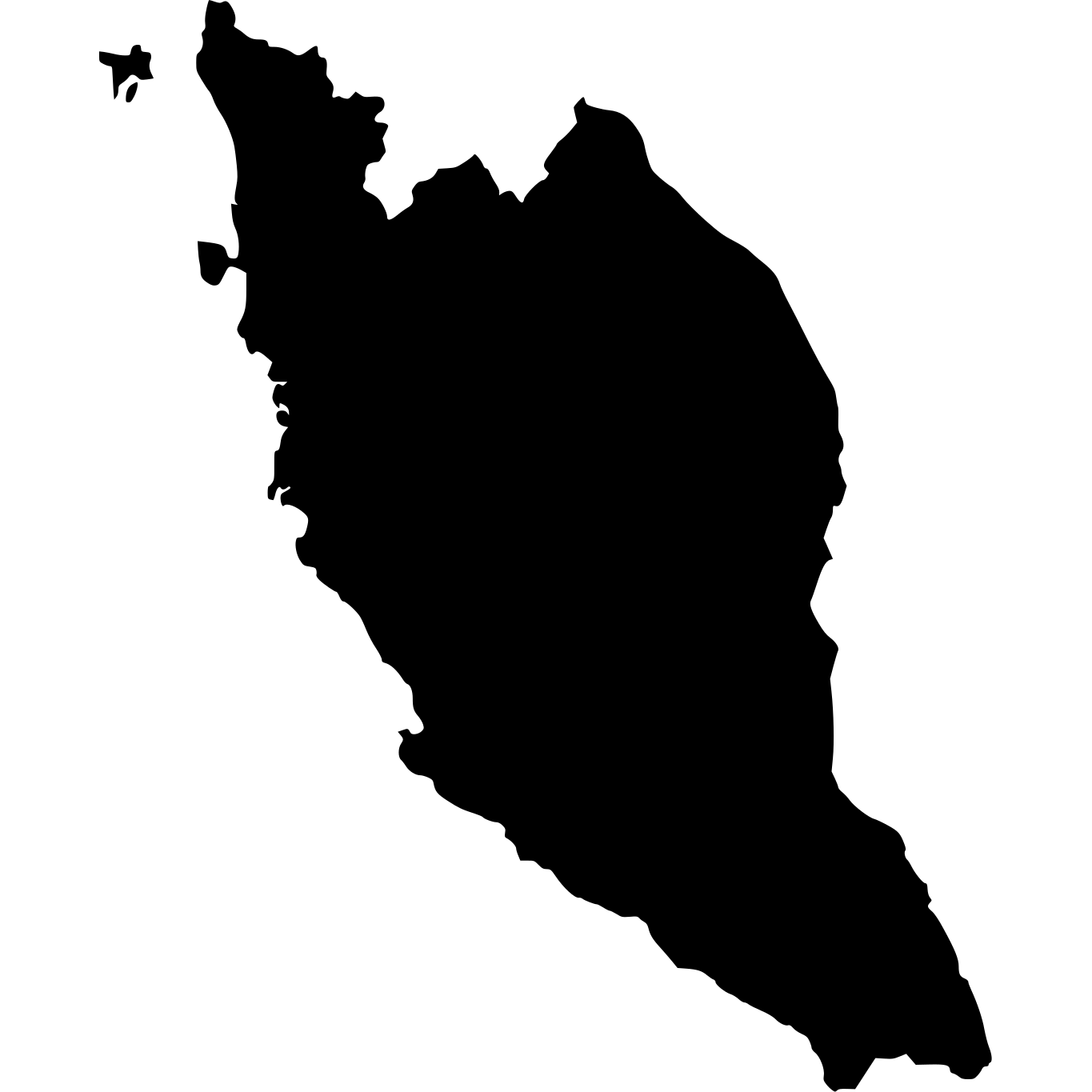
NK Age Reverse is a Malaysian brand

We're dedicated to providing you with the most up-to-date and science-backed ingredient info out there.
The data we've presented on this page has been verified by a member of the SkinSort Team.
Read more about us· Updated July 27, 2026 • Added by damianadhirah1


