Byredo Mascara
Mascara with 30 ingredients that contains exfoliants, Vitamin C and Vitamin E
We independently verify ingredients, backed by peer-reviewed research. Suggest an update.
What's inside
Ingredients List
Water
Skin ConditioningCI 77499
Cosmetic ColorantCopernicia Cerifera Cera
Emollient

Glyceryl Stearate
Emollient
Hydrogenated Olive Oil Stearyl Esters
Emulsion Stabilising
Synthetic Wax
Abrasive

Vp/Va Copolymer
Stearic Acid
Cleansing
Helianthus Annuus Seed Cera
Emollient
Palmitic Acid
Emollient

Butylene Glycol
Humectant
Olea Europaea Oil Unsaponifiables
Skin Conditioning
CI 77007
Cosmetic ColorantAminomethyl Propanol
BufferingRicinus Communis Seed Oil
Masking
1,2-Hexanediol
Skin Conditioning
Caprylyl Glycol
Emollient
Polyimide-1
Galactoarabinan

Rhus Succedanea Fruit Cera
EmollientShorea Robusta Resin
TonicSodium Dehydroacetate
Preservative
Myristic Acid
Cleansing
Parfum
Masking

Lauric Acid
Cleansing
Oleic Acid
Emollient
Lecithin
Emollient
Tocopherol
Antioxidant




Ascorbyl Palmitate
Antioxidant

Citric Acid
Buffering
Water, CI 77499, Copernicia Cerifera Cera, Glyceryl Stearate, Hydrogenated Olive Oil Stearyl Esters, Synthetic Wax, Vp/Va Copolymer, Stearic Acid, Helianthus Annuus Seed Cera, Palmitic Acid, Butylene Glycol, Olea Europaea Oil Unsaponifiables, CI 77007, Aminomethyl Propanol, Ricinus Communis Seed Oil, 1,2-Hexanediol, Caprylyl Glycol, Polyimide-1, Galactoarabinan, Rhus Succedanea Fruit Cera, Shorea Robusta Resin, Sodium Dehydroacetate, Myristic Acid, Parfum, Lauric Acid, Oleic Acid, Lecithin, Tocopherol, Ascorbyl Palmitate, Citric Acid
Key Ingredients
Benefits
Concerns
Ingredients Explained
Water. It's the most common cosmetic ingredient of all. You'll usually see it at the top of ingredient lists, meaning that it makes up the largest part of the product.
So why is it so popular? Water most often acts as a solvent - this means that it helps dissolve other ingredients into the formulation.
You'll also recognize water as that liquid we all need to stay alive. If you see this, drink a glass of water. Remember to stay hydrated!
Learn more about WaterCi 77499 is also hydrated iron III oxide. It is created from mixing red and black iron oxides. This helps give shades of darkness to a product.
Iron III oxides are classified as inorganic chemicals for coloring.
This ingredient comes from a palm tree native to Brazil. This ingredient is used to thicken texture and leaves behind a film when applied.
Glyceryl Stearate is made by reacting glycerin with stearic acid (typically sourced from plant oils like palm or coconut). It's an emulsifier, emollient, and mild occlusive.
Emulsifiers help ingredients like oil and water stay mixed so your formula stays nicely blended and uniform in texture.
This ingredient is typically used in concentrations between 1-10%. Studies have found it to be non-sensitizing, non-phototoxic, and non-photoallergenic.
A close cousin of this ingredient is Glyceryl Stearate SE ("self-emulsifying"). This just has a small amount of sodium or potassium stearate added so it can emulsify without a co-emulsifier.
Since this ingredient is an ester of a C18 fatty acid, it may not be fungal acne safe. The Malassezia yeast can potentially metabolize within the C11-C24 range.
Fun fact: The human body also creates Glyceryl Stearate naturally.
Learn more about Glyceryl StearateHydrogenated Olive Oil Stearyl Esters is an oil.
Synthetic Wax is a manufactured hydrocarbon wax. In formulas, it works as an occlusive emollient that helps reduce water loss and improves the spreadability of products.
Research comparing synthetic wax to traditional mineral-derived products found that formulas containing it perform as well for skin hydration.
It is considered non-comedogenic and vegan-friendly.
This ingredient has a well-established safety record by the CIR Expert Panel for Cosmetic Ingredient Safety.
Synthetic Waxes are straight/branched-chain hydrocarbons with no ester bond or fatty acids. That means there is nothing for the Malassezia yeast to feed on.
Learn more about Synthetic WaxVP/VA Copolymer is a synthetic polymer made by joining two smaller molecules (vinylpyrrolidone and vinyl acetate) into a larger chain.
It is mainly used as a film-former and fixing agent. When a product dries, it creates a thin and flexible layer on the skin, hair, or nails. This film helps hold hairstyles into place, adds a smooth feel to skin, and traps moisture to reduce dryness.
Irritation is rare at normal concentrations and it doesn't penetrate deeply into skin.
Learn more about Vp/Va CopolymerStearic Acid is a fatty acid that is already found in your skin. It's one of the free fatty acids that works alongside ceramides and cholesterols to maintain your barrier.
In cosmetics, it is a multitasker:
Safety-wise, the CIR Expert Panel has concluded it to be safe in cosmetics when formulated to be non-irritating and non-sensitizing.
Free stearic acid is a C18 fatty acid that the Malassezia yeast can substrate, so this ingredient may not be fungal acne safe.
This ingredient does have a comedogenic rating of 2-3, but this doesn't mean a formula with this ingredient will clog pores.
Human testing has proved that any finished product with this ingredient won't automatically make you break out; it really comes down to concentration, formula, and your skin.
Learn more about Stearic AcidHelianthus Annuus Seed Cera isn't fungal acne safe.
Palmitic Acid is a fatty acid naturally found in our skin and in many plant and animal sources.
In cosmetics, it is usually derived from palm oil. It serves many purposes in skincare, acting as a cleanser, emollient, and emulsifier.
Interestingly, topically applied Palmitic Acid can be elongated into longer chain fatty acids and ceramides. A 2019 study found low levels of Palmitic Acid lead to slower development of cells, suggesting it plays a role in keeping your skin's renewal process on track.
The CIR (Cosmetic Ingredient Review) panel determined it safe as used in cosmetics at concentrations up to 13%. It is non-irritating and non-sensitizing in clinical studies.
The culprit behind fungal acne, the Malassezia yeast, feeds on fatty acids with carbon chain lengths between C11-C24. Palmitic Acid, at C16, falls right into that sweet spot.
In vitro studies have shown that Palmitic Acid is one of the fatty acids that induce rapid Malassezia growth in lab settings.
It's worth noting that what feeds yeast in a lab doesn't necessarily feed it on your face since formulation and your skin's chemistry play a bigger role.
This ingredient does have a comedogenic rating of 2, but this doesn't mean a formula with this ingredient will clog pores.
Human testing has proved that any finished product with a comedogenic ingredient won't automatically make you break out; it really comes down to concentration, formula, and your skin.
Learn more about Palmitic AcidButylene Glycol (or BG) is used within cosmetic products for a few different reasons:
Overall, Butylene Glycol is a safe and well-rounded ingredient that works well with other ingredients.
Though this ingredient works well with most skin types, some people with sensitive skin may experience a reaction such as allergic rashes, closed comedones, or itchiness.
Learn more about Butylene GlycolOlive oil unsaponifiables is the part of olive oil that doesn't turn into soap.
This ingredient is rich in bioactive compounds like squalene, phytosterols, and polyphenols that make it a great skin conditioner.
Its fatty acid composition mimics that of the hydrolipidic film covering the surface of the epidermis.
This allows it to diffuse into the upper layers of the skin and integrate with the lipid matrix of the stratum corneum to improve barrier function without being greasy.
Studies have shown that it increases hydration of stratum corneum and the squalene component specifically contributes emollient properties and barrier-restoring effects.
A 2025 narrative review also highlighted olive-derived bioactives in:
Typical use levels for this ingredient run from 3-10%.
Fungal acne:
Whole olive oil contains significant triglycerides and free oleic acid that Malassezia can readily metabolize; the unsaponifiables fraction has had these fatty glycerides removed.
However, certain batches of this ingredient may contain sterol esters or free fatty acids depending on the refinement quality. These trace amounts of C12-24 fatty acids could be metabolized by Malassezia.
This ingredient may not be fungal acne safe but not everyone will react to it. It's best to patch test if you're unsure.
Learn more about Olea Europaea Oil UnsaponifiablesThis pigment is called Ultramarine blue lazurite. It gives a saturated blue color, but can be used to create other colors as well.
According to the manufacturer, it is usually made from kaolin, sodium sulfate, sodium carbonate, sulfur, and charcoal.
Aminomethyl Propanol is used to adjust the pH of products. It is also used as a base to create other organic compounds. Having a balanced pH is important for protecting your skin.
Aminomethyl propanol is safe to use in cosmetics up to 1%. It is soluble in water.
This ingredient is also known as castor oil. It is a skin conditioning ingredient.
The star component of castor oil is ricinoleic acid, an unusual fatty acid that makes up ~80-92% of its composition.
In skincare, it is an emollient that dries down to a solid film with water-binding properties. This helps keep skin hydrated and helps reduce transepidermal water loss (TEWL).
A 2026 dermatology review pulls together its broader uses:
Human clinical testing found this ingredient to be non-irritating and non-sensitizing.
Because castor oil contains fatty acids in the C11-24 range, this ingredient may not be fungal acne safe.
At this time, the literature does not support castor oil in regrowing hair. A 2022 systematic review found no strong evidence that it supports hair growth and only weak evidence that it improves hair shine.
Castor oil itself carries "perfuming" and "masking" function tags according to the official CosIng database. This is because of its mild odor and odor-dampening properties.
Learn more about Ricinus Communis Seed Oil1,2-Hexanediol is a synthetic liquid and another multi-functional powerhouse.
It is a:
- Humectant, drawing moisture into the skin
- Emollient, helping to soften skin
- Solvent, dispersing and stabilizing formulas
- Preservative booster, enhancing the antimicrobial activity of other preservatives
Caprylyl Glycol is a humectant, skin conditioner, emollient, and preservative booster derived from either caprylic acid or synthetically created.
Typical use levels vary from 0.3-1% as a preservative booster and go up to 2% to condition skin.
Because it is not a free-fatty acid, this ingredient is fungal acne safe (there's nothing for Malassezia to feed on).
Learn more about Caprylyl GlycolWe don't have a description for Polyimide-1 yet.
This ingredient is also known as arabinogalactan. It is a polysaccharide extracted from North American larch trees. It is a film-forming agent that helps enhance skin hydration and improves the texture of products.
Once applied, galactoarabinan forms a lightweight and breathable film on the skin. This helps reduce transepidermal water loss (TEWL) without adding a greasy finish.
It is also used to boost the efficacy of exfoliating actives like AHAs by improving skin feel and reducing irritation potential.
Studies show this ingredient supports hydration through two actions:
1) Limiting water evaporation
2) Enhancing the spreadability of emulsion products to disperse humectants and emollients across the skin's surface
Additionally, galactoarabinan can improve makeup wear and reduce "tightness" after cleansing.
Learn more about GalactoarabinanThis ingredient is also known as Japan wax. It is made from the fruit pulp of the Japanese wax tree.
In cosmetics, this ingredient acts like a classic wax; it thickens and stabilizes formulas, helps bind powders, and leaves an emollient film to help reduce moisture loss.
It is important to note this ingredient comes from a tree that is part of the Toxicodendron species that are well-known for having urushiol, an allergen also found in poison ivy.
Though this ingredient comes from the fruit instead of sap (the sap contains the substance that causes itchy rashes), there is a very small chance that sensitive people could react.
Learn more about Rhus Succedanea Fruit CeraWe don't have a description for Shorea Robusta Resin yet.
Sodium Dehydroacetate is a synthetic preservative and sodium salt form of dehydroacetic acid. It stops bacteria, mold, and yeast from growing in your products at low concentrations.
Clinical testing found it to be non-irritating, non-sensitizing, and non-photosensitizing. It's also not significantly absorbed through skin.
There are a very small number of reported cases of contact dermatitis in cases linked to wound-care creams used over compromised skin (rather than skincare).
Overall, this is a well-studied and low-risk preservative just doing its job.
Typical concentrations run up to 0.6%, which is also the maximum amount permitted under both EU CosIng regulations and US FDA guidelines.
Learn more about Sodium DehydroacetateMyristic Acid, aka tetradecanoic acid, is a naturally occurring fatty acid found in coconut oil, milk fat, and palm oil.
In skincare, it is an:
Research indicates that this ingredient posts a low risk of irritation and sensitization.
Industry survey data collected for this ingredient puts real-world usage concentrations anywhere from 0.00002% to 20% (most of the high end sits in rinse-off products).
Myristic Acid is not a recognized contact allergen and there are no published case reports of allergic contact dermatitis to it. Human testing found it to be non-irritating at 100% and at 40-50% in mineral oil. There are complaints about high-Myristic-acid cleansers leaving a tight feeling behind, but that has more to do with soap chemistry and pH than an allergy.
This ingredient does have a comedogenic rating of 3, but this doesn't mean a formula with this ingredient will clog pores.
Human testing has proved that any finished product with this ingredient won't automatically make you break out; it really comes down to concentration, formula, and your skin. Some people still find it breaks them out. So if that's you, definitely trust your skin.
Since myristic acid is a C14 fatty acid, it falls within the range that Malassezia can metabolize (C11-24), and therefore may not be fungal acne safe.
Learn more about Myristic AcidParfum is a catch-all term for an ingredient or more that is used to give a scent to products.
Also called "fragrance", this ingredient can be a blend of hundreds of chemicals or plant oils. This means every product with "fragrance" or "parfum" in the ingredients list is a different mixture.
For instance, Habanolide is a proprietary trade name for a specific aroma chemical. When used as a fragrance ingredient in cosmetics, most aroma chemicals fall under the broad labeling category of “FRAGRANCE” or “PARFUM” according to EU and US regulations.
The term 'parfum' or 'fragrance' is not regulated in many countries. In many cases, it is up to the brand to define this term.
For instance, many brands choose to label themselves as "fragrance-free" because they are not using synthetic fragrances. However, their products may still contain ingredients such as essential oils that are considered a fragrance by INCI standards.
One example is Calendula flower extract. Calendula is an essential oil that still imparts a scent or 'fragrance'.
Depending on the blend, the ingredients in the mixture can cause allergies and sensitivities on the skin. Some ingredients that are known EU allergens include linalool and citronellol.
Parfum can also be used to mask or cover an unpleasant scent.
The bottom line is: not all fragrances/parfum/ingredients are created equally. If you are worried about fragrances, we recommend taking a closer look at an ingredient. And of course, we always recommend speaking with a professional.
Learn more about ParfumLauric Acid is a saturated fatty acid naturally found in coconut oil, palm kernel oil, and even breast milk.
In cosmetics, it is an:
Lab studies have found that lauric acid is surprisingly good at killing acne-causing bacteria. However, these tests were done on bacteria in a petri dish and not on real skin, so we can't say for certain it works the same in a formulation on a real face.
The comedogenic rating of 4 comes from the 1972 rabbit ear model using undiluted ingredients. Comedogenicity is highly individual and one comedogenic ingredient cannot predict how a formula will behave on skin.
This ingredient is not fungal acne safe and research has confirmed Malassezia can use it as a food source. Even though "fungal acne" has the word "acne" in it, they are completely different. Regular acne is driven by a bacteria called Cutibacterium acnes, clogged pores, and excess oil. Fungal acne isn't really acne; it's caused by an overgrowth of a yeast called Malassezia that already lives on everyone's skin. Because one is bacterial and the other is fungal, they respond to different ingredients.
Learn more about Lauric AcidOleic Acid is an Omega-9 fatty acid that can be found naturally in your skin's sebum and in many plant oils such as avocado and olive oil.
It is an emollient that helps soften skin and prevent moisture loss.
Research shows:
A 1998 study did find that applying oleic acid at higher concentrations may cause irritation and disrupt the skin barrier. Modern formulations typically use low levels that is well-tolerated.
The culprit behind fungal acne, the Malassezia yeast, feeds on fatty acids with carbon chain lengths between C11-C24. Oleic Acid, at C18, falls right into that sweet spot.
In vitro studies have shown that Oleic Acid is one of the fatty acids that induce rapid Malassezia growth in lab settings.
Oleic Acid is widely listed with a comedogenic rating but no published study has ever actually assigned it one.
The 0 to 5 scale everyone quotes comes from Fulton's 1989 survey in the Journal of the Society of Cosmetic Chemists and Oleic Acid does not appear in his fatty acid tables at all; what he did test were related ingredients built from it, like Decyl Oleate and Oleyl Alcohol (which did get ratings).
Somewhere along the way people seem to have borrowed those numbers for Oleic Acid itself.
So why is it considered comedogenic? Oleic Acid has been studied. Researchers in 1971 and 1983 applied it to rabbit ears (the standard test back then) and it did clog pores. The 1983 study also found something useful: oxidized Oleic Acid, meaning the kind that's gone rancid, clogged pores noticeably more than fresh Oleic Acid did.
It's just worth keeping in mind that these tests used rabbit skin which reacts more easily than ours. They also used much higher concentrations than you'd ever find in a real product.
A 2006 study on actual people found finished products made with comedogenic ingredients often turn out not to be comedogenic at all. As always, listen to your skin.
Learn more about Oleic AcidLecithin is a term for a group of substances found in the cell membranes of plants, animals, and humans. They are made up of phospholipids.
Thanks to its amphiphilic structure (water-loving head and oil-loving tail), it is a true multitasker:
It plays well with most ingredients and is typically used at 0.1-1%. However, concentrations up to 50% have been reported in moisturizers.
Learn more about LecithinTocopherol is a fat-soluble antioxidant known as Vitamin E.
You'll find this ingredient in the vast majority of skincare (for good reason). It works to neutralize free radicals, or unstable molecules generated by UV exposure, pollution, and other environmental stressors, before they can cause oxidative damage to your skin cells.
Topically applied tocopherol has been shown to protect against UV damage by ramping up the skin's own natural defense enzymes.
It also acts as a skin conditioning agent; some studies show that regular topical use can improve the skin's water-binding capacity over 2-4 weeks.
This ingredient is especially loved for being a team player. When combined with Vitamin C, the photoprotective effect of both ingredients roughly doubles and the combo also helps reduce UV-induced DNA damage.
This ingredient has some brightening potential but it's more of a prevention ingredient than spot-fader. Cell studies show it can slow down melanin production but it's worth noting that it's not the most powerful brightener out there.
In formulations, it also serves as a stabilizer that helps protect other oxidation-prone ingredients from degrading.
Concentrations usually range from 0.1-1% in most leave-on products.
Learn more about TocopherolAscorbyl Palmitate is a fat-soluble form of vitamin C (Ascorbic Acid) made by combining it with palmitic acid.
It is able to blend easily into creams and oil-based formulas because it dissolves in oils rather than water.
As you may know, regular vitamin C is notorious for breaking down when exposed to sunlight and air. Ascorbyl Palmitate is more stable and degrades at a slower rate.
Research on whether it converts efficiently into active vitamin C once it's applied on your skin is still limited.
Some in-vitro studies suggest it may support collagen production, but it is not considered one of the stronger vitamin C derivatives, like:
Due to the palmitic acid base, this ingredient may not be fungal acne safe. Comedogenic studies have also shown this ingredient to have a rating of 2.
It's also worth keeping in mind that comedogenic and irritancy ratings are tested on individual ingredients, not finished formulas. The final product's formulation, concentration, and other ingredients all play a role in how something actually behaves on your skin.
Learn more about Ascorbyl PalmitateCitric Acid is an alpha hydroxy acid (AHA) naturally found in citrus fruits like oranges, lemons, and limes.
Like other AHAs, citric acid can exfoliate skin by breaking down the bonds that hold dead skin cells together. This helps reveal smoother and brighter skin underneath.
However, this exfoliating effect only happens at high concentrations (20%) which can be hard to find in cosmetic products.
Due to this, citric acid is usually included in small amounts as a pH adjuster. This helps keep products slightly more acidic and compatible with skin's natural pH.
In skincare formulas, citric acid can:
While it can provide some skin benefits, research shows lactic acid and glycolic acid are generally more effective and less irritating exfoliants.
Most citric acid used in skincare today is made by fermenting sugars (usually from molasses). This synthetic version is identical to the natural citrus form but easier to stabilize and use in formulations.
Rosacea skin has a lower threshold for acids generally, with 62.5% of rosacea subjects in one study reacting to lactic acid in a sting test. This is why we mark citric acid as a potential rosacea trigger.
However, this ingredient shows up as a pH adjuster or chelator at roughly 0.1-1% in many products. These low levels are unlikely to be an issue for rosacea skin and becomes a potential trigger at exfoliating concentrations (20%). Because everybody's skin is unique, we recommend a patch test if you are unsure.
Learn more about Citric AcidReviews
No written reviews yet. Be the first to review this product.
Recent searches
Search reviews by skin type, ingredient, or keyword.
Where it's from
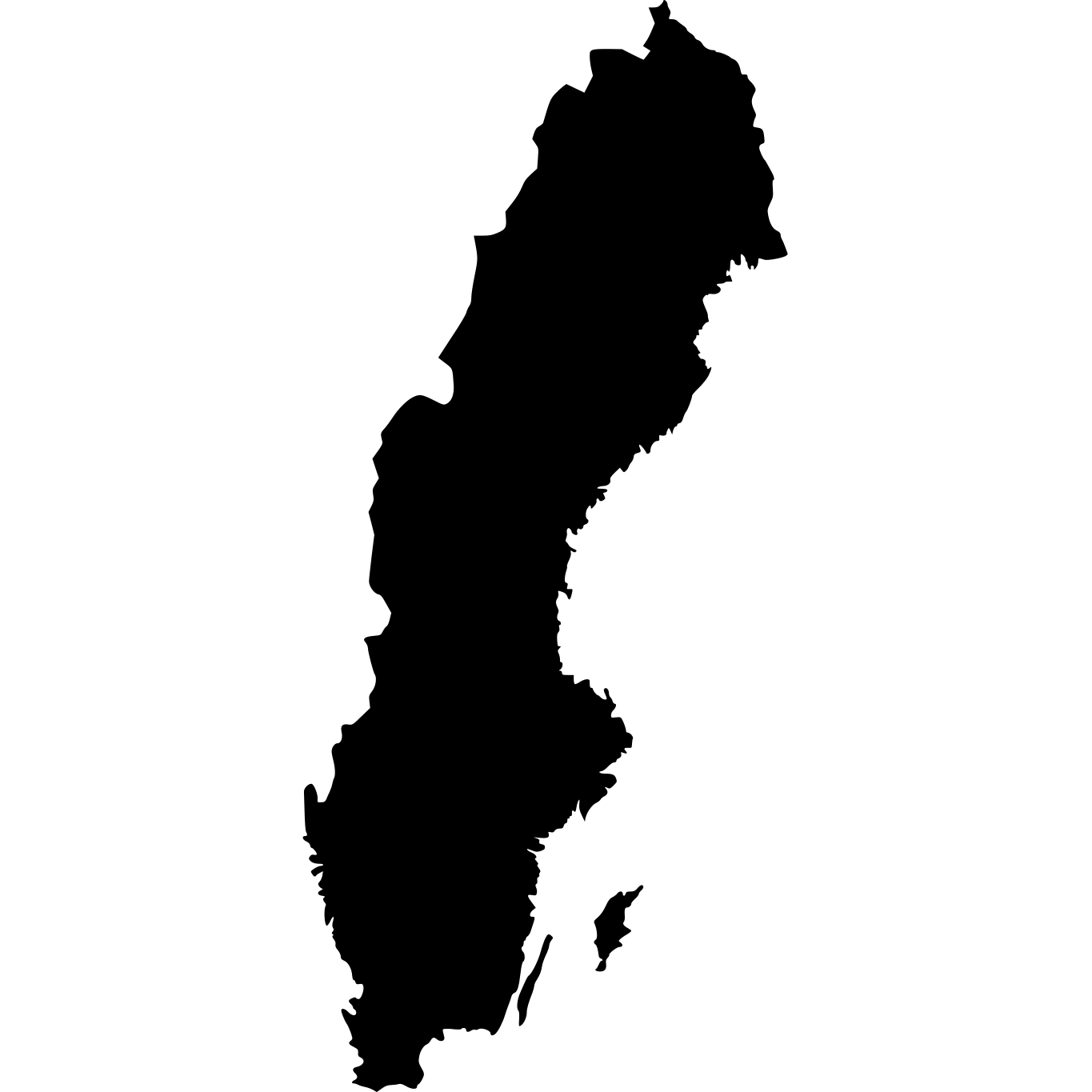
Byredo is a Swedish brand

We're dedicated to providing you with the most up-to-date and science-backed ingredient info out there.
The data we've presented on this page has been verified by a member of the SkinSort Team.
Read more about us· Updated April 24, 2025 • Added by anemone


