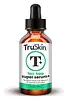
This acne serum is formulated around Retinol and Salicylic Acid to clear breakouts and refine skin texture.

What's inside
What's inside
 Key Ingredients
Benefits
Concerns
Ingredients Side-by-side
Herbal Infusion
Aloe Barbadensis Leaf
Masking


Ascorbic Acid
Antioxidant






Dimethyl Sulfone
SolventCassia Angustifolia Seed Polysaccharide
Skin ConditioningNiacinamide
Smoothing




Retinol
Skin Conditioning


Sulfated Olive Oil
Cleansing


Salicylic Acid
Masking



Rosa Canina Fruit Oil
Emollient
Carbomer
Emulsion StabilisingArginine
Masking
Melaleuca Alternifolia Leaf Oil
Antioxidant

Lavandula Angustifolia Oil
Masking
Cananga Odorata Flower Oil
Masking
Centella Asiatica Extract
Cleansing
Pelargonium Graveolens Oil
Masking
Phenoxyethanol
Preservative
Ethylhexylglycerin
Skin ConditioningHerbal Infusion, Aloe Barbadensis Leaf, Ascorbic Acid, Dimethyl Sulfone, Cassia Angustifolia Seed Polysaccharide, Niacinamide, Retinol, Sulfated Olive Oil, Salicylic Acid, Rosa Canina Fruit Oil, Carbomer, Arginine, Melaleuca Alternifolia Leaf Oil, Lavandula Angustifolia Oil, Cananga Odorata Flower Oil, Centella Asiatica Extract, Pelargonium Graveolens Oil, Phenoxyethanol, Ethylhexylglycerin
Glycine Soja Oil
Emollient

Melaleuca Alternifolia Leaf Oil
Antioxidant
Carthamus Tinctorius Seed Oil
Masking
Rosa Canina Fruit Oil
Emollient
Prunus Amygdalus Dulcis Oil
Skin Conditioning
Arachis Hypogaea Oil
Skin Conditioning
BHT
Antioxidant
Aloe Barbadensis Leaf Extract
Emollient
Tocopherol
Antioxidant
Helianthus Annuus Seed Oil
Emollient
Chamomilla Recutita Extract
Skin Conditioning
Arnica Montana Flower Extract
Masking
Rosmarinus Officinalis Leaf Extract
AntimicrobialSalvia Officinalis Leaf Extract
CleansingPinus Palustris Leaf Extract
TonicArctium Minus Root Extract
Skin ConditioningCitrus Medica Limonum Peel
Skin ConditioningHedera Helix Extract
AntimicrobialCalendula Officinalis Flower Extract
Masking
Tropaeolum Majus Extract
AntimicrobialLamium Album Flower Extract
AstringentIsopropyl Myristate
Emollient
Parfum
Masking
Phenoxyethanol
Preservative
Methylparaben
Preservative

Isopropylparaben
Preservative
Isobutylparaben
Antimicrobial
Butylparaben
Masking
CI 47000
Cosmetic ColorantGlycine Soja Oil, Melaleuca Alternifolia Leaf Oil, Carthamus Tinctorius Seed Oil, Rosa Canina Fruit Oil, Prunus Amygdalus Dulcis Oil, Arachis Hypogaea Oil, BHT, Aloe Barbadensis Leaf Extract, Tocopherol, Helianthus Annuus Seed Oil, Chamomilla Recutita Extract, Arnica Montana Flower Extract, Rosmarinus Officinalis Leaf Extract, Salvia Officinalis Leaf Extract, Pinus Palustris Leaf Extract, Arctium Minus Root Extract, Citrus Medica Limonum Peel, Hedera Helix Extract, Calendula Officinalis Flower Extract, Tropaeolum Majus Extract, Lamium Album Flower Extract, Isopropyl Myristate, Parfum, Phenoxyethanol, Methylparaben, Isopropylparaben, Isobutylparaben, Butylparaben, CI 47000
Alternatives
Ingredients Explained
These ingredients are found in both products.
Ingredients higher up in an ingredient list are typically present in a larger amount.
This ingredient is also known as tea tree oil. It has antioxidant, anti-inflammatory, and antimicrobial properties.
Tea tree oil is a complex lipophilic (fat-loving) oil that contains around 100 compounds with terpinen-4-ol being the most abundant (~40%).
Terpinen-4-ol is responsible for tea tree oil's broad-spectrum antimicrobial activity and makes it a well-researched option for acne.
Clinical studies support 5% tea tree oil as an effective topical treatment for mild to moderate acne. A study with 124 patients compared 5% tea tree oil gel to 5% benzoyl peroxide and both reduced acne (though tea tree oil worked more slowly).
Besides acne, it is also seen in anti-dandruff shampoos and scalp treatments for it's antimicrobial and anti-seborrheic properties.
Safety-wise, the allergic potential of low concentrations on healthy skin is considered low. However, oxidized (old or improperly stored) tea tree oil is a stronger sensitizer.
Irritation can also occur if using the undiluted oil on skin; it's best to use this ingredient as part of a carefully crafted cosmetic formula. This is because regulations require tea tree oil in cosmetics to be stabilized to prevent degradation.
This ingredient has been deemed safe up to 2% in shampoo, 1% in cleansers, and 0.1% in face cream by the EU's Scientific Committee on Consumer Safety (SCCS).
There is some lab evidence that tea tree oil is antifungal against Malassezia, but it is a supportive option at best and not a replacement for proven antifungal treatments.
Learn more about Melaleuca Alternifolia Leaf OilPhenoxyethanol is one of the most widely used preservatives in skincare (and for good reason!).
It has a large spectrum of antimicrobial activity and especially effective bacteria, yeast, and mold while only having a weak effect on your skin's natural microbiome.
On a cellular level, it disrupts the cell membranes of microbes by poking holes that make the cell leak. This shuts down the chemical reactions the microbe needs to make energy so it can no longer survive.
Another perk of this ingredient is that it stays functional across a wide pH range (3-10).
You'll often see it paired with boosters like Ethylhexylglycerin; one study showed that a 1:9 ratio of Ethylhexylglycerin to Phenoxyethanol damages bacterial membranes as effectively as doubling the Phenoxyethanol concentration on its own.
Typical use concentrations range from 0.3-1% depending on the formula, and this ingredient is capped at 1% int the EU.
Safety-wise, the fear mongering does not hold up to the evidence. The EU's Scientific Committee on Consumer Safety and FDA consider it safe as a preservative at up to 1%, including for children of all ages.
Adverse systemic effects only showed up in animal studies at exposures roughly 200x higher than what people get from cosmetics. And despite its very widespread use, this ingredient is a rare sensitizer and allergic reactions are uncommon.
Learn more about PhenoxyethanolRosa Canina Fruit Oil is a non-fragrant plant oil that has earned its skincare reputation through chemistry.
It's dominated by fatty acids like linoleic acid (~35-55%), alpha-linolenic acid (~17-27%), and oleic acid (~14-22%). This is the exact profile that supports skin barrier, locks in hydration, and calms inflammation.
A 2024 review found evidence for the Rosa canina species supports its use for scarring, hyperpigmentation, wrinkles, and atopic dermatitis; this was mostly credited to its vitamin C content and fatty acid composition as the primary active mechanisms.
You might see this ingredient marketed as a "natural retinol". Some rosehip seed oils contains traces of all-trans-retinoic acid but these trace amounts are far below biologically active levels.
The Cosmetic Ingredient Review Panel has deemed this ingredient safe and it's well-tolerated.
Fungal acne: The fatty acids of this oil fall into the C11-24 range that Malassezia yeast can metabolize, so this ingredient may not be fungal acne safe.
Learn more about Rosa Canina Fruit Oil

