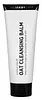
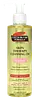
The INKEY List Oat Cleansing Balm Versus Palmer's Cocoa Butter Skin Therapy Cleansing Oil, Face, Rosehip Fragrance
This oil-based makeup remover is made to dissolve makeup, sunscreen, and daily buildup.
This oil-based makeup remover is made to dissolve makeup, sunscreen, and daily buildup.


What's inside
What's inside
 Key Ingredients
Benefits
Concerns
Ingredients Side-by-side
Prunus Amygdalus Dulcis Oil
Skin Conditioning





Cetearyl Alcohol
Emollient


PEG-6 Caprylic/Capric Glycerides
EmulsifyingAvena Sativa Kernel Oil
Skin Conditioning


Candelilla Cera
Emollient
Silica
Abrasive


Sorbitan Stearate
Emulsifying
Tribehenin
Emollient
PEG-60 Almond Glycerides
Emulsifying
Avena Sativa Kernel Flour
Abrasive
Water
Skin ConditioningBenzyl Alcohol
Perfuming





Phenoxyethanol
Preservative
Lecithin
Emollient
1,2-Hexanediol
Skin Conditioning
Ascorbyl Palmitate
Antioxidant



Tocopherol
Antioxidant


Biosaccharide Gum-4
Skin Conditioning
Helianthus Annuus Seed Oil
Emollient
Prunus Amygdalus Dulcis Oil, Cetearyl Alcohol, PEG-6 Caprylic/Capric Glycerides, Avena Sativa Kernel Oil, Candelilla Cera, Silica, Sorbitan Stearate, Tribehenin, PEG-60 Almond Glycerides, Avena Sativa Kernel Flour, Water, Benzyl Alcohol, Phenoxyethanol, Lecithin, 1,2-Hexanediol, Ascorbyl Palmitate, Tocopherol, Biosaccharide Gum-4, Helianthus Annuus Seed Oil
Glycine Soja Oil
Emollient
Prunus Amygdalus Dulcis Oil
Skin Conditioning
Polysorbate 85
Emulsifying
Prunus Armeniaca Kernel Oil
Masking
Sorbitan Trioleate
Emulsifying
Theobroma Cacao Seed Butter
Emollient
Tocopheryl Acetate
Antioxidant
Cetearyl Ethylhexanoate
Emollient
Vitis Vinifera Seed Oil
Emollient
Simmondsia Chinensis Seed Oil
Emollient
Sesamum Indicum Seed Oil
Emollient
Argania Spinosa Kernel Oil
Emollient
Oryza Sativa Bran Oil
Emollient
Rosa Canina Fruit Oil
Emollient
Ascorbyl Palmitate
Antioxidant
Isopropyl Myristate
Emollient
Parfum
Masking
Benzyl Benzoate
Antimicrobial
Citronellol
Perfuming
Geraniol
Perfuming
Butylphenyl Methylpropional
Perfuming
Glycine Soja Oil, Prunus Amygdalus Dulcis Oil, Polysorbate 85, Prunus Armeniaca Kernel Oil, Sorbitan Trioleate, Theobroma Cacao Seed Butter, Tocopheryl Acetate, Cetearyl Ethylhexanoate, Vitis Vinifera Seed Oil, Simmondsia Chinensis Seed Oil, Sesamum Indicum Seed Oil, Argania Spinosa Kernel Oil, Oryza Sativa Bran Oil, Rosa Canina Fruit Oil, Ascorbyl Palmitate, Isopropyl Myristate, Parfum, Benzyl Benzoate, Citronellol, Geraniol, Butylphenyl Methylpropional
Reviews
Ingredients Explained
These ingredients are found in both products.
Ingredients higher up in an ingredient list are typically present in a larger amount.
Ascorbyl Palmitate is a fat-soluble form of vitamin C (Ascorbic Acid) made by combining it with palmitic acid.
It is able to blend easily into creams and oil-based formulas because it dissolves in oils rather than water.
As you may know, regular vitamin C is notorious for breaking down when exposed to sunlight and air. Ascorbyl Palmitate is more stable and degrades at a slower rate.
Research on whether it converts efficiently into active vitamin C once it's applied on your skin is still limited.
Some in-vitro studies suggest it may support collagen production, but it is not considered one of the stronger vitamin C derivatives, like:
Due to the palmitic acid base, this ingredient may not be fungal acne safe. Comedogenic studies have also shown this ingredient to have a rating of 2.
It's also worth keeping in mind that comedogenic and irritancy ratings are tested on individual ingredients, not finished formulas. The final product's formulation, concentration, and other ingredients all play a role in how something actually behaves on your skin.
Learn more about Ascorbyl PalmitateThis ingredient is also known as sweet almond oil. It is a lightweight, cold-pressed oil from the ripe seeds of the sweet almond tree.
Sweet almond oil is rich in skin-nourishing fatty acids such as oleic acid (55-86%) and linolenic acid (7-35%).
As an emollient, it softens and hydrates skin by forming a thin barrier that locks in moisture.
Clinical studies have found it to be non-irritating and non-sensitizing. The CIR Expert Panel has evaluated the available safety data and concluded it is safe for topical use.
Because of the oleic acid content, this ingredient may not be fungal acne safe.
Learn more about Prunus Amygdalus Dulcis Oil

