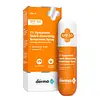
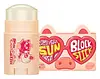
The Derma Co 1% Hyaluronic Quick-Absorbing Sunscreen Spray SPF 50 Versus Elizavecca Milky Piggy Sun Great Block Stick SPF50+ PA++
This hybrid sunscreen covers the full UV range and blocks ~98% of UVB at SPF 50.
This chemical sunscreen covers most of the UV range, lighter on the deep UVA that drives aging.


What's inside
What's inside
 Key Ingredients
Benefits
Concerns
Ingredients Side-by-side
Water
Skin ConditioningEthylhexyl Methoxycinnamate
UV Absorber


Butyl Methoxydibenzoylmethane
UV Absorber
Octocrylene
UV Absorber
Butylene Glycol
Humectant

Lecithin
Emollient
Phenoxyethanol
Preservative
Xylitol
Humectant
Glucose
Humectant
Anhydroxylitol
Humectant
Phoenix Dactylifera Seed Extract
MoisturisingHyaluronic Acid
Humectant


Ethylhexylglycerin
Skin ConditioningHydroxyethyl Urea
Humectant
Ethoxydiglycol
HumectantPropanediol
Solvent
Sodium Gluconate
ChelatingAllantoin
Skin Conditioning

Oxothiazolidine
Skin ProtectingTitanium Dioxide
Cosmetic Colorant
Zinc Oxide
Cosmetic Colorant
Panthenol
Skin Conditioning
Citric Acid
Buffering


Water, Ethylhexyl Methoxycinnamate, Butyl Methoxydibenzoylmethane, Octocrylene, Butylene Glycol, Lecithin, Phenoxyethanol, Xylitol, Glucose, Anhydroxylitol, Phoenix Dactylifera Seed Extract, Hyaluronic Acid, Ethylhexylglycerin, Hydroxyethyl Urea, Ethoxydiglycol, Propanediol, Sodium Gluconate, Allantoin, Oxothiazolidine, Titanium Dioxide, Zinc Oxide, Panthenol, Citric Acid
Octyldodecanol
Emollient
Dicaprylyl Carbonate
EmollientMethyl Methacrylate Crosspolymer
Ethylhexyl Methoxycinnamate
UV Absorber
Dibutyl Lauroyl Glutamide
Skin ConditioningCaprylic/Capric Triglyceride
Masking
Octocrylene
UV Absorber
Homosalate
Skin Conditioning
Ethylhexyl Salicylate
UV Absorber
Dibutyl Ethylhexanoyl Glutamide
Skin ConditioningButyl Methoxydibenzoylmethane
UV Absorber
Tocopheryl Acetate
Antioxidant

Water
Skin ConditioningLavandula Angustifolia Flower Extract
Cleansing
Mentha Rotundifolia Leaf Extract
TonicMelissa Officinalis Leaf Extract
Skin ConditioningRosmarinus Officinalis Leaf Extract
AntimicrobialChamomilla Recutita Extract
Skin Conditioning
Monarda Didyma Leaf Extract
Skin ConditioningSalvia Officinalis Leaf Extract
CleansingMentha Piperita Leaf Extract
Skin ConditioningRosa Centifolia Flower Extract
Astringent
Octyldodecanol, Dicaprylyl Carbonate, Methyl Methacrylate Crosspolymer, Ethylhexyl Methoxycinnamate, Dibutyl Lauroyl Glutamide, Caprylic/Capric Triglyceride, Octocrylene, Homosalate, Ethylhexyl Salicylate, Dibutyl Ethylhexanoyl Glutamide, Butyl Methoxydibenzoylmethane, Tocopheryl Acetate, Water, Lavandula Angustifolia Flower Extract, Mentha Rotundifolia Leaf Extract, Melissa Officinalis Leaf Extract, Rosmarinus Officinalis Leaf Extract, Chamomilla Recutita Extract, Monarda Didyma Leaf Extract, Salvia Officinalis Leaf Extract, Mentha Piperita Leaf Extract, Rosa Centifolia Flower Extract
Reviews
Ingredients Explained
These ingredients are found in both products.
Ingredients higher up in an ingredient list are typically present in a larger amount.
Also known as Avobenzone, this ingredient is an oil-soluble used to absorb the full spectrum of UVA rays (peak 357 nm).
It's one of the most effective UVA filters available but has a major caveat of photostability: avobenzone is susceptible to photodegradation.
This means it can lose efficacy when exposed to sunlight without the help of a stabilizing agent.
Studies show antioxidants (like vitamin E or vitamin C) and some UV filters (like octocrylene and Tinosorb S) can meaningfully improve its stability in a formulation.
The maximum allowable concentration according to regulation is 3% in the US + Canada, and 5% in the EU, Australia, China, Korea, and ASEAN countries.
It has a well-support safety profile: a comprehensive 2025 review found minimal toxicity with no evidence of carcinogenicity.
Overall, avobenzone is a safe and regulated ingredient used in sunscreen for over 40 years.
Learn more about Butyl MethoxydibenzoylmethaneThis ingredient is also known as Octinoxate and is one of the oldest and most widely used chemical UV filters in skincare.
It has a simple job: soap up UVB radiation (290-320 nm), the wavelengths responsible for sunburn and a big chunk of long-term sun damage.
In formulas, it's always paired with a separate UVA filter because octinoxate solely protects skin from UVB.
Because it's an oil-soluble liquid, it's easy to blend into the oil phase of lotions/creams and gives a cosmetically elegant feel.
The one quirk about formulating this ingredient is photostability; the molecule slowly changes shape into a less effective version when sunlight hits it. So the longer you're in the sun, the weaker its protection gets. The drop can be more than 30% in some formulas.
It also doesn't play nice with Avobenzone (the common UVA filter) since avobenzone destabilizes octinoxate and the two degrade each other. But don't worry: brands have solved this issue by adding photostabilizers like Tinosorb S to prevent degradation and keep SPF stable under heavy UV exposure.
The maximum allowed level is 10% in the EU and Australia, 7.5% in the US and Canada, and 20% in Japan.
The Cosmetic Ingredient Review Panel has concluded this ingredient to be safe in cosmetics up to 10%.
One last thing worth knowing for context:
Octinoxate has been the subject of ongoing review in Europe where the Scientific Committee on Consumer Safety's (SCCS) 2025 final opinion is that this ingredient is an endocrine-active substance.
Lab and animal studies suggest it can act a bit like a hormone in the body (mildly mimicking estrogen and slightly blocking male hormones). It's important to know this hasn't really been shown to happen in everyday human use.
This ingredient is also banned in Hawaii over coral reef concerns.
Learn more about Ethylhexyl MethoxycinnamateOctocrylene is an oil-soluble organic UV filter that mainly absorbs UVB and short wave UVA II light.
Its real superpower is teamwork: octocrylene is remarkably photostable and is most famous for stabilizing avobenzone (the workhorse UVA filter).
This ingredient is commonly used to enhance both UVB and UVA protection due to its unique property in stabilizing avobenzone. It also pulls double duty by boosting water resistance and giving formulas a smooth, spreadable feel.
The EU's Scientific Committee on Consumer Safety (SCCS) has deemed octocrylene to be safe as a UV-filter at concentrations up to 10% (capped at 9% in propellant sprays). The US also permits it up to 10%.
Two things worth knowing:
You'll usually see this ingredient used in concentrations between 2-10% (higher amounts when used as a stabilizer for avobenzone).
Learn more about OctocryleneWater. It's the most common cosmetic ingredient of all. You'll usually see it at the top of ingredient lists, meaning that it makes up the largest part of the product.
So why is it so popular? Water most often acts as a solvent - this means that it helps dissolve other ingredients into the formulation.
You'll also recognize water as that liquid we all need to stay alive. If you see this, drink a glass of water. Remember to stay hydrated!
Learn more about Water

