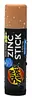
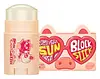
SunBurnt Zinc Stick Light Skin Tone Spf 50+ Sunscreen Versus Elizavecca Milky Piggy Sun Great Block Stick SPF50+ PA++
This hybrid sunscreen covers the full UV range and blocks ~98% of UVB at SPF 50.
This chemical sunscreen covers most of the UV range, lighter on the deep UVA that drives aging.


What's inside
What's inside
 Key Ingredients
Benefits
Concerns
Ingredients Side-by-side
Zinc Oxide
Cosmetic Colorant


Titanium Dioxide
Cosmetic Colorant
Ethylhexyl Methoxycinnamate
UV Absorber
Diethylamino Hydroxybenzoyl Hexyl Benzoate
UV Filter
Ethylhexyl Palmitate
Emollient




CI 77891
Cosmetic ColorantCeresin
Emulsion StabilisingOctocrylene
UV Absorber
Microcrystalline Wax
Emulsion StabilisingEthylhexyl Triazone
UV Absorber
Hydrated Silica
Abrasive
Vp/Eicosene Copolymer
CI 77492
Cosmetic ColorantCI 77491
Cosmetic ColorantSynthetic Wax
Abrasive
Polyhydroxystearic Acid
Emulsifying
Tocopheryl Acetate
Antioxidant


Aloe Barbadensis Leaf Extract
Emollient


CI 77499
Cosmetic ColorantKaolin
Abrasive

Zinc Oxide, Titanium Dioxide, Ethylhexyl Methoxycinnamate, Diethylamino Hydroxybenzoyl Hexyl Benzoate, Ethylhexyl Palmitate, CI 77891, Ceresin, Octocrylene, Microcrystalline Wax, Ethylhexyl Triazone, Hydrated Silica, Vp/Eicosene Copolymer, CI 77492, CI 77491, Synthetic Wax, Polyhydroxystearic Acid, Tocopheryl Acetate, Aloe Barbadensis Leaf Extract, CI 77499, Kaolin
Octyldodecanol
Emollient
Dicaprylyl Carbonate
EmollientMethyl Methacrylate Crosspolymer
Ethylhexyl Methoxycinnamate
UV Absorber
Dibutyl Lauroyl Glutamide
Skin ConditioningCaprylic/Capric Triglyceride
Masking

Octocrylene
UV Absorber
Homosalate
Skin Conditioning
Ethylhexyl Salicylate
UV Absorber
Dibutyl Ethylhexanoyl Glutamide
Skin ConditioningButyl Methoxydibenzoylmethane
UV Absorber
Tocopheryl Acetate
Antioxidant
Water
Skin ConditioningLavandula Angustifolia Flower Extract
Cleansing
Mentha Rotundifolia Leaf Extract
TonicMelissa Officinalis Leaf Extract
Skin ConditioningRosmarinus Officinalis Leaf Extract
AntimicrobialChamomilla Recutita Extract
Skin Conditioning
Monarda Didyma Leaf Extract
Skin ConditioningSalvia Officinalis Leaf Extract
CleansingMentha Piperita Leaf Extract
Skin ConditioningRosa Centifolia Flower Extract
Astringent
Octyldodecanol, Dicaprylyl Carbonate, Methyl Methacrylate Crosspolymer, Ethylhexyl Methoxycinnamate, Dibutyl Lauroyl Glutamide, Caprylic/Capric Triglyceride, Octocrylene, Homosalate, Ethylhexyl Salicylate, Dibutyl Ethylhexanoyl Glutamide, Butyl Methoxydibenzoylmethane, Tocopheryl Acetate, Water, Lavandula Angustifolia Flower Extract, Mentha Rotundifolia Leaf Extract, Melissa Officinalis Leaf Extract, Rosmarinus Officinalis Leaf Extract, Chamomilla Recutita Extract, Monarda Didyma Leaf Extract, Salvia Officinalis Leaf Extract, Mentha Piperita Leaf Extract, Rosa Centifolia Flower Extract
Reviews
Ingredients Explained
These ingredients are found in both products.
Ingredients higher up in an ingredient list are typically present in a larger amount.
This ingredient is also known as Octinoxate and is one of the oldest and most widely used chemical UV filters in skincare.
It has a simple job: soap up UVB radiation (290-320 nm), the wavelengths responsible for sunburn and a big chunk of long-term sun damage.
In formulas, it's always paired with a separate UVA filter because octinoxate solely protects skin from UVB.
Because it's an oil-soluble liquid, it's easy to blend into the oil phase of lotions/creams and gives a cosmetically elegant feel.
The one quirk about formulating this ingredient is photostability; the molecule slowly changes shape into a less effective version when sunlight hits it. So the longer you're in the sun, the weaker its protection gets. The drop can be more than 30% in some formulas.
It also doesn't play nice with Avobenzone (the common UVA filter) since avobenzone destabilizes octinoxate and the two degrade each other. But don't worry: brands have solved this issue by adding photostabilizers like Tinosorb S to prevent degradation and keep SPF stable under heavy UV exposure.
The maximum allowed level is 10% in the EU and Australia, 7.5% in the US and Canada, and 20% in Japan.
The Cosmetic Ingredient Review Panel has concluded this ingredient to be safe in cosmetics up to 10%.
One last thing worth knowing for context:
Octinoxate has been the subject of ongoing review in Europe where the Scientific Committee on Consumer Safety's (SCCS) 2025 final opinion is that this ingredient is an endocrine-active substance.
Lab and animal studies suggest it can act a bit like a hormone in the body (mildly mimicking estrogen and slightly blocking male hormones). It's important to know this hasn't really been shown to happen in everyday human use.
This ingredient is also banned in Hawaii over coral reef concerns.
Learn more about Ethylhexyl MethoxycinnamateOctocrylene is an oil-soluble organic UV filter that mainly absorbs UVB and short wave UVA II light.
Its real superpower is teamwork: octocrylene is remarkably photostable and is most famous for stabilizing avobenzone (the workhorse UVA filter).
This ingredient is commonly used to enhance both UVB and UVA protection due to its unique property in stabilizing avobenzone. It also pulls double duty by boosting water resistance and giving formulas a smooth, spreadable feel.
The EU's Scientific Committee on Consumer Safety (SCCS) has deemed octocrylene to be safe as a UV-filter at concentrations up to 10% (capped at 9% in propellant sprays). The US also permits it up to 10%.
Two things worth knowing:
You'll usually see this ingredient used in concentrations between 2-10% (higher amounts when used as a stabilizer for avobenzone).
Learn more about OctocryleneTocopheryl Acetate is a stable, shelf-friendly form of vitamin E.
Formulators love it because plain vitamin E oxidizes quickly once it hits air. This acetate version stays stable and resists going off, helping to extend a product's shelf life.
It's actually inactive on its own and works like a slow-release "storage" form; the enzymes in your skin called esterases gradually convert it into active vitamin E over time.
One in vivo study showed 5% of the acetate in the living layer of the epidermis converted to vitamin E after 5 days of application. This study also found the skin gained protection against UV damage even though the conversion was slow and small.
Once converted, vitamin E acts as a skin's main fat-soluble antioxidant that fights free radicals to protect skin from damage.
Topical vitamin E generally boosts the skin's photoprotection, and it reduced UV-damage in animal models.
This ingredient has some brightening potential but it's more of a prevention ingredient than spot-fader. Cell studies show it can slow down melanin production but it's worth noting that it's not the most powerful brightener out there.
Overall, it has a pretty solid safety profile and has been found to be non-irritating and non-comedogenic. Allergic reactions may happen but stay rare due to how widely the ingredient gets used.
The concentration will vary depending on the formula; industry data shows 0.1% in baby lotions, 3% in lipsticks, and 5% in foot powders. You can also find this ingredient at 100% in a pure vitamin E oil.
Most leave-on skincare keeps it at the lower end, often between 0.5-1%.
Learn more about Tocopheryl Acetate

