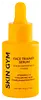
This hydrating serum is formulated around Sodium Hyaluronate and Retinyl Palmitate to hydrate skin and soften the look of wrinkles.
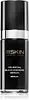
This brightening serum is formulated around Retinyl Palmitate and Sodium Ascorbyl Phosphate to brighten dull-looking skin.


What's inside
What's inside
 Key Ingredients
Benefits
Concerns
Ingredients Side-by-side
Water
Skin ConditioningGlycerin
Humectant


Benzyl Alcohol
Perfuming






Parfum
Masking
Sucrose Laurate
Emollient
Hydrogenated Starch Hydrolysate
HumectantXanthan Gum
EmulsifyingCarbomer
Emulsion StabilisingHydroxypropyl Guar
Emulsion StabilisingSodium Hyaluronate
Humectant


Sucrose Dilaurate
Emollient
Alcohol
Antimicrobial
Dehydroacetic Acid
Preservative
Retinyl Palmitate
Skin Conditioning


Punica Granatum Bark Extract
MaskingSodium Hydroxide
BufferingHelianthus Annuus Seed Oil
Emollient
Sucrose Trilaurate
Emulsifying
Achillea Millefolium Flower/Leaf/Stem Extract
Skin ConditioningAlchemilla Vulgaris Flower/Leaf/Stem Extract
AstringentMalva Sylvestris Flower/Leaf/Stem Extract
Skin ConditioningMelissa Officinalis Leaf Extract
Skin ConditioningMentha Piperita Leaf Extract
Skin ConditioningPrimula Veris Flower Extract
Skin ConditioningVeronica Officinalis Flower/Leaf/Stem Extract
AstringentSodium Ascorbate
Antioxidant



Citric Acid
Buffering
Potassium Sorbate
Preservative
Sodium Benzoate
Masking
Tocopherol
Antioxidant
CI 19140
Cosmetic ColorantCI 17200
Cosmetic ColorantWater, Glycerin, Benzyl Alcohol, Parfum, Sucrose Laurate, Hydrogenated Starch Hydrolysate, Xanthan Gum, Carbomer, Hydroxypropyl Guar, Sodium Hyaluronate, Sucrose Dilaurate, Alcohol, Dehydroacetic Acid, Retinyl Palmitate, Punica Granatum Bark Extract, Sodium Hydroxide, Helianthus Annuus Seed Oil, Sucrose Trilaurate, Achillea Millefolium Flower/Leaf/Stem Extract, Alchemilla Vulgaris Flower/Leaf/Stem Extract, Malva Sylvestris Flower/Leaf/Stem Extract, Melissa Officinalis Leaf Extract, Mentha Piperita Leaf Extract, Primula Veris Flower Extract, Veronica Officinalis Flower/Leaf/Stem Extract, Sodium Ascorbate, Citric Acid, Potassium Sorbate, Sodium Benzoate, Tocopherol, CI 19140, CI 17200
Water
Skin ConditioningGlycerin
Humectant
Alcohol
Antimicrobial
Sorbitol
Humectant
Isopropyl Myristate
Emollient

Benzyl Alcohol
Perfuming
Aloe Barbadensis Extract
Skin Conditioning
Polysorbate 20
Emulsifying
Retinyl Palmitate
Skin Conditioning
Tocopherol
Antioxidant
Linoleic Acid
Cleansing
Sodium Hyaluronate
Humectant
Carbomer
Emulsion StabilisingSodium Hydroxide
BufferingCaproic Acid
Cleansing
Aesculus Hippocastanum Extract
Antioxidant
Sodium Ascorbyl Phosphate
Antioxidant
Xanthan Gum
EmulsifyingGlycyrrhiza Glabra Root Extract
Bleaching
Prunus Armeniaca Kernel Oil
Masking
Acetyl Cysteine
Antioxidant
Schinopsis Quebracho-Colorado Wood Extract
Antioxidant
Centella Asiatica Extract
Cleansing
Diamond Powder
Abrasive
Parfum
Masking
Water, Glycerin, Alcohol, Sorbitol, Isopropyl Myristate, Benzyl Alcohol, Aloe Barbadensis Extract, Polysorbate 20, Retinyl Palmitate, Tocopherol, Linoleic Acid, Sodium Hyaluronate, Carbomer, Sodium Hydroxide, Caproic Acid, Aesculus Hippocastanum Extract, Sodium Ascorbyl Phosphate, Xanthan Gum, Glycyrrhiza Glabra Root Extract, Prunus Armeniaca Kernel Oil, Acetyl Cysteine, Schinopsis Quebracho-Colorado Wood Extract, Centella Asiatica Extract, Diamond Powder, Parfum
Ingredients Explained
These ingredients are found in both products.
Ingredients higher up in an ingredient list are typically present in a larger amount.
This ingredient is also called ethanol or ethyl alcohol. It is denatured, meaning made undrinkable for cosmetic use.
In formulas, it:
Is it bad for your skin?
The answer comes down to concentration. Patch and wash studies have found highly concentrated alcohol-based hand rubs (60-100%) cause less barrier disruption than washing with a basic detergent like SLS. The only measurable effect in these studies was a temporary dip in skin hydration.
Concentrations below 12-15% in leave-on cosmetics is generally well-tolerated. Concentrations above start to see increased transepidermal water loss (TEWL) and reduced hydration.
In concentrations about 58%, it creates temporary channels in your skin's lipid layers to become more permeable and allow other ingredients to slip through easily.
This ingredient can be up to 80% of the formula in alcohol-based perfumes.
Overall, this ingredient is probably harmless if found lower down an ingredients list but worth side-eyeing if it's high up (especially if your barrier is already struggling).
Alcohol can worsen dry skin, eczema, and oily skin, especially at higher concentrations. This is because it can increase transepidermal water loss and decrease hydration to disrupt the skin barrier.
According to the National Rosacea Society based in the US, you should be mindful of products with these alcohols in the top half of ingredients.
True allergic contact dermatitis to ethanol is uncommon, but be sure to patch test if you have dry or sensitive skin.
Learn more about AlcoholBenzyl Alcohol is an aromatic alcohol with several roles: it's a preservative, solvent, and mild fragrance component with a floral scent.
This ingredient has been deemed safe for use in cosmetic formulations at concentrations up to 5%, and up to 10% in hair dyes. You'll typically see 0.5-2% in most rinse-off or leave-on products.
As a preservative, it works by disrupting the membrane of microbial proteins. This helps keep bacteria and fungi from growing in your products.
The sensitization picture is actually quite assuring as well:of nearly 71,000 patients patch tested with benzyl alcohol, only 0.21% showed a positive reaction with most of them being weakly positive.
This led researchers to conclude that benzyl alcohol cannot be regarded as a significant contact allergen.
It is worth noting this ingredient is classified as one of the EU's regulated fragrance allergens and restricted to 1% in finished products.
Labels must also declare it in concentrations above 0.001% in leave-on products and 0.01% in rinse-off products.
At concentrations around 5%, localized redness and itching can appear as a direct irritant response and not as a true allergic reaction.
Learn more about Benzyl AlcoholCarbomer is a synthetic thickening and gelling agent. It's basically the ingredient that gives a lot of serums, gels, creams, and sunscreens their smooth, non-sticky texture.
Although legally permitted at very high levels, carbomers are normally used at concentrations below 1%.
It also needs to be neutralized to actually thicken, and because it is a large molecule, it doesn't really penetrate the skin barrier.
Allergy-wise, the risk is very low. Clinical studies show carbomers have low potential for skin irritation/sensitization even at concentrations up to 100%.
A 2024 UK study patch-tested 1,302 patients and found true allergy to the parent group of carbomer to be rare with no confirmed relevant reactions.
Learn more about CarbomerGlycerin (or glycerol) is a compound naturally found in your skin. It's a powerhouse humectant that pulls water into the stratum corneum.
Topically, glycerin does several things at once:
Your skin makes glycerin on its own (mostly from sebaceous oil breakdown) and shuttles it to your outermost layer of skin, or your epidermis, via aquaporin-3.
Aquaporin-3 is a transporter that is essential for normal skin hydration, elasticity, and repair. Interestingly, mice lacking in AQP3 have dry and less elastic skin that can be fully corrected with glycerin.
This ingredient is non-irritating, plays well with almost every ingredient, and works across all skin types. Typical use is anywhere between 3-10% but can go up to 79% in some leave-on products.
Just know very high concentrations (>40%) can feel tacky in low humidity.
Glycerin is the name for this ingredient in American English. British English uses Glycerol/Glycerine.
Learn more about GlycerinParfum is a catch-all term for an ingredient or more that is used to give a scent to products.
Also called "fragrance", this ingredient can be a blend of hundreds of chemicals or plant oils. This means every product with "fragrance" or "parfum" in the ingredients list is a different mixture.
For instance, Habanolide is a proprietary trade name for a specific aroma chemical. When used as a fragrance ingredient in cosmetics, most aroma chemicals fall under the broad labeling category of “FRAGRANCE” or “PARFUM” according to EU and US regulations.
The term 'parfum' or 'fragrance' is not regulated in many countries. In many cases, it is up to the brand to define this term.
For instance, many brands choose to label themselves as "fragrance-free" because they are not using synthetic fragrances. However, their products may still contain ingredients such as essential oils that are considered a fragrance by INCI standards.
One example is Calendula flower extract. Calendula is an essential oil that still imparts a scent or 'fragrance'.
Depending on the blend, the ingredients in the mixture can cause allergies and sensitivities on the skin. Some ingredients that are known EU allergens include linalool and citronellol.
Parfum can also be used to mask or cover an unpleasant scent.
The bottom line is: not all fragrances/parfum/ingredients are created equally. If you are worried about fragrances, we recommend taking a closer look at an ingredient. And of course, we always recommend speaking with a professional.
Learn more about ParfumRetinyl Palmitate is a form of retinoid. Retinoids are the superstar class of anti-aging ingredients that include Tretinoin and Retinol.
This particular ingredient has had a bumpy year with its rise and fall in popularity.
First, Retinyl Palmitate is created from Palmitic Acid and Retinol. It is a Retinol ester and considered one of the weaker forms of retinoid.
This is because all retinoids have to be converted to Tretinoin, AKA Retinoic Acid.
Retinyl Palmitate is pretty far down the line and has to go through multiple conversions before its effects are seen. Once it's on your skin, enzymes called esterases convert it into Retinol, then into Retinal, and finally into Retinoic Acid; that's three steps with a little lost at each one.
The benefits of Retinyl Palmitate are debated due to this long and ineffective conversion line.
So why use it at all?
The answer is stability. Retinol and Retinoic Acid break down fast when they hit light, heat, and air, and Retinoic Acid can be pretty irritating on top of that.
Retinyl Palmitate is much more stable and gentler, making it easier to formulate with and easier on sensitive skin (even if it's weaker gram for gram).
Studies show Retinyl Palmitate to help:
Newer research from 2023-2025 also found that Retinyl Palmitate works especially well when paired with Retinol. The two seem to cover each other's weak spots; retinol brings the potency while Retinyl Palmitate brings the stability and gentleness. Together, they repair UV damage better than either one does alone.
This ingredient used to be found in sunscreens to boost the efficacy of sunscreen filters.
The downfall of Retinyl Palmitate was due to released reports about the ingredient being correlated to sun damage and skin tumors.
Most of this traces back to a 2012 US National Toxicology Program (NTP) study where hairless mice coated in Retinyl Palmitate cream and exposed to UV light developed skin tumors faster.
Here's the nuance, though.
When the Cosmetic Ingredient Review (CIR) Expert Panel went back through that study, they found methodological flaws and decided the results couldn't be interpreted as proof of extra risk.
The EU's Scientific Committee on Consumer Safety (SCCS) said the mouse findings might point to a concern but they're hard to apply to humans since hairless mouse skin and human skin behave differently.
While there is a study showing this ingredient to cause DNA damage when exposed to UVA, there is no concrete proof of it being linked to skin cancer. It is completely safe to use when used correctly.
Both the CIR and the SCCS consider it safe at the concentrations used in cosmetics; the SCCS specifically cleared retinoids up to 0.05% in body lotions and 0.3% in face creams, hand creams, and rinse-off products.
As of 2025, the EU has written those limits into law, plus a label warning about your total Vitamin A intake from all sources.
All retinoids increase your skin's sensitivity to the sun in the first few months of usage. Be especially careful with reapplying sunscreen when using any form of retinoid.
One more note: if you're pregnant, high doses of Vitamin A can be a concern, so a lot of people skip topical retinoids (including Retinyl Palmitate) during pregnancy just to be safe. Check with your doctor if you're unsure.
Fun fact: This ingredient is often added to low-fat milk to increase the levels of Vitamin A.
Learn more about Retinyl PalmitateSodium Hyaluronate is the salt form of hyaluronic acid. It is a long sugar chain that is naturally found in your skin, joints, and connective tissue that maintains hydration and elasticity.
In skincare, it works as a humectant. It pulls water from the environment and deeper layers of skin and binds it to the surface.
Interestingly, the size of the molecule affects its behavior:
Some clinical evidence links low molecular weight versions to improved wrinkle depth, elasticity, anti-inflammatory effects, and barrier repair.
Many serums use a blend of both weights so you can get surface hydration plus longer-lasting and deeper effects.
You'll typically see concentrations between 0.1-2% for this ingredient.
Learn more about Sodium HyaluronateSodium Hydroxide is also known as lye or caustic soda. It is used to adjust the pH of products; many ingredients require a specific pH to be effective.
In small amounts, sodium hydroxide is considered safe to use. However, large amounts may cause chemical burns due to its high alkaline.
Your skin has a natural pH and acid mantle. This acid mantle helps prevent harmful bacteria from breaking through. The acid mantle also helps keep your skin hydrated.
"Alkaline" refers to a high pH level. A low pH level would be considered acidic.
Learn more about Sodium HydroxideTocopherol is a fat-soluble antioxidant known as Vitamin E.
You'll find this ingredient in the vast majority of skincare (for good reason). It works to neutralize free radicals, or unstable molecules generated by UV exposure, pollution, and other environmental stressors, before they can cause oxidative damage to your skin cells.
Topically applied tocopherol has been shown to protect against UV damage by ramping up the skin's own natural defense enzymes.
It also acts as a skin conditioning agent; some studies show that regular topical use can improve the skin's water-binding capacity over 2-4 weeks.
This ingredient is especially loved for being a team player. When combined with Vitamin C, the photoprotective effect of both ingredients roughly doubles and the combo also helps reduce UV-induced DNA damage.
This ingredient has some brightening potential but it's more of a prevention ingredient than spot-fader. Cell studies show it can slow down melanin production but it's worth noting that it's not the most powerful brightener out there.
In formulations, it also serves as a stabilizer that helps protect other oxidation-prone ingredients from degrading.
Concentrations usually range from 0.1-1% in most leave-on products.
Learn more about TocopherolWater. It's the most common cosmetic ingredient of all. You'll usually see it at the top of ingredient lists, meaning that it makes up the largest part of the product.
So why is it so popular? Water most often acts as a solvent - this means that it helps dissolve other ingredients into the formulation.
You'll also recognize water as that liquid we all need to stay alive. If you see this, drink a glass of water. Remember to stay hydrated!
Learn more about WaterXanthan gum is used as a stabilizer and thickener within cosmetic products. It helps give products a sticky, thick feeling - preventing them from being too runny.
On the technical side of things, xanthan gum is a polysaccharide - a combination consisting of multiple sugar molecules bonded together.
Xanthan gum is a pretty common and great ingredient. It is a natural, non-toxic, non-irritating ingredient that is also commonly used in food products.
Learn more about Xanthan Gum

