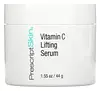
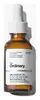
PrescriptSkin Vitamin C Lifting Serum, Enhanced Brightening Gel Serum Versus The Ordinary Alpha Arbutin 2% + HA
This brightening serum is formulated around Ascorbic Acid and Glycolic Acid to brighten dull-looking skin and soften the look of wrinkles.
This brightening serum is formulated around Alpha-Arbutin and Hydrolyzed Sodium Hyaluronate to fade the look of dark spots and brighten dull-looking skin.


What's inside
What's inside
 Key Ingredients
Benefits
Concerns
Ingredients Side-by-side
Water
Skin ConditioningGlycerin
Humectant


Sodium PCA
Humectant
Hydrolyzed Collagen
Emollient
Hydrolyzed Elastin
EmollientAscorbic Acid
Antioxidant




Polysorbate 20
Emulsifying

Sodium Hydroxide
BufferingCarbomer
Emulsion StabilisingAloe Barbadensis Leaf Juice
Skin Conditioning
Tocopherol
Antioxidant
Citric Acid
Buffering
Aesculus Hippocastanum Seed Extract
Skin ConditioningHydroxyethylcellulose
Emulsion StabilisingPrunus Armeniaca Fruit Extract
Skin ConditioningRosa Centifolia Flower Extract
Astringent
Rosmarinus Officinalis Leaf Extract
AntimicrobialTocopheryl Acetate
Antioxidant
Disodium EDTA
ChelatingRetinyl Palmitate
Skin Conditioning
Lactic Acid
Buffering



Malic Acid
Buffering
Gluconic Acid
Chelating
Glycolic Acid
Buffering
Salicylic Acid
Masking


Tartaric Acid
Buffering
Ethylhexylglycerin
Skin ConditioningCitral
Perfuming
Limonene
Perfuming
Parfum
Masking
Benzyl Alcohol
Perfuming
Water, Glycerin, Sodium PCA, Hydrolyzed Collagen, Hydrolyzed Elastin, Ascorbic Acid, Polysorbate 20, Sodium Hydroxide, Carbomer, Aloe Barbadensis Leaf Juice, Tocopherol, Citric Acid, Aesculus Hippocastanum Seed Extract, Hydroxyethylcellulose, Prunus Armeniaca Fruit Extract, Rosa Centifolia Flower Extract, Rosmarinus Officinalis Leaf Extract, Tocopheryl Acetate, Disodium EDTA, Retinyl Palmitate, Lactic Acid, Malic Acid, Gluconic Acid, Glycolic Acid, Salicylic Acid, Tartaric Acid, Ethylhexylglycerin, Citral, Limonene, Parfum, Benzyl Alcohol
Water
Skin ConditioningAlpha-Arbutin
Antioxidant
Propanediol
Solvent
Polyacrylate Crosspolymer-6
Emulsion StabilisingHydrolyzed Sodium Hyaluronate
Skin Conditioning
Ergothioneine
Antioxidant
Polysorbate 20
Emulsifying
Citric Acid
Buffering
Sodium Citrate
BufferingSodium Hydroxide
BufferingSodium Metabisulfite
Antioxidant
Trisodium Ethylenediamine Disuccinate
ChelatingEthoxydiglycol
HumectantPhenoxyethanol
Preservative
Chlorphenesin
Antimicrobial
Reviews
Ingredients Explained
These ingredients are found in both products.
Ingredients higher up in an ingredient list are typically present in a larger amount.
Citric Acid is an alpha hydroxy acid (AHA) naturally found in citrus fruits like oranges, lemons, and limes.
Like other AHAs, citric acid can exfoliate skin by breaking down the bonds that hold dead skin cells together. This helps reveal smoother and brighter skin underneath.
However, this exfoliating effect only happens at high concentrations (20%) which can be hard to find in cosmetic products.
Due to this, citric acid is usually included in small amounts as a pH adjuster. This helps keep products slightly more acidic and compatible with skin's natural pH.
In skincare formulas, citric acid can:
While it can provide some skin benefits, research shows lactic acid and glycolic acid are generally more effective and less irritating exfoliants.
Most citric acid used in skincare today is made by fermenting sugars (usually from molasses). This synthetic version is identical to the natural citrus form but easier to stabilize and use in formulations.
Rosacea skin has a lower threshold for acids generally, with 62.5% of rosacea subjects in one study reacting to lactic acid in a sting test. This is why we mark citric acid as a potential rosacea trigger.
However, this ingredient shows up as a pH adjuster or chelator at roughly 0.1-1% in many products. These low levels are unlikely to be an issue for rosacea skin and becomes a potential trigger at exfoliating concentrations (20%). Because everybody's skin is unique, we recommend a patch test if you are unsure.
Learn more about Citric AcidPolysorbate 20 is a gentle, water-soluble emulsifier and mild surfactant. It stops oil and water from separating to keep your formulas blended and stable.
It also acts as a mild penetration enhancer by helping active ingredients absorb slightly better.
The common safety discussion around this ingredient involves a manufacturing byproduct called 1,4-dioxane.
Trace amounts can form during production but the EU's Scientific Committee on Consumer Safety has concluded that levels at/below 10 ppm in finished products are safe (commercial products consistently fall within acceptable margins).
True allergic reactions are uncommon and the CIR Expert Panel has confirmed this ingredient to be safe as used in cosmetics.
Because it is derived from lauric acid, it may not be fungal acne safe.
Learn more about Polysorbate 20Sodium Hydroxide is also known as lye or caustic soda. It is used to adjust the pH of products; many ingredients require a specific pH to be effective.
In small amounts, sodium hydroxide is considered safe to use. However, large amounts may cause chemical burns due to its high alkaline.
Your skin has a natural pH and acid mantle. This acid mantle helps prevent harmful bacteria from breaking through. The acid mantle also helps keep your skin hydrated.
"Alkaline" refers to a high pH level. A low pH level would be considered acidic.
Learn more about Sodium HydroxideWater. It's the most common cosmetic ingredient of all. You'll usually see it at the top of ingredient lists, meaning that it makes up the largest part of the product.
So why is it so popular? Water most often acts as a solvent - this means that it helps dissolve other ingredients into the formulation.
You'll also recognize water as that liquid we all need to stay alive. If you see this, drink a glass of water. Remember to stay hydrated!
Learn more about Water

